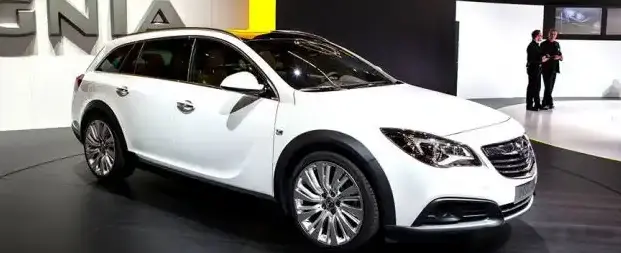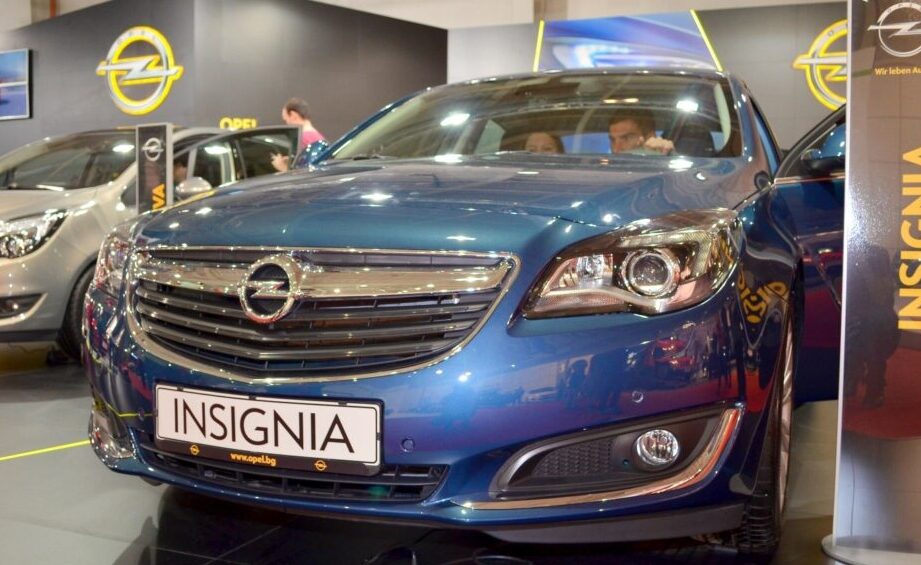
The Opel Insignia OPC 2.8 V6, produced from September 2013 to January 2017, represented the high-performance variant of the Insignia A sedan, particularly within the facelifted model range. Positioned as the flagship trim, it aimed to deliver a blend of luxury, practicality, and spirited driving dynamics. This model was primarily marketed in Europe, offering a direct competitor to performance-oriented sedans from German manufacturers. The “Unlimited” designation referred to the removal of the electronic speed limiter, allowing the vehicle to achieve its maximum potential.
Technical Specifications
| Brand | Opel |
| Model | Insignia |
| Generation | Insignia Sedan (A, facelift 2013) |
| Type | OPC 2.8 V6 (325 Hp) AWD Turbo Ecotec Automatic Unlimited |
| Start of production | September, 2013 |
| End of production | January, 2017 |
| Powertrain Architecture | Internal Combustion engine |
| Body type | Sedan |
| Seats | 5 |
| Doors | 4 |
| Fuel consumption (urban) | 16.1 l/100 km (14.6 US mpg, 17.5 UK mpg, 6.2 km/l) |
| Fuel consumption (extra urban) | 7.5 l/100 km (31.4 US mpg, 37.7 UK mpg, 13.3 km/l) |
| Fuel consumption (combined) | 10.7 l/100 km (22 US mpg, 26.4 UK mpg, 9.3 km/l) |
| CO2 emissions | 251 g/km |
| Fuel Type | Petrol (Gasoline) |
| Acceleration 0 – 100 km/h | 6 sec |
| Acceleration 0 – 62 mph | 6 sec |
| Acceleration 0 – 60 mph | 5.7 sec |
| Maximum speed | 270 km/h (167.77 mph) |
| Emission standard | Euro 5 |
| Weight-to-power ratio | 5.4 kg/Hp, 184.7 Hp/tonne |
| Weight-to-torque ratio | 4 kg/Nm, 247.2 Nm/tonne |
| Power | 325 Hp @ 5250 rpm |
| Power per litre | 116.4 Hp/l |
| Torque | 435 Nm @ 5250 rpm (320.84 lb.-ft. @ 5250 rpm) |
| Engine layout | Front, Transverse |
| Engine Model/Code | A28NER, B28NER |
| Engine displacement | 2792 cm3 (170.38 cu. in.) |
| Number of cylinders | 6 |
| Engine configuration | V-engine |
| Cylinder Bore | 89 mm (3.5 in.) |
| Piston Stroke | 74.8 mm (2.94 in.) |
| Compression ratio | 9.5:1 |
| Fuel injection system | Multi-port manifold injection |
| Engine aspiration | Turbocharger, Intercooler |
| Engine oil capacity | 6.3 l (6.66 US qt | 5.54 UK qt) |
| Coolant | 6.7 l (7.08 US qt | 5.9 UK qt) |
| Kerb Weight | 1760 kg (3880.14 lbs.) |
| Max. weight | 2340 kg (5158.82 lbs.) |
| Max load | 580 kg (1278.68 lbs.) |
| Trunk (boot) space – minimum | 500 l (17.66 cu. ft.) |
| Trunk (boot) space – maximum | 1015 l (35.84 cu. ft.) |
| Fuel tank capacity | 70 l (18.49 US gal | 15.4 UK gal) |
| Max. roof load | 100 kg (220.46 lbs.) |
| Permitted trailer load with brakes (12%) | 1600 kg (3527.4 lbs.) |
| Permitted trailer load without brakes | 750 kg (1653.47 lbs.) |
| Length | 4842 mm (190.63 in.) |
| Width | 1858 mm (73.15 in.) |
| Width including mirrors | 2084 mm (82.05 in.) |
| Height | 1498 mm (58.98 in.) |
| Wheelbase | 2737 mm (107.76 in.) |
| Front track | 1585 mm (62.4 in.) |
| Rear (Back) track | 1587 mm (62.48 in.) |
| Minimum turning circle | 11.4 m (37.4 ft.) |
| Drive wheel | All wheel drive (4×4) |
| Number of gears | 6 |
| Gearbox type | automatic transmission |
Powertrain & Engine Architecture
The heart of the Insignia OPC was the 2.8-liter V6 engine, designated A28NER or B28NER depending on minor revisions. This engine featured a 60-degree V-configuration, utilizing aluminum alloy construction for reduced weight. It employed a twin-scroll turbocharger with an intercooler to boost power output to 325 horsepower and 435 Nm (320.84 lb-ft) of torque. The engine utilized multi-port fuel injection and a sophisticated engine management system to optimize performance and efficiency. The six-speed automatic transmission, sourced from Aisin, was specifically tuned for the OPC model to provide quicker shifts and improved responsiveness. It featured a manual shift mode for driver control.
Driving Characteristics
The combination of the potent V6 engine and all-wheel drive system delivered impressive performance. Acceleration from 0 to 60 mph was achieved in approximately 5.7 seconds, with a top speed electronically limited to 155 mph (250 km/h) in some markets, but unrestricted in the “Unlimited” version, reaching 270 km/h (167.77 mph). The automatic transmission, while providing convenience, wasn’t as engaging as a manual gearbox. However, the transmission’s programming prioritized performance, holding gears longer and downshifting quickly under hard acceleration. Compared to the lower-powered 1.6L or 2.0L variants, the OPC offered a significantly more visceral driving experience, with a noticeable increase in power and torque across the rev range. The all-wheel drive system provided excellent traction, particularly in adverse weather conditions.
Equipment & Trim Levels
The Insignia OPC came standard with a comprehensive list of features, befitting its flagship status. These included leather upholstery, heated front seats, a premium audio system, dual-zone climate control, and a touchscreen infotainment system. Exterior features included a unique OPC body kit with aggressive styling cues, including a rear spoiler, side skirts, and a distinctive front grille. Optional extras included adaptive cruise control, a panoramic sunroof, and advanced safety features such as lane departure warning and blind-spot monitoring. The interior trim was typically dark-themed, with accents in contrasting colors to emphasize the sporty character of the vehicle.
Chassis & Braking
The OPC model featured a sport-tuned suspension system with stiffer springs and dampers compared to other Insignia variants. The front suspension utilized a McPherson strut design, while the rear employed a multi-link setup. Larger diameter brakes with ventilated discs all around provided ample stopping power. The all-wheel drive system employed a multi-plate clutch to distribute torque between the front and rear axles, optimizing traction and stability. A thicker stabilizer bar was fitted to reduce body roll during cornering.
Market Reception & Comparison
The Insignia OPC was generally well-received by automotive critics, who praised its performance, handling, and spacious interior. However, some reviewers noted that the automatic transmission could feel slightly sluggish at times. Fuel economy was a common criticism, as the V6 engine consumed significantly more fuel than the smaller displacement engines offered in the Insignia range. Compared to rivals like the Ford Mondeo ST and Volkswagen Passat R-Line, the OPC offered a more powerful engine and a more aggressive driving experience, but at a higher price point. The 1.6L and 2.0L Insignia models were aimed at a more budget-conscious buyer prioritizing fuel efficiency and practicality, while the OPC catered to enthusiasts seeking a high-performance sedan.
Legacy
The Opel Insignia OPC 2.8 V6 remains a desirable used car, particularly among enthusiasts. The 2.8L V6 engine, while complex, has proven to be relatively reliable when properly maintained. Common issues include turbocharger wear and potential oil leaks. The automatic transmission is generally robust, but regular fluid changes are essential. The OPC’s combination of performance, practicality, and distinctive styling has ensured its continued appeal in the used car market. It represents a high point in Opel’s performance car history, offering a compelling alternative to more mainstream performance sedans.