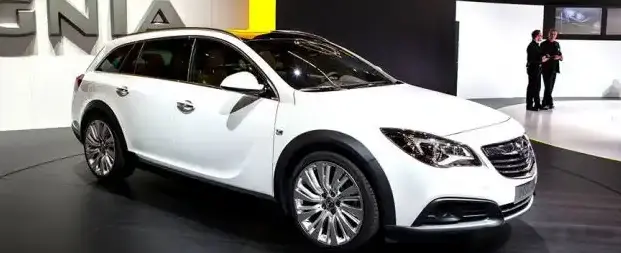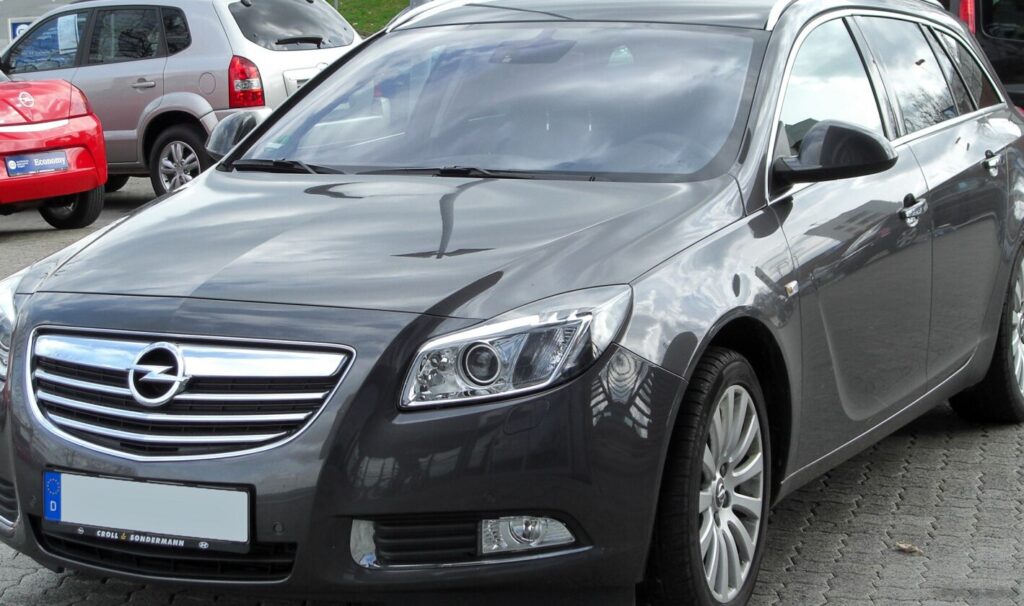
The Opel Insignia Sports Tourer (A) 1.6 Turbo, producing 180 horsepower, was a key variant in the first generation (A) of Opel’s mid-size wagon, launched in March 2009 and continuing through June 2013. Positioned as a strong contender in the European market, it aimed to offer a balance of practicality, fuel efficiency, and respectable performance within the station wagon segment. This model represented Opel’s attempt to modernize its image and compete with established rivals like the Ford Mondeo, Volkswagen Passat, and Peugeot 508. The Sports Tourer body style, Opel’s designation for a wagon, was crucial to the Insignia’s success, appealing to families and those needing versatile cargo space.
Technical Specifications
| Brand | Opel |
| Model | Insignia |
| Generation | Insignia Sports Tourer (A) |
| Type (Engine) | 1.6 Turbo (180 Hp) |
| Start of production | March, 2009 |
| End of production | June, 2013 |
| Powertrain Architecture | Internal Combustion engine |
| Body type | Station wagon (estate) |
| Seats | 5 |
| Doors | 5 |
| Fuel consumption (urban) | 9.8 l/100 km (24 US mpg, 28.8 UK mpg, 10.2 km/l) |
| Fuel consumption (extra urban) | 5.8 l/100 km (40.6 US mpg, 48.7 UK mpg, 17.2 km/l) |
| Fuel consumption (combined) | 7.2 l/100 km (32.7 US mpg, 39.2 UK mpg, 13.9 km/l) |
| CO2 emissions | 169 g/km |
| Fuel Type | Petrol (Gasoline) |
| Acceleration 0 – 100 km/h | 9.2 sec |
| Acceleration 0 – 62 mph | 9.2 sec |
| Acceleration 0 – 60 mph | 8.7 sec |
| Maximum speed | 220 km/h (136.7 mph) |
| Emission standard | Euro 5 |
| Weight-to-power ratio | 8.7 kg/Hp, 115.4 Hp/tonne |
| Weight-to-torque ratio | 6.8 kg/Nm, 147.4 Nm/tonne |
| Power | 180 Hp @ 5500 rpm |
| Power per litre | 112.6 Hp/l |
| Torque | 230 Nm @ 2200-5500 rpm (169.64 lb.-ft. @ 2200-5500 rpm) |
| Engine layout | Front, Transverse |
| Engine Model/Code | A16LET |
| Engine displacement | 1598 cm3 (97.52 cu. in.) |
| Number of cylinders | 4 |
| Engine configuration | Inline |
| Cylinder Bore | 79 mm (3.11 in.) |
| Piston Stroke | 81.5 mm (3.21 in.) |
| Compression ratio | 8.8:1 |
| Number of valves per cylinder | 4 |
| Fuel injection system | Multi-port manifold injection |
| Engine aspiration | Turbocharger, Intercooler |
| Engine oil capacity | 4.5 l (4.76 US qt | 3.96 UK qt) |
| Coolant | 5.6 l (5.92 US qt | 4.93 UK qt) |
| Kerb Weight | 1560 kg (3439.21 lbs.) |
| Max. weight | 2215 kg (4883.24 lbs.) |
| Max load | 655 kg (1444.03 lbs.) |
| Trunk (boot) space – minimum | 540 l (19.07 cu. ft.) |
| Trunk (boot) space – maximum | 1530 l (54.03 cu. ft.) |
| Fuel tank capacity | 70 l (18.49 US gal | 15.4 UK gal) |
| Length | 4908 mm (193.23 in.) |
| Width | 1858 mm (73.15 in.) |
| Height | 1520 mm (59.84 in.) |
| Wheelbase | 2737 mm (107.76 in.) |
| Front track | 1585 mm (62.4 in.) |
| Rear (Back) track | 1587 mm (62.48 in.) |
| Ride height (ground clearance) | 160 mm (6.3 in.) |
| Minimum turning circle | 11.4 m (37.4 ft.) |
| Drivetrain Architecture | Front wheel drive |
| Number of gears and type of gearbox | 6 gears, manual transmission |
| Front brakes | Ventilated discs |
| Rear brakes | Disc |
| Assisting systems | ABS (Anti-lock braking system) |
| Tires size | 215/60 R16; 225/55 R17; 245/45 R18 |
| Wheel rims size | 16; 17; 18 |
Powertrain & Engine Architecture
The heart of this Insignia variant is the A16LET engine, a 1.6-liter turbocharged inline-four cylinder gasoline engine. This engine belongs to Opel’s ‘Family 1’ engine family, known for its relatively compact size and efficiency. The A16LET utilizes multi-point fuel injection and a single turbocharger with an intercooler to boost power output. The turbocharger helps to mitigate turbo lag and provide a broader torque curve. The engine’s 8.8:1 compression ratio is a compromise between performance and the ability to run on readily available fuel grades. The 6-speed manual transmission was standard, offering a good balance between fuel economy and driver engagement. While an automatic transmission was available on other Insignia models, it wasn’t typically paired with this specific 180 hp engine.
Driving Characteristics
The 1.6 Turbo engine, producing 180 hp, provided adequate performance for everyday driving. Acceleration from 0-60 mph took around 8.7 seconds, making it competitive within its class. However, it wasn’t a particularly sporty engine; its strength lay in its mid-range torque, making it suitable for overtaking and cruising on highways. Compared to the more powerful 2.0 Turbo or the diesel variants, the 1.6 Turbo felt less responsive, especially at higher engine speeds. The manual transmission, while precise, required frequent shifting to maintain momentum, particularly when fully loaded. The gear ratios were tuned for fuel efficiency rather than outright acceleration.
Equipment & Trim Levels
The 1.6 Turbo trim typically fell into the mid-range of the Insignia Sports Tourer lineup. Standard equipment generally included air conditioning, a CD/radio system with auxiliary input, electric front windows, and central locking. Higher trim levels added features like alloy wheels, a multi-function steering wheel, cruise control, and upgraded upholstery. Optional extras included a navigation system, leather seats, a panoramic sunroof, and advanced safety features like adaptive cruise control and lane departure warning. Interior upholstery was typically cloth, with the option of leather upgrades on higher-spec models. The dashboard layout was functional and modern, with a focus on ergonomics.
Chassis & Braking
The Insignia Sports Tourer featured a MacPherson strut front suspension and a multi-link rear suspension, providing a comfortable ride and decent handling. The suspension was tuned for a balance between comfort and stability, leaning towards the former. Front brakes were ventilated discs, while rear brakes were solid discs. ABS (Anti-lock Braking System) was standard. The chassis was designed to accommodate the larger body size of the wagon while maintaining reasonable handling characteristics. Stabilizer bars were fitted front and rear to reduce body roll during cornering.
Market Reception & Comparison
The 1.6 Turbo Insignia Sports Tourer was generally well-received by automotive critics. It was praised for its spacious interior, comfortable ride, and reasonable fuel economy. However, some critics found the engine to be somewhat underpowered, especially when compared to the more potent engine options available. Fuel economy figures of around 32.7 US mpg combined were competitive for its class. Compared to the 2.0 Turbo, the 1.6 Turbo offered lower running costs but sacrificed performance. The diesel variants provided even better fuel economy but were generally more expensive to purchase.
Legacy
The A16LET engine, while not known for any major inherent flaws, requires regular maintenance to ensure longevity. Common issues include turbocharger wear and potential problems with the fuel injectors. The Insignia Sports Tourer (A) 1.6 Turbo remains a relatively affordable and practical used car option. Its spacious interior and decent fuel economy make it a good choice for families. However, potential buyers should be aware of the engine’s limitations and ensure that it has been properly maintained. The Insignia, in general, helped to elevate Opel’s brand image and establish it as a serious competitor in the mid-size segment.