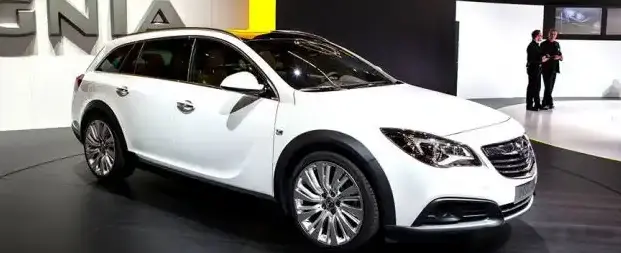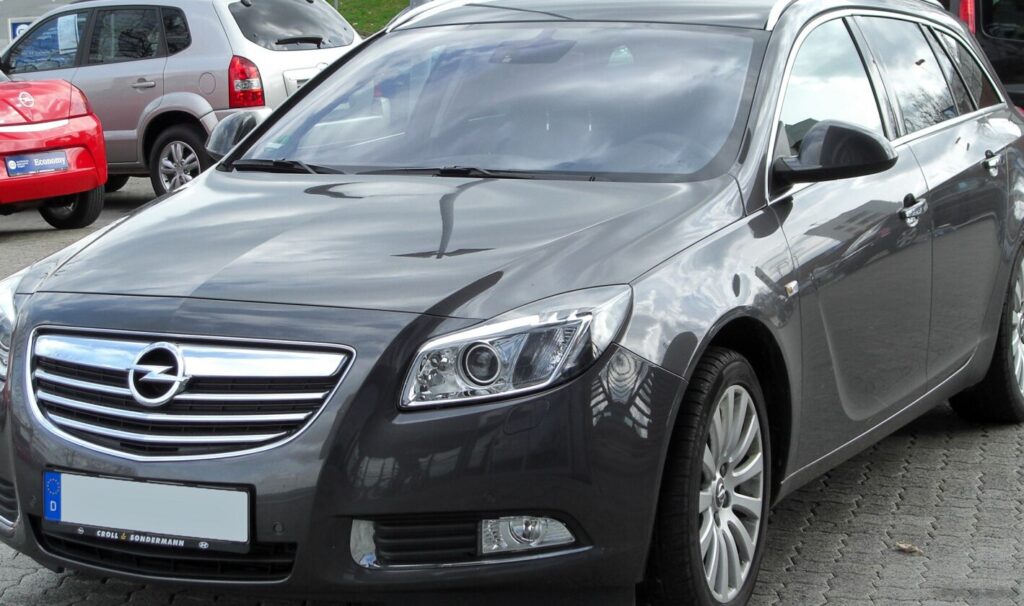
The Opel Insignia Sports Tourer (A) 2.0 BiTurbo CDTI Automatic, produced between December 2011 and June 2013, represented a significant offering in the European D-segment station wagon market. Part of the second generation Insignia (A) range, this variant combined a powerful twin-turbo diesel engine with the convenience of an automatic transmission, aiming to provide a blend of performance, efficiency, and practicality. It was positioned as a mid-to-high range trim within the Sports Tourer lineup, appealing to buyers seeking a more refined and capable vehicle than the base models. The Insignia Sports Tourer competed directly with vehicles like the Ford Mondeo Estate, Volkswagen Passat Variant, and Peugeot 508 SW.
Technical Specifications
| Brand | Opel |
| Model | Insignia |
| Generation | Insignia Sports Tourer (A) |
| Type (Engine) | 2.0 BiTurbo CDTI (195 Hp) Automatic |
| Start of production | December, 2011 |
| End of production | June, 2013 |
| Powertrain Architecture | Internal Combustion engine |
| Body type | Station wagon (estate) |
| Seats | 5 |
| Doors | 5 |
| Fuel consumption (economy) – urban | 8 l/100 km (29.4 US mpg, 35.3 UK mpg, 12.5 km/l) |
| Fuel consumption (economy) – extra urban | 4.8 l/100 km (49 US mpg, 58.9 UK mpg, 20.8 km/l) |
| Fuel consumption (economy) – combined | 6 l/100 km (39.2 US mpg, 47.1 UK mpg, 16.7 km/l) |
| CO2 emissions | 158 g/km |
| Fuel Type | Diesel |
| Acceleration 0 – 100 km/h | 9 sec |
| Acceleration 0 – 62 mph | 9 sec |
| Acceleration 0 – 60 mph | 8.6 sec |
| Maximum speed | 224 km/h (139.19 mph) |
| Emission standard | Euro 5 |
| Weight-to-power ratio | 7.8 kg/Hp, 127.9 Hp/tonne |
| Weight-to-torque ratio | 3.8 kg/Nm, 262.3 Nm/tonne |
| Power | 195 Hp @ 4000 rpm |
| Power per litre | 99.7 Hp/l |
| Torque | 400 Nm @ 1750 rpm (295.02 lb.-ft. @ 1750 rpm) |
| Engine layout | Front, Transverse |
| Engine Model/Code | A20DTR |
| Engine displacement | 1956 cm3 (119.36 cu. in.) |
| Number of cylinders | 4 |
| Engine configuration | Inline |
| Cylinder Bore | 83 mm (3.27 in.) |
| Piston Stroke | 90.4 mm (3.56 in.) |
| Number of valves per cylinder | 4 |
| Fuel injection system | Diesel Commonrail |
| Engine aspiration | BiTurbo, Intercooler |
| Valvetrain | OHC |
| Engine oil capacity | 4.5 l (4.76 US qt | 3.96 UK qt) |
| Coolant | 9 l (9.51 US qt | 7.92 UK qt) |
| Kerb Weight | 1525 kg (3362.05 lbs.) |
| Max. weight | 2203 kg (4856.78 lbs.) |
| Max load | 678 kg (1494.73 lbs.) |
| Trunk (boot) space – minimum | 540 l (19.07 cu. ft.) |
| Trunk (boot) space – maximum | 1530 l (54.03 cu. ft.) |
| Fuel tank capacity | 70 l (18.49 US gal | 15.4 UK gal) |
| Length | 4908 mm (193.23 in.) |
| Width | 1856 mm (73.07 in.) |
| Height | 1520 mm (59.84 in.) |
| Wheelbase | 2737 mm (107.76 in.) |
| Front track | 1585 mm (62.4 in.) |
| Rear (Back) track | 1587 mm (62.48 in.) |
| Ride height (ground clearance) | 160 mm (6.3 in.) |
| Minimum turning circle (turning diameter) | 10.8 m (35.43 ft.) |
| Drivetrain Architecture | The Internal combustion engine (ICE) drives the front wheels of the vehicle. |
| Drive wheel | Front wheel drive |
| Number of gears and type of gearbox | 6 gears, automatic transmission |
| Front brakes | Ventilated discs |
| Rear brakes | Disc |
| Assisting systems | ABS (Anti-lock braking system) |
| Tires size | 215/60 R16; 225/55 R17; 245/45 R18 |
| Wheel rims size | 16; 17; 18 |
INTRODUCTION
The Opel Insignia Sports Tourer (A) 2.0 BiTurbo CDTI Automatic, launched in late 2011, was a key variant within the refreshed Insignia range. Building upon the success of the initial Insignia launch in 2008, the ‘A’ designation denotes updates to styling, technology, and powertrain options. The Sports Tourer body style, Opel’s term for a station wagon, offered increased practicality and cargo space compared to the hatchback version. This particular 2.0 BiTurbo CDTI Automatic model aimed to deliver a compelling combination of performance and fuel efficiency, targeting buyers who needed a versatile family vehicle with a more dynamic driving experience.
Powertrain & Engine Architecture
At the heart of this Insignia variant lies the A20DTR engine, a 2.0-liter inline-four cylinder diesel engine equipped with a sequential twin-turbocharger system. This configuration utilizes two turbochargers of different sizes – a smaller turbo for quick response at low engine speeds and a larger turbo to maintain power at higher RPMs. The engine features a common rail direct injection system, delivering fuel directly into the combustion chamber at extremely high pressure for optimized combustion. The valvetrain utilizes an overhead camshaft (OHC) design. The engine produces 195 horsepower at 4000 rpm and a substantial 400 Nm (295 lb-ft) of torque from as low as 1750 rpm. The automatic transmission is a six-speed unit, designed to provide smooth and efficient gear changes. While not a dual-clutch transmission, it offered a good balance of comfort and responsiveness for everyday driving.
Driving Characteristics
The 2.0 BiTurbo CDTI Automatic Insignia Sports Tourer offered a noticeably more spirited driving experience than the lower-powered engine options available in the range. The twin-turbo setup minimized turbo lag, providing strong acceleration from a standstill and ample power for overtaking maneuvers. The automatic transmission, while not as sporty as a manual, was well-programmed and generally shifted smoothly. The 9-second 0-62 mph acceleration time was respectable for a vehicle of this size and weight. However, the added weight of the automatic transmission and the larger engine did slightly impact fuel economy compared to the manual versions. The gear ratios were tuned for a balance between acceleration and fuel efficiency, prioritizing mid-range pull over outright top-end speed.
Equipment & Trim Levels
The 2.0 BiTurbo CDTI Automatic typically came with a generous level of standard equipment. This included features such as climate control, power windows and mirrors, a multi-function steering wheel, and an audio system with USB connectivity. Higher trim levels added features like leather upholstery, heated front seats, a navigation system, and advanced safety technologies like adaptive cruise control and lane departure warning. Exterior features often included alloy wheels, fog lights, and chrome detailing. Optional extras could further customize the vehicle, including a panoramic sunroof, premium audio systems, and parking assist features.
Chassis & Braking
The Insignia Sports Tourer featured a MacPherson strut front suspension and a multi-link rear suspension, providing a comfortable ride and good handling characteristics. The suspension was tuned to balance ride comfort with body control. Braking duties were handled by ventilated discs at the front and solid discs at the rear, equipped with ABS (Anti-lock Braking System) as standard. The chassis was designed to provide a stable and predictable driving experience, even when fully loaded with passengers and luggage. Stabilizer bars were fitted front and rear to reduce body roll during cornering.
Market Reception & Comparison
The Opel Insignia Sports Tourer 2.0 BiTurbo CDTI Automatic was generally well-received by automotive critics. It was praised for its powerful engine, comfortable ride, and spacious interior. However, some reviewers noted that the automatic transmission could occasionally feel hesitant, and the steering lacked some feel. Compared to the 1.8L petrol and lower-powered diesel variants, this model offered a significant performance upgrade, but at a higher price point. The 1.8L petrol was more affordable but lacked the torque of the diesel, while the lower-powered diesel trims prioritized fuel economy over performance. The BiTurbo CDTI offered a compelling compromise for drivers who wanted both.
Legacy
The A20DTR engine, while generally reliable, is known to require regular maintenance, particularly regarding the diesel particulate filter (DPF) and turbocharger system. Proper servicing and the use of high-quality oil are crucial for long-term durability. In the used car market, the Insignia Sports Tourer 2.0 BiTurbo CDTI Automatic remains a popular choice for buyers seeking a practical and well-equipped estate car. Its combination of performance, space, and features continues to appeal to families and drivers who need a versatile vehicle. However, potential buyers should be aware of the potential maintenance costs associated with the diesel engine and turbocharger system, and a thorough inspection before purchase is recommended.