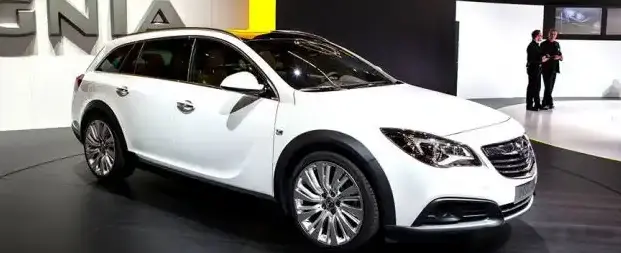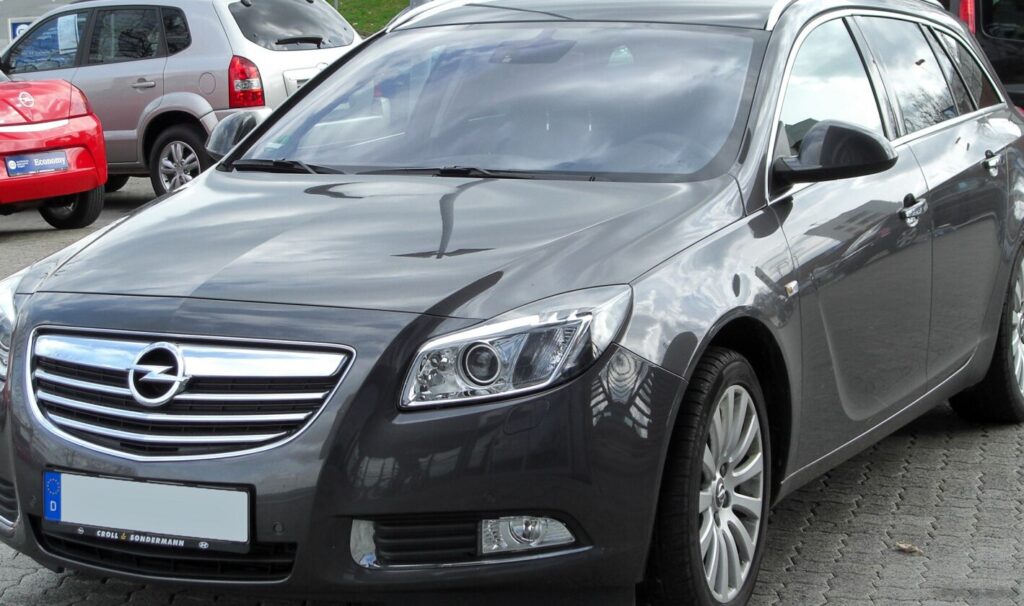
The Opel Insignia Sports Tourer (A) 2.0 CDTI, producing 110 horsepower, was a key variant in the first generation (A) Insignia lineup, manufactured from February 2009 to June 2013. Positioned as an entry-level diesel option within the Sports Tourer – Opel’s station wagon body style – it aimed to provide fuel efficiency and practicality for families and long-distance drivers. This model was primarily sold in Europe, where station wagons maintain significant market share, and represented Opel’s attempt to compete in the increasingly competitive mid-size segment against rivals like the Ford Mondeo, Volkswagen Passat, and Peugeot 508. The Insignia itself was a significant vehicle for Opel, representing a move upmarket in terms of design and technology.
Technical Specifications
| Brand | Opel |
| Model | Insignia |
| Generation | Insignia Sports Tourer (A) |
| Type (Engine) | 2.0 CDTI (110 Hp) DPF |
| Start of production | February, 2009 |
| End of production | June, 2013 |
| Powertrain Architecture | Internal Combustion engine |
| Body type | Station wagon (estate) |
| Seats | 5 |
| Doors | 5 |
| Fuel consumption (urban) | 7.9 l/100 km (29.8 US mpg, 35.8 UK mpg, 12.7 km/l) |
| Fuel consumption (extra urban) | 4.9 l/100 km (48 US mpg, 57.6 UK mpg, 20.4 km/l) |
| Fuel consumption (combined) | 6 l/100 km (39.2 US mpg, 47.1 UK mpg, 16.7 km/l) |
| CO2 emissions | 159 g/km |
| Fuel Type | Diesel |
| Acceleration 0 – 100 km/h | 12.86 sec |
| Acceleration 0 – 62 mph | 12.86 sec |
| Acceleration 0 – 60 mph | 12.2 sec (Calculated) |
| Maximum speed | 185 km/h (114.95 mph) |
| Emission standard | Euro 5 |
| Weight-to-power ratio | 14.6 kg/Hp, 68.3 Hp/tonne |
| Weight-to-torque ratio | 4.6 kg/Nm, 219.3 Nm/tonne |
| Power | 110 Hp @ 4000 rpm |
| Power per litre | 56.2 Hp/l |
| Torque | 353 Nm @ 1750-2500 rpm (260.36 lb.-ft. @ 1750-2500 rpm) |
| Engine layout | Front, Transverse |
| Engine Model/Code | A20DTL |
| Engine displacement | 1956 cm3 (119.36 cu. in.) |
| Number of cylinders | 4 |
| Engine configuration | Inline |
| Cylinder Bore | 83 mm (3.27 in.) |
| Piston Stroke | 90.4 mm (3.56 in.) |
| Compression ratio | 16.5:1 |
| Number of valves per cylinder | 4 |
| Fuel injection system | Diesel Commonrail |
| Engine aspiration | Turbocharger, Intercooler |
| Valvetrain | OHC |
| Engine oil capacity | 4.5 l (4.76 US qt | 3.96 UK qt) |
| Coolant | 9 l (9.51 US qt | 7.92 UK qt) |
| Kerb Weight | 1610 kg (3549.44 lbs.) |
| Max. weight | 2265 kg (4993.47 lbs.) |
| Max load | 655 kg (1444.03 lbs.) |
| Trunk (boot) space – minimum | 540 l (19.07 cu. ft.) |
| Trunk (boot) space – maximum | 1530 l (54.03 cu. ft.) |
| Fuel tank capacity | 70 l (18.49 US gal | 15.4 UK gal) |
| Length | 4908 mm (193.23 in.) |
| Width | 1856 mm (73.07 in.) |
| Height | 1520 mm (59.84 in.) |
| Wheelbase | 2737 mm (107.76 in.) |
| Front track | 1585 mm (62.4 in.) |
| Rear (Back) track | 1587 mm (62.48 in.) |
| Ride height (ground clearance) | 160 mm (6.3 in.) |
| Minimum turning circle | 11.4 m (37.4 ft.) |
| Drivetrain Architecture | Front wheel drive |
| Number of gears and type of gearbox | 6 gears, manual transmission |
| Front brakes | Ventilated discs |
| Rear brakes | Disc |
| Assisting systems | ABS (Anti-lock braking system) |
| Tires size | 215/60 R16; 225/55 R17 |
| Wheel rims size | 16; 17 |
Powertrain & Engine Architecture
The 2.0 CDTI engine, specifically the A20DTL code, is a four-cylinder, inline diesel engine. It utilizes a common rail direct injection system, delivering fuel at extremely high pressure for improved combustion efficiency and reduced emissions. The engine is turbocharged and intercooled, enhancing power output and torque. The intercooler cools the compressed air from the turbocharger, increasing its density and further improving performance. The engine features an overhead camshaft (OHC) valvetrain with four valves per cylinder, optimizing gas flow for better engine breathing. The 110 horsepower output is achieved at 4000 rpm, while the peak torque of 353 Nm (260 lb-ft) is available between 1750 and 2500 rpm, providing good low-end grunt for everyday driving. This engine was designed to meet Euro 5 emission standards, incorporating a diesel particulate filter (DPF) to trap soot particles. The standard transmission for this variant was a six-speed manual gearbox, although a six-speed automatic transmission was also available as an option.
Driving Characteristics
The 110 hp 2.0 CDTI with the manual transmission offered adequate, but not exhilarating, performance. Acceleration from 0 to 100 km/h (0-62 mph) took around 12.86 seconds. The engine’s strength lay in its mid-range torque, making it suitable for overtaking and cruising on highways. The six-speed gearbox was well-matched to the engine’s characteristics, allowing drivers to keep the engine in its optimal torque band. Compared to the more powerful 160 hp or 195 hp versions of the 2.0 CDTI, this variant felt noticeably slower, particularly during acceleration. However, it offered significantly better fuel economy. The automatic transmission, while providing convenience, slightly dulled the driving experience and often resulted in the engine feeling strained during quick acceleration.
Equipment & Trim Levels
The 110 hp 2.0 CDTI Sports Tourer typically came with a reasonable level of standard equipment. This included air conditioning, electric front windows, a CD/radio system, and basic safety features like ABS and front airbags. Higher trim levels, such as ‘Edition’ or ‘Sport’, added features like alloy wheels, rear parking sensors, cruise control, and upgraded interior trim. Interior upholstery was typically cloth, with options for leather available on higher-spec models. The dashboard layout was functional and straightforward, with a focus on ergonomics. Optional extras included a navigation system, panoramic sunroof, and heated seats.
Chassis & Braking
The Insignia Sports Tourer featured a front-wheel-drive chassis with MacPherson strut suspension at the front and a multi-link suspension at the rear. This setup provided a good balance between ride comfort and handling. The front brakes were ventilated discs, while the rear brakes were solid discs. ABS (Anti-lock Braking System) was standard. The suspension was tuned for comfort, prioritizing a smooth ride over sporty handling. Stabilizer bars were fitted to both the front and rear axles to reduce body roll during cornering. The steering was hydraulic, providing a reasonably direct feel.
Market Reception & Comparison
The 110 hp 2.0 CDTI Sports Tourer was generally well-received by critics as a practical and fuel-efficient option. However, it was often criticized for its lack of outright performance. Compared to the more powerful diesel variants, it was seen as a more sensible choice for drivers prioritizing economy over excitement. Fuel economy was a strong point, with combined figures around 6 l/100 km (39.2 US mpg). Reliability was generally good, although the DPF could be prone to clogging if the vehicle was primarily used for short journeys. The 1.9 CDTI models, while older, were sometimes preferred by those seeking a simpler and potentially more reliable diesel engine.
Legacy
The Opel Insignia Sports Tourer 2.0 CDTI (110 hp) remains a relatively common sight on European roads. The A20DTL engine, while not known for being particularly high-performance, has proven to be reasonably durable with proper maintenance. Used examples are generally affordable, making them an attractive option for budget-conscious buyers. The DPF remains a potential maintenance concern, and regular servicing is crucial to ensure its longevity. Overall, this variant represents a solid and practical choice for those seeking a fuel-efficient and spacious station wagon.