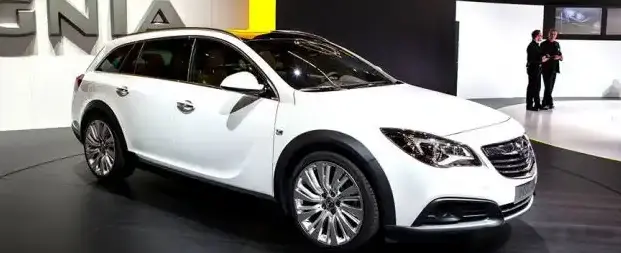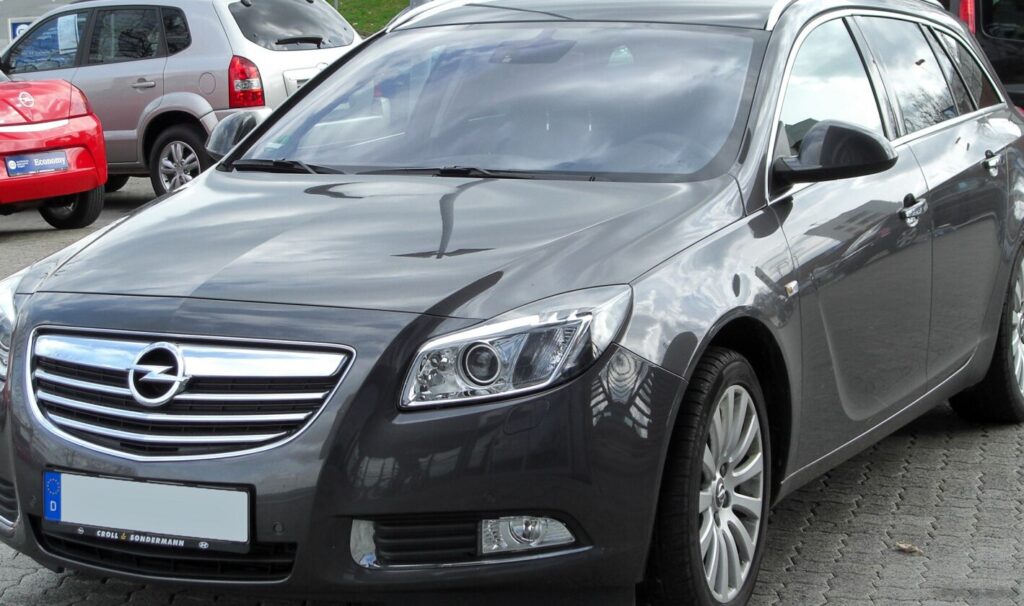
The Opel Insignia Sports Tourer (A) 2.0 Turbo (220 hp) Automatic, produced between March 2009 and June 2011, represented a significant offering in the European D-segment station wagon market. Part of the first generation (A) Insignia lineup, designated internally as the A09, this variant aimed to provide a blend of performance, practicality, and comfort. It was positioned as a mid-to-upper trim level within the Sports Tourer range, appealing to buyers seeking more power than the base engines but potentially avoiding the higher costs associated with the flagship trims. The Insignia, in general, was Opel’s attempt to move upmarket and compete with established players like the Ford Mondeo, Volkswagen Passat, and Peugeot 508.
Technical Specifications
| Brand | Opel |
| Model | Insignia |
| Generation | Insignia Sports Tourer (A) |
| Type (Engine) | 2.0 Turbo (220 Hp) Automatic |
| Start of production | March, 2009 |
| End of production | June, 2011 |
| Powertrain Architecture | Internal Combustion engine |
| Body type | Station wagon (estate) |
| Seats | 5 |
| Doors | 5 |
| Fuel consumption (urban) | 13.2 l/100 km (17.8 US mpg, 21.4 UK mpg, 7.6 km/l) |
| Fuel consumption (extra urban) | 6.4 l/100 km (36.8 US mpg, 44.1 UK mpg, 15.6 km/l) |
| Fuel consumption (combined) | 8.9 l/100 km (26.4 US mpg, 31.7 UK mpg, 11.2 km/l) |
| CO2 emissions | 209 g/km |
| Fuel Type | Petrol (Gasoline) |
| Acceleration 0 – 100 km/h | 8.1 sec |
| Acceleration 0 – 62 mph | 8.1 sec |
| Acceleration 0 – 60 mph | 7.7 sec |
| Maximum speed | 234 km/h (145.4 mph) |
| Emission standard | Euro 5 |
| Weight-to-power ratio | 7.8 kg/Hp, 127.5 Hp/tonne |
| Weight-to-torque ratio | 4.9 kg/Nm, 202.9 Nm/tonne |
| Power | 220 Hp @ 5300 rpm |
| Power per litre | 110.1 Hp/l |
| Torque | 350 Nm @ 2000-4000 rpm (258.15 lb.-ft. @ 2000-4000 rpm) |
| Engine layout | Front, Transverse |
| Engine Model/Code | A20NHT |
| Engine displacement | 1998 cm3 (121.93 cu. in.) |
| Number of cylinders | 4 |
| Engine configuration | Inline |
| Cylinder Bore | 86 mm (3.39 in.) |
| Piston Stroke | 86 mm (3.39 in.) |
| Compression ratio | 9.3:1 |
| Number of valves per cylinder | 4 |
| Fuel injection system | Direct injection |
| Engine aspiration | Twin-scroll turbo, Intercooler |
| Engine oil capacity | 6 l (6.34 US qt | 5.28 UK qt) |
| Coolant | 7.3 l (7.71 US qt | 6.42 UK qt) |
| Kerb Weight | 1725 kg (3802.97 lbs.) |
| Max. weight | 2280 kg (5026.54 lbs.) |
| Max load | 555 kg (1223.57 lbs.) |
| Trunk (boot) space – minimum | 540 l (19.07 cu. ft.) |
| Trunk (boot) space – maximum | 1530 l (54.03 cu. ft.) |
| Fuel tank capacity | 70 l (18.49 US gal | 15.4 UK gal) |
| Length | 4908 mm (193.23 in.) |
| Width | 1858 mm (73.15 in.) |
| Height | 1520 mm (59.84 in.) |
| Wheelbase | 2737 mm (107.76 in.) |
| Front track | 1585 mm (62.4 in.) |
| Rear (Back) track | 1587 mm (62.48 in.) |
| Ride height (ground clearance) | 160 mm (6.3 in.) |
| Minimum turning circle | 11.4 m (37.4 ft.) |
| Drivetrain Architecture | The Internal combustion engine (ICE) drives the front wheels of the vehicle. |
| Drive wheel | Front wheel drive |
| Number of gears and type of gearbox | 6 gears, automatic transmission |
| Front brakes | Ventilated discs |
| Rear brakes | Disc |
| Tires size | 225/55 R17; 245/45 R18 |
| Wheel rims size | 17; 18 |
Powertrain & Engine Architecture
At the heart of the Insignia Sports Tourer 2.0 Turbo Automatic lies the A20NHT engine, a 1.998-liter inline-four cylinder gasoline engine. This engine is a member of Opel’s ‘Family 1’ engine family, known for its robust construction and relatively straightforward maintenance. The A20NHT utilizes direct fuel injection, a technology that improves fuel efficiency and power output by injecting fuel directly into the combustion chamber. A twin-scroll turbocharger, coupled with an intercooler, further enhances performance by increasing air intake and reducing turbo lag. The engine produces 220 horsepower at 5300 rpm and 350 Nm (258 lb-ft) of torque between 2000 and 4000 rpm. The engine is transversely mounted in the front of the vehicle.
The automatic transmission paired with this engine is a six-speed unit, providing smooth gear changes and contributing to a more relaxed driving experience. While not known for being the sportiest automatic transmission available at the time, it was generally regarded as reliable and well-matched to the engine’s characteristics. The transmission’s gear ratios were tuned for a balance between fuel economy and acceleration.
Driving Characteristics
The 2.0 Turbo Automatic Insignia Sports Tourer offered a comfortable and capable driving experience. Acceleration from 0-60 mph took approximately 7.7 seconds, making it reasonably quick for a family-oriented station wagon. The automatic transmission, while smooth, did slightly diminish the sense of urgency compared to the six-speed manual version. The engine provided ample torque for everyday driving and overtaking maneuvers, with the peak torque available across a broad rev range. However, it wasn’t a particularly rev-happy engine, and pushing it hard towards the redline didn’t yield significant gains in performance. The suspension was tuned for comfort, providing a compliant ride over most road surfaces, but it wasn’t as sporty or engaging as some of its rivals.
Equipment & Trim Levels
The 2.0 Turbo Automatic trim typically included features such as air conditioning, a CD/radio system with auxiliary input, power windows and mirrors, and central locking. Higher-spec versions often added features like leather upholstery, heated front seats, a sunroof, and a more advanced infotainment system. Safety features included ABS brakes, electronic stability control, and multiple airbags. Optional extras could include navigation systems, parking sensors, and upgraded audio systems.
Chassis & Braking
The Insignia Sports Tourer (A) utilized a MacPherson strut front suspension and a multi-link rear suspension. The front brakes were ventilated discs, while the rear brakes were solid discs. The suspension setup was designed to provide a comfortable ride and predictable handling. Stabilizer bars were fitted to both the front and rear axles to reduce body roll during cornering. Tire sizes varied depending on the trim level, with 225/55 R17 and 245/45 R18 being common options.
Market Reception & Comparison
The Insignia Sports Tourer 2.0 Turbo Automatic was generally well-received by automotive critics. It was praised for its spacious interior, comfortable ride, and strong engine performance. However, some critics noted that the automatic transmission could feel a bit sluggish at times, and the handling wasn’t as sharp as some of its competitors. Compared to the lower-powered 1.6L and 1.8L versions, the 2.0 Turbo offered a significant performance upgrade, making it a more enjoyable car to drive, especially on longer journeys. Compared to the diesel variants, the petrol engine offered a different driving experience, with a more linear power delivery and a more responsive feel.
Legacy
The A20NHT engine, while not without its quirks, proved to be a relatively reliable unit when properly maintained. Common issues included occasional turbocharger problems and oil leaks. The six-speed automatic transmission also generally proved durable. Today, the Insignia Sports Tourer (A) 2.0 Turbo Automatic can be found on the used car market at relatively affordable prices. It remains a practical and comfortable option for those seeking a spacious station wagon with decent performance. Its blend of practicality, comfort, and reasonable running costs continues to appeal to a wide range of buyers.