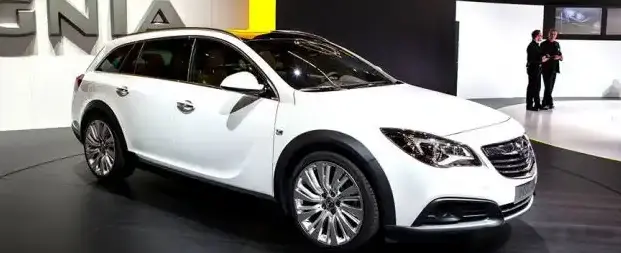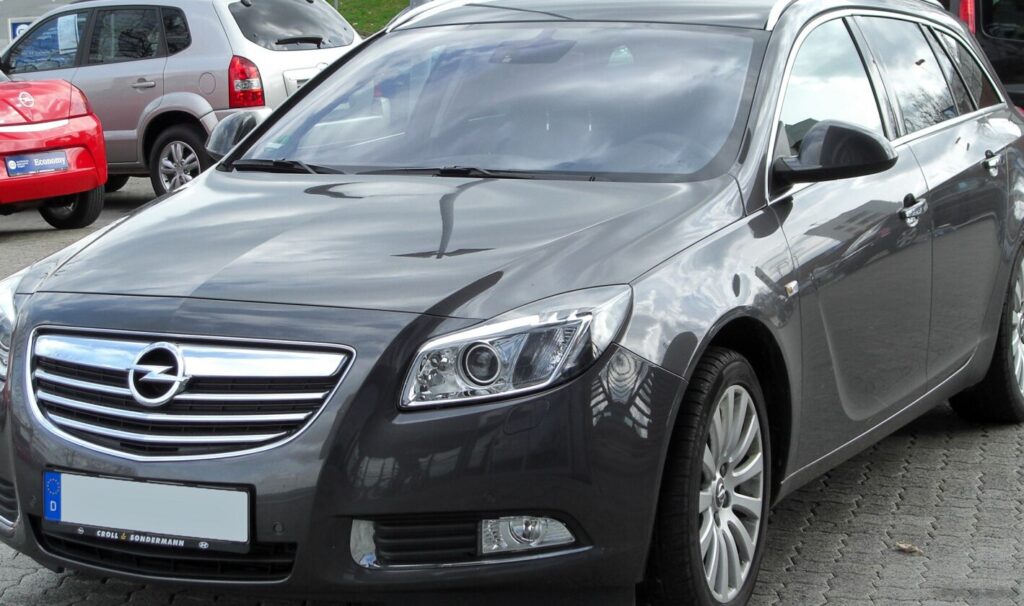
The Opel Insignia Sports Tourer (A) 2.0 Turbo 4×4, produced from July 2011 to June 2013, represented a high-performance variant within the first generation (A) of Opel’s flagship mid-size wagon. Positioned as a premium offering, it combined a potent turbocharged engine with all-wheel drive, aiming to deliver both engaging driving dynamics and practicality. This model was primarily marketed in Europe, where the station wagon (estate) body style remains popular, and served as a competitor to vehicles like the Audi A6 Avant, BMW 3 Series Touring, and Volkswagen Passat Variant. The Insignia Sports Tourer, in general, aimed to elevate Opel’s image with a more sophisticated and stylish design compared to its predecessors.
| Brand | Opel |
| Model | Insignia |
| Generation | Insignia Sports Tourer (A) |
| Type (Engine) | 2.0 Turbo (250 Hp) 4×4 |
| Start of production | July, 2011 |
| End of production | June, 2013 |
| Powertrain Architecture | Internal Combustion engine |
| Body type | Station wagon (estate) |
| Seats | 5 |
| Doors | 5 |
| Fuel consumption (urban) | 11.7 l/100 km (20.1 US mpg, 24.1 UK mpg, 8.5 km/l) |
| Fuel consumption (extra urban) | 6.6 l/100 km (35.6 US mpg, 42.8 UK mpg, 15.2 km/l) |
| Fuel consumption (combined) | 8.5 l/100 km (27.7 US mpg, 33.2 UK mpg, 11.8 km/l) |
| CO2 emissions | 199 g/km |
| Fuel Type | Petrol (Gasoline) |
| Acceleration 0 – 100 km/h | 7.8 sec |
| Acceleration 0 – 62 mph | 7.8 sec |
| Acceleration 0 – 60 mph | 7.4 sec |
| Maximum speed | 241 km/h (149.75 mph) |
| Emission standard | Euro 5 |
| Weight-to-power ratio | 7 kg/Hp, 143.4 Hp/tonne |
| Weight-to-torque ratio | 4.4 kg/Nm, 229.5 Nm/tonne |
| Power | 250 Hp @ 5300 rpm |
| Power per litre | 125.1 Hp/l |
| Torque | 400 Nm @ 2400-3600 rpm (295.02 lb.-ft. @ 2400-3600 rpm) |
| Engine layout | Front, Transverse |
| Engine Model/Code | A20NFT |
| Engine displacement | 1998 cm3 (121.93 cu. in.) |
| Number of cylinders | 4 |
| Engine configuration | Inline |
| Cylinder Bore | 86 mm (3.39 in.) |
| Piston Stroke | 86 mm (3.39 in.) |
| Compression ratio | 9.3:1 |
| Number of valves per cylinder | 4 |
| Fuel injection system | Direct injection |
| Engine aspiration | Twin-scroll turbo, Intercooler |
| Engine oil capacity | 5.7 l (6.02 US qt | 5.02 UK qt) |
| Coolant | 7.8 l (8.24 US qt | 6.86 UK qt) |
| Kerb Weight | 1743 kg (3842.66 lbs.) |
| Max. weight | 2400 kg (5291.09 lbs.) |
| Max load | 657 kg (1448.44 lbs.) |
| Trunk (boot) space – minimum | 540 l (19.07 cu. ft.) |
| Trunk (boot) space – maximum | 1530 l (54.03 cu. ft.) |
| Fuel tank capacity | 70 l (18.49 US gal | 15.4 UK gal) |
| Length | 4908 mm (193.23 in.) |
| Width | 1858 mm (73.15 in.) |
| Height | 1520 mm (59.84 in.) |
| Wheelbase | 2737 mm (107.76 in.) |
| Front track | 1585 mm (62.4 in.) |
| Rear (Back) track | 1587 mm (62.48 in.) |
| Ride height (ground clearance) | 160 mm (6.3 in.) |
| Minimum turning circle | 10.8 m (35.43 ft.) |
| Drive wheel | All wheel drive (4×4) |
| Number of gears | 6 gears, manual transmission |
| Front brakes | Ventilated discs |
| Rear brakes | Disc |
| Assisting systems | ABS (Anti-lock braking system) |
| Tires size | 225/55 R17 |
| Wheel rims size | 17 |
Powertrain & Engine Architecture
The heart of the Insignia Sports Tourer 2.0 Turbo 4×4 is the A20NFT engine, a 1.998-liter inline-four cylinder gasoline engine. This engine utilizes direct fuel injection, a technology that improves efficiency and power output by injecting fuel directly into the combustion chamber. A twin-scroll turbocharger, coupled with an intercooler, further enhances performance by increasing air density and reducing turbo lag. The engine produces 250 horsepower at 5300 rpm and 400 Nm (295 lb-ft) of torque between 2400 and 3600 rpm. The transmission is a six-speed manual gearbox, chosen for its driver engagement and efficiency. The 4×4 system employs a multi-plate clutch to distribute torque between the front and rear axles, providing enhanced traction and stability, particularly in adverse weather conditions.
Driving Characteristics
The 2.0 Turbo 4×4 Insignia Sports Tourer delivers a noticeably more spirited driving experience compared to lower-powered variants. The 250 hp engine provides ample power for confident overtaking and highway cruising. Acceleration from 0 to 60 mph takes approximately 7.4 seconds, and the car reaches a top speed of 149.75 mph. The all-wheel-drive system contributes to excellent grip and handling, inspiring confidence in corners. The six-speed manual transmission offers precise shifts, allowing drivers to fully exploit the engine’s powerband. While not a dedicated sports car, the Insignia Sports Tourer 2.0 Turbo 4×4 strikes a good balance between performance and practicality.
Equipment & Trim Levels
The 2.0 Turbo 4×4 trim typically included a generous level of standard equipment. This often featured leather upholstery, heated front seats, dual-zone climate control, and a premium audio system. Standard safety features included ABS, traction control, stability control, and multiple airbags. Optional extras could include a panoramic sunroof, navigation system, adaptive cruise control, and parking sensors. The interior design was generally modern and well-appointed, with a focus on comfort and ergonomics. The dashboard layout was functional and intuitive, with easy-to-read gauges and controls.
Chassis & Braking
The Insignia Sports Tourer’s chassis was designed to provide a comfortable yet controlled ride. The suspension system consisted of MacPherson struts at the front and a multi-link setup at the rear. The 4×4 models often featured slightly stiffer springs and dampers to compensate for the added weight of the all-wheel-drive system. Braking duties were handled by ventilated discs at the front and solid discs at the rear, providing adequate stopping power. ABS (Anti-lock Braking System) was standard, enhancing safety during emergency braking situations.
Market Reception & Comparison
The Insignia Sports Tourer 2.0 Turbo 4×4 was generally well-received by automotive critics. It was praised for its powerful engine, comfortable ride, and spacious interior. However, some reviewers noted that the car’s weight could detract from its agility. Compared to other trims in the Insignia lineup, the 2.0 Turbo 4×4 offered significantly more performance but at a higher price point and with slightly lower fuel economy. The 2.0-liter diesel variants, for example, offered comparable torque but with superior fuel efficiency, making them a popular choice for long-distance drivers. The petrol version appealed to those prioritizing performance and a more engaging driving experience.
Legacy
The A20NFT engine, while generally reliable, can be susceptible to issues with the timing chain and carbon buildup on the intake valves, particularly if not regularly serviced. The all-wheel-drive system is generally robust, but the clutch can wear over time, especially with frequent use. Today, the Insignia Sports Tourer 2.0 Turbo 4×4 represents a relatively affordable entry point into the premium wagon segment. Well-maintained examples are still sought after by enthusiasts who appreciate its blend of performance, practicality, and style. Its lasting appeal lies in its ability to offer a compelling alternative to more expensive rivals.