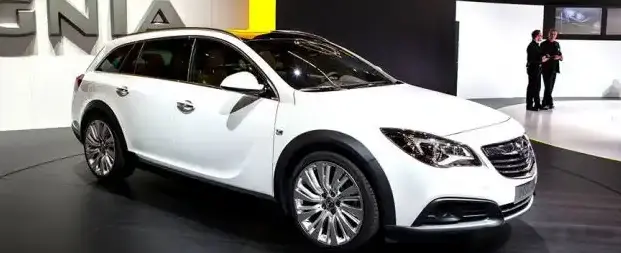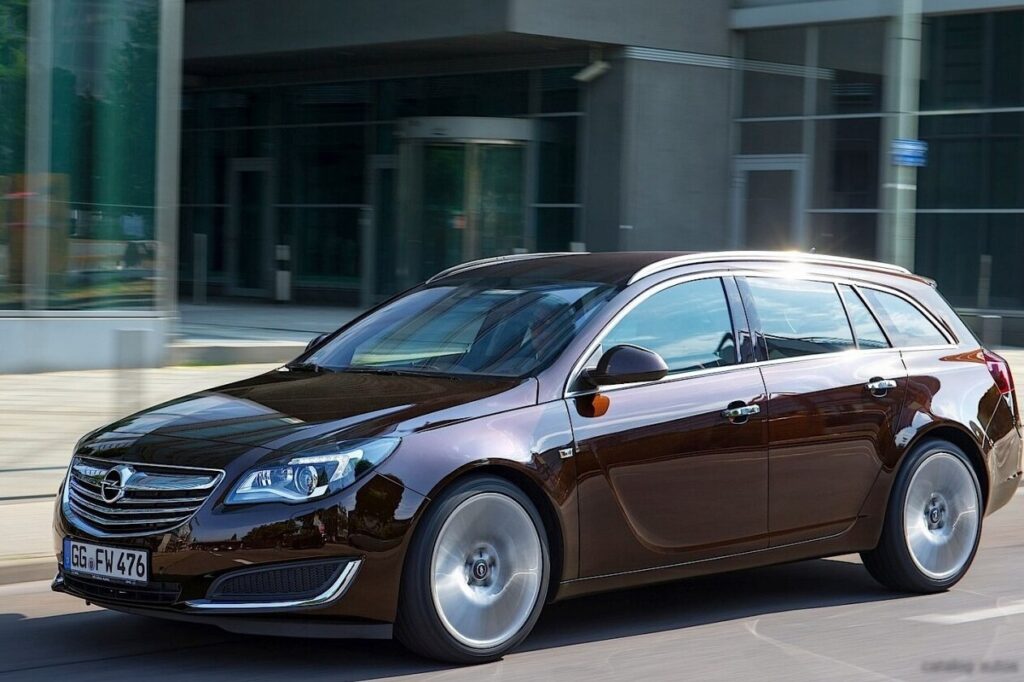
The Opel Insignia Sports Tourer, specifically the variant powered by the 1.4-liter Turbo Ecotec engine producing 140 horsepower, was a key offering in Opel’s lineup from July 2013 to January 2017. This model represented a significant update to the original Insignia (launched in 2008), incorporating styling revisions and updated technology. Positioned as a mid-range option within the Sports Tourer (estate/wagon) body style, it aimed to balance fuel efficiency with reasonable performance and practicality for families and commuters. It was built on the GM Delta II platform, also known as the 1HX0/A3 platform, shared with other vehicles like the Chevrolet Malibu and Buick Regal.
Technical Specifications
| Brand | Opel |
| Model | Insignia |
| Generation | Insignia Sports Tourer (A, facelift 2013) |
| Type (Engine) | 1.4 (140 Hp) Turbo Ecotec start/stop |
| Start of production | July, 2013 |
| End of production | January, 2017 |
| Powertrain Architecture | Internal Combustion engine |
| Body type | Station wagon (estate) |
| Seats | 5 |
| Doors | 5 |
| Fuel consumption (urban) | 7.1 l/100 km (33.1 US mpg, 39.8 UK mpg, 14.1 km/l) |
| Fuel consumption (extra urban) | 4.7 l/100 km (50 US mpg, 60.1 UK mpg, 21.3 km/l) |
| Fuel consumption (combined) | 5.6 l/100 km (42 US mpg, 50.4 UK mpg, 17.9 km/l) |
| CO2 emissions | 131 g/km |
| Fuel Type | Petrol (Gasoline) |
| Acceleration 0 – 100 km/h | 11.5 sec |
| Acceleration 0 – 62 mph | 11.5 sec |
| Acceleration 0 – 60 mph | 10.9 sec |
| Maximum speed | 200 km/h (124.27 mph) |
| Emission standard | Euro 5 |
| Power | 140 Hp @ 4900-6000 rpm |
| Power per litre | 102.6 Hp/l |
| Torque | 200 Nm @ 1850-4900 rpm (147.51 lb.-ft. @ 1850-4900 rpm) |
| Engine layout | Front, Transverse |
| Engine Model/Code | B14NET |
| Engine displacement | 1364 cm3 (83.24 cu. in.) |
| Number of cylinders | 4 |
| Engine configuration | Inline |
| Cylinder Bore | 72.5 mm (2.85 in.) |
| Piston Stroke | 82.6 mm (3.25 in.) |
| Fuel injection system | Multi-port manifold injection |
| Engine aspiration | Turbocharger, Intercooler |
| Engine oil capacity | 4 l (4.23 US qt | 3.52 UK qt) |
| Coolant | 9 l (9.51 US qt | 7.92 UK qt) |
| Trunk (boot) space – minimum | 540 l (19.07 cu. ft.) |
| Trunk (boot) space – maximum | 1530 l (54.03 cu. ft.) |
| Fuel tank capacity | 70 l (18.49 US gal | 15.4 UK gal) |
| Length | 4913 mm (193.43 in.) |
| Width | 1856 mm (73.07 in.) |
| Width including mirrors | 2084 mm (82.05 in.) |
| Height | 1513 mm (59.57 in.) |
| Wheelbase | 2737 mm (107.76 in.) |
| Front track | 1587 mm (62.48 in.) |
| Rear (Back) track | 1590 mm (62.6 in.) |
| Minimum turning circle | 11.4 m (37.4 ft.) |
| Drivetrain Architecture | The Internal combustion engine (ICE) drives the front wheels of the vehicle. |
| Drive wheel | Front wheel drive |
| Number of gears and type of gearbox | 6 gears, manual transmission |
| Front brakes | Ventilated discs |
| Assisting systems | ABS (Anti-lock braking system) |
| Steering type | Steering rack and pinion |
| Power steering | Electric Steering |
Powertrain & Engine Architecture
At the heart of this Insignia variant lies the B14NET engine, a 1.4-liter inline-four cylinder gasoline engine. This engine is part of Opel’s ‘Ecotec’ family, emphasizing efficiency and reduced emissions. It utilizes multi-port fuel injection and a single turbocharger with an intercooler to boost power output. The turbocharger helps to mitigate the typical lack of low-end torque often associated with smaller displacement engines. The engine’s design incorporates features like direct ignition coils and a lightweight construction to minimize friction and improve responsiveness. The 6-speed manual transmission was the standard offering, chosen for its balance of fuel economy and driver engagement. The transmission’s gear ratios were tuned to complement the engine’s powerband, providing adequate acceleration without sacrificing highway cruising efficiency.
Driving Characteristics
The 140 horsepower and 200 Nm (147.51 lb-ft) of torque delivered by the 1.4-liter turbo engine provided adequate, though not exhilarating, performance. Acceleration from 0-60 mph took around 10.9 seconds, making it suitable for everyday driving and highway merging. Compared to the more powerful 2.0-liter turbocharged variants, this engine felt less stressed during acceleration, but also lacked the same level of outright speed. The manual transmission offered a more engaging driving experience than the optional automatic, allowing drivers to better control the engine’s powerband. The suspension was tuned for comfort, providing a relatively smooth ride, but it wasn’t particularly sporty. Steering feel was light and precise, making it easy to maneuver in urban environments.
Equipment & Trim Levels
The 1.4 Turbo Ecotec Start/Stop trim typically came with a respectable level of standard equipment. This included air conditioning, electric windows, a basic audio system with USB connectivity, and stability control. Higher trim levels, such as the ‘Edition’ or ‘Sport’ offered additional features like alloy wheels, upgraded infotainment systems with touchscreen displays, parking sensors, and heated seats. Interior upholstery was typically cloth, with options for leather upgrades on higher trims. The dashboard layout was functional and well-designed, with a focus on ergonomics. The Start/Stop system, a key feature of this variant, automatically shut off the engine when the vehicle came to a halt, improving fuel economy in city driving.
Chassis & Braking
The Insignia Sports Tourer’s chassis featured a MacPherson strut front suspension and a multi-link rear suspension, providing a good balance of ride comfort and handling. The front brakes were ventilated discs, offering good stopping power, while the rear brakes were typically solid discs. Anti-lock Braking System (ABS) was standard, enhancing safety during emergency braking situations. Stabilizer bars were fitted to both the front and rear axles to reduce body roll during cornering. The suspension tuning was geared towards comfort, prioritizing a smooth ride over sporty handling. The steering system was an electric power steering system, providing light and precise steering feel.
Market Reception & Comparison
The 1.4 Turbo Ecotec variant of the Insignia Sports Tourer was generally well-received by critics as a sensible and economical option. It offered a good balance of fuel efficiency and practicality, making it a popular choice for families and commuters. Compared to the more powerful 2.0-liter variants, it was less expensive to purchase and operate, but it also lacked the same level of performance. Fuel economy was a strong point, with combined figures around 5.6 l/100 km (42 US mpg). Reliability was generally good, although some owners reported minor issues with the turbocharger and fuel injection system. The 1.9 CDTI diesel variants were often favored by those prioritizing fuel economy above all else, while the 2.0-liter petrol models appealed to drivers seeking more performance.
Legacy
The 1.4 Turbo Ecotec engine proved to be a relatively reliable unit, although regular maintenance is crucial to ensure longevity. The Insignia Sports Tourer, in general, has established a reputation as a practical and spacious estate car. On the used car market, this variant represents a good value proposition, offering a comfortable and economical driving experience. While not the most exciting version of the Insignia, it remains a popular choice for those seeking a well-rounded and affordable family car. Parts availability is generally good, and maintenance costs are reasonable, making it a viable option for budget-conscious buyers.