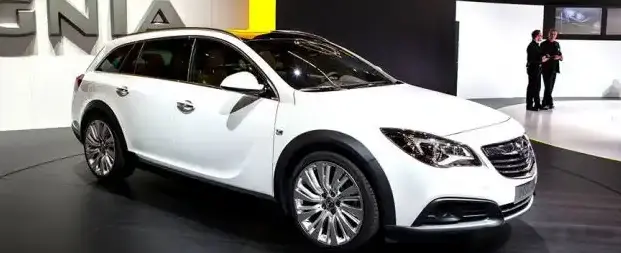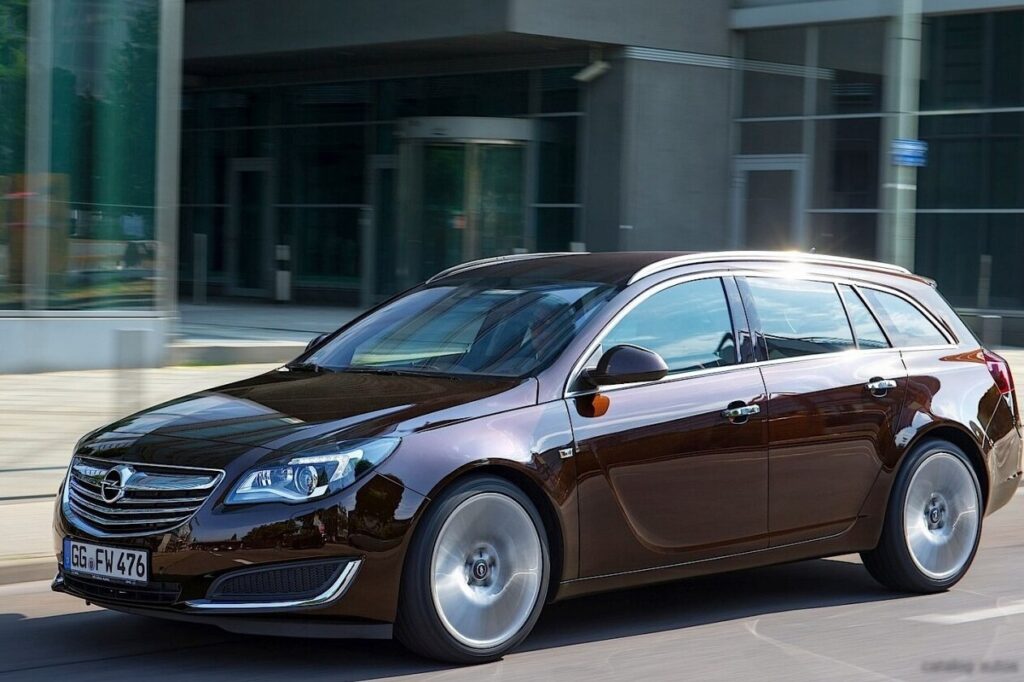
The Opel Insignia Sports Tourer, specifically the variant powered by the 1.6-liter Turbo Ecotec engine producing 170 horsepower, was a key offering in Opel’s lineup from July 2013 to January 2017. This model represented a significant update to the original Insignia (launched in 2008), incorporating styling revisions and refined powertrain options. Positioned as a mid-range trim, it aimed to balance performance, fuel efficiency, and practicality for families and drivers seeking a spacious and comfortable estate car. The Insignia Sports Tourer competed directly with vehicles like the Ford Mondeo Estate, Volkswagen Passat Variant, and Peugeot 508 SW in the European market.
Technical Specifications
| Brand | Opel |
| Model | Insignia |
| Generation | Insignia Sports Tourer (A, facelift 2013) |
| Type (Engine) | 1.6 (170 Hp) Turbo Ecotec |
| Start of production | July, 2013 |
| End of production | January, 2017 |
| Powertrain Architecture | Internal Combustion engine |
| Body type | Station wagon (estate) |
| Seats | 5 |
| Doors | 5 |
| Fuel consumption (urban) | 7.8 l/100 km (30.2 US mpg, 36.2 UK mpg, 12.8 km/l) |
| Fuel consumption (extra urban) | 5.3 l/100 km (44.4 US mpg, 53.3 UK mpg, 18.9 km/l) |
| Fuel consumption (combined) | 6.2 l/100 km (37.9 US mpg, 45.6 UK mpg, 16.1 km/l) |
| CO2 emissions | 146 g/km |
| Fuel Type | Petrol (Gasoline) |
| Acceleration 0 – 100 km/h | 9.8 sec |
| Acceleration 0 – 62 mph | 9.8 sec |
| Acceleration 0 – 60 mph | 9.3 sec |
| Maximum speed | 215 km/h (133.59 mph) |
| Emission standard | Euro 5 |
| Power | 170 Hp @ 4250 rpm |
| Torque | 260 Nm @ 1650-4250 rpm (191.77 lb.-ft. @ 1650-4250 rpm) |
| Engine layout | Front, Transverse |
| Engine Model/Code | A16XHT, B16SHL |
| Engine displacement | 1598 cm3 (97.52 cu. in.) |
| Number of cylinders | 4 |
| Engine configuration | Inline |
| Cylinder Bore | 79 mm (3.11 in.) |
| Piston Stroke | 81.5 mm (3.21 in.) |
| Fuel injection system | Multi-port manifold injection |
| Engine aspiration | Turbocharger, Intercooler |
| Engine oil capacity | 5.5 l (5.81 US qt | 4.84 UK qt) |
| Coolant | 5.8 l (6.13 US qt | 5.1 UK qt) |
| Trunk (boot) space – minimum | 540 l (19.07 cu. ft.) |
| Trunk (boot) space – maximum | 1530 l (54.03 cu. ft.) |
| Fuel tank capacity | 70 l (18.49 US gal | 15.4 UK gal) |
| Length | 4913 mm (193.43 in.) |
| Width | 1856 mm (73.07 in.) |
| Width including mirrors | 2084 mm (82.05 in.) |
| Height | 1513 mm (59.57 in.) |
| Wheelbase | 2737 mm (107.76 in.) |
| Front track | 1587 mm (62.48 in.) |
| Rear (Back) track | 1590 mm (62.6 in.) |
| Minimum turning circle | 11.4 m (37.4 ft.) |
| Drivetrain Architecture | The Internal combustion engine (ICE) drives the front wheels of the vehicle. |
| Drive wheel | Front wheel drive |
| Number of gears and type of gearbox | 6 gears, manual transmission |
| Front brakes | Ventilated discs |
| Assisting systems | ABS (Anti-lock braking system) |
| Steering type | Steering rack and pinion |
| Power steering | Electric Steering |
Powertrain & Engine Architecture
The heart of this Insignia variant is the 1.6-liter (1598 cc) turbocharged four-cylinder engine, designated as either A16XHT or B16SHL depending on the specific production date and market. This engine belongs to Opel’s Ecotec family, known for its focus on efficiency and refinement. It utilizes multi-port fuel injection and a single turbocharger with an intercooler to boost power output to 170 horsepower at 4250 rpm and 260 Nm (191.77 lb-ft) of torque between 1650 and 4250 rpm. The engine’s architecture is a conventional inline-four configuration with a cast iron block and aluminum cylinder head. The six-speed manual transmission was standard, providing a balance between fuel economy and driver engagement. The transmission’s gear ratios were tuned to maximize the engine’s torque delivery, offering reasonable acceleration and highway cruising ability.
Driving Characteristics
The 1.6-liter Turbo Ecotec-equipped Insignia Sports Tourer offered a comfortable and composed driving experience. While not overtly sporty, the 170 hp output provided adequate performance for everyday driving and longer journeys. Acceleration from 0 to 60 mph took around 9.3 seconds, and the car could reach a top speed of 215 km/h (133.59 mph). Compared to the more powerful 2.0-liter Turbo variants, this engine felt less eager to rev, but it delivered a broader, more accessible torque curve. The manual transmission allowed for precise gear changes, and the clutch was relatively light and easy to operate. The suspension, tuned for comfort, absorbed bumps and imperfections in the road well, making it a pleasant vehicle for long-distance travel. However, drivers seeking a more dynamic experience might find the steering a bit numb and the chassis less responsive than some of its rivals.
Equipment & Trim Levels
The 1.6-liter Turbo Ecotec variant of the Insignia Sports Tourer typically came with a respectable level of standard equipment. This included air conditioning, electric front and rear windows, a CD/MP3 stereo system, alloy wheels, and ABS brakes. Higher trim levels, often denoted by additional packages, added features such as leather upholstery, heated front seats, a touchscreen infotainment system with navigation, parking sensors, and automatic climate control. Interior upholstery was typically cloth on the base models, with leather options available as upgrades. The dashboard layout was functional and well-designed, with clear instrumentation and intuitive controls.
Chassis & Braking
The Insignia Sports Tourer featured a front-wheel-drive layout with a MacPherson strut suspension at the front and a multi-link suspension at the rear. This setup provided a good balance between ride comfort and handling. The front brakes were ventilated discs, while the rear brakes were typically solid discs on most variants. ABS (Anti-lock Braking System) was standard, enhancing braking performance and stability. The steering system was an electric power-assisted rack and pinion, offering a reasonable level of assistance and feedback.
Market Reception & Comparison
The 1.6-liter Turbo Ecotec Insignia Sports Tourer was generally well-received by automotive critics as a practical and efficient estate car. It was praised for its spacious interior, comfortable ride, and reasonable fuel economy (around 37.9 US mpg combined). However, some reviewers noted that the engine lacked the outright performance of its larger-displacement counterparts. Compared to the 2.0-liter Turbo models, the 1.6-liter version offered lower running costs but sacrificed some driving excitement. Against competitors like the Ford Mondeo Estate and Volkswagen Passat Variant, the Insignia Sports Tourer offered a compelling combination of value, space, and features.
Legacy
The 1.6-liter Turbo Ecotec engine proved to be a relatively reliable unit, although, like any turbocharged engine, it required regular maintenance and oil changes. The Insignia Sports Tourer, in general, has established a reputation as a dependable and practical family car. On the used car market, these models represent good value for money, offering a lot of space and equipment for a reasonable price. However, potential buyers should be aware of potential issues with the turbocharger and fuel injection system, and a thorough inspection is recommended before purchase. The Insignia Sports Tourer, particularly this 1.6L variant, remains a popular choice for those seeking a spacious, comfortable, and efficient estate car.