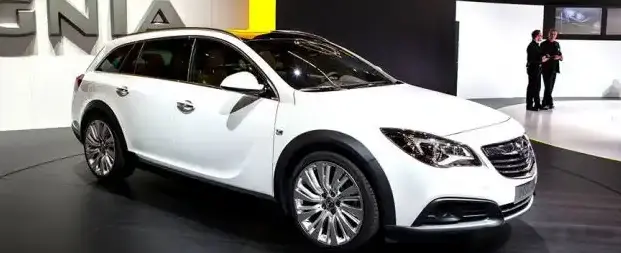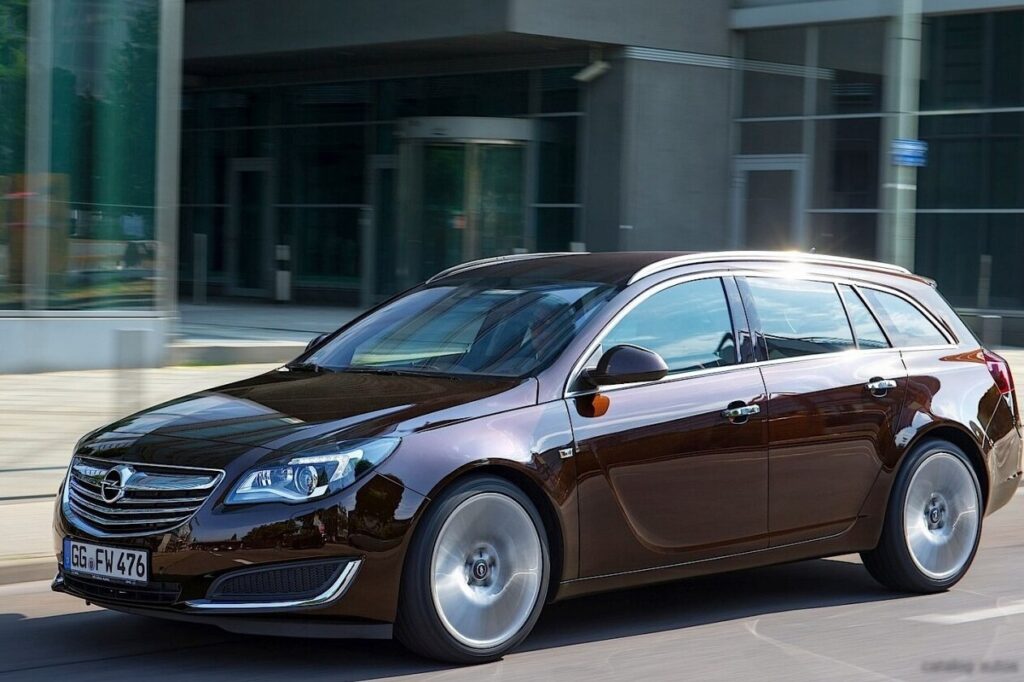
The Opel Insignia Sports Tourer, specifically the 2.0 (250 hp) AWD Turbo Ecotec Start/Stop variant produced from July 2013 to January 2017, represents a significant offering in the European D-segment station wagon market. This model, part of the Insignia A facelift (often referred to as the ‘A’ generation post-refresh), aimed to combine practicality, performance, and a degree of premium appeal. It served as a flagship trim for those seeking a powerful and capable estate car, positioned above the lower-powered engine options and front-wheel-drive variants within the Insignia range. The Sports Tourer body style, Opel’s designation for a station wagon, was crucial to the Insignia’s success, offering a compelling alternative to traditional saloons.
Technical Specifications
| Brand | Opel |
| Model | Insignia |
| Generation | Insignia Sports Tourer (A, facelift 2013) |
| Type (Engine) | 2.0 (250 Hp) AWD Turbo Ecotec start/stop |
| Start of production | July, 2013 |
| End of production | January, 2017 |
| Powertrain Architecture | Internal Combustion engine |
| Body type | Station wagon (estate) |
| Seats | 5 |
| Doors | 5 |
| Fuel consumption (urban) | 10.7 l/100 km (22 US mpg, 26.4 UK mpg, 9.3 km/l) |
| Fuel consumption (extra urban) | 6.5 l/100 km (36.2 US mpg, 43.5 UK mpg, 15.4 km/l) |
| Fuel consumption (combined) | 8.1 l/100 km (29 US mpg, 34.9 UK mpg, 12.3 km/l) |
| CO2 emissions | 189 g/km |
| Fuel Type | Petrol (Gasoline) |
| Acceleration 0 – 100 km/h | 7.8 sec |
| Acceleration 0 – 62 mph | 7.8 sec |
| Acceleration 0 – 60 mph | 7.4 sec |
| Maximum speed | 240 km/h (149.13 mph) |
| Emission standard | Euro 5 |
| Power | 250 Hp @ 5300 rpm |
| Torque | 400 Nm @ 2500-4000 rpm (295.02 lb.-ft. @ 2500-4000 rpm) |
| Engine layout | Front, Transverse |
| Engine Model/Code | A20NHT, B20NHT |
| Engine displacement | 1998 cm3 (121.93 cu. in.) |
| Number of cylinders | 4 |
| Engine configuration | Inline |
| Cylinder Bore | 86 mm (3.39 in.) |
| Piston Stroke | 86 mm (3.39 in.) |
| Fuel injection system | Direct injection |
| Engine aspiration | Turbocharger, Intercooler |
| Engine oil capacity | 6 l (6.34 US qt | 5.28 UK qt) |
| Coolant | 8 l (8.45 US qt | 7.04 UK qt) |
| Trunk (boot) space – minimum | 540 l (19.07 cu. ft.) |
| Trunk (boot) space – maximum | 1530 l (54.03 cu. ft.) |
| Fuel tank capacity | 70 l (18.49 US gal | 15.4 UK gal) |
| Length | 4913 mm (193.43 in.) |
| Width | 1856 mm (73.07 in.) |
| Width including mirrors | 2084 mm (82.05 in.) |
| Height | 1513 mm (59.57 in.) |
| Wheelbase | 2737 mm (107.76 in.) |
| Front track | 1587 mm (62.48 in.) |
| Rear (Back) track | 1590 mm (62.6 in.) |
| Minimum turning circle | 11.4 m (37.4 ft.) |
| Drive wheel | All wheel drive (4×4) |
| Number of gears | 6 |
| Gearbox type | Manual transmission |
| Front brakes | Ventilated discs |
| Assisting systems | ABS (Anti-lock braking system) |
| Steering type | Steering rack and pinion |
| Power steering | Electric Steering |
Powertrain & Engine Architecture
At the heart of this Insignia Sports Tourer lies the 2.0-liter turbocharged four-cylinder engine, designated as either A20NHT or B20NHT depending on minor production variations. This engine is a member of Opel’s ‘Ecotec’ family, emphasizing efficiency and performance. The engine utilizes direct fuel injection, a technology that improves combustion efficiency and power output. The turbocharger, coupled with an intercooler, forces more air into the cylinders, boosting horsepower and torque. The engine produces 250 hp at 5300 rpm and a substantial 400 Nm (295 lb-ft) of torque available between 2500 and 4000 rpm. This broad torque curve contributes to strong acceleration and effortless cruising. The engine is transversely mounted in the front of the vehicle. The six-speed manual transmission was the standard offering, providing drivers with full control over gear selection.
Driving Characteristics
The 2.0-liter 250 hp AWD variant delivers a noticeably more engaging driving experience compared to the lower-powered Insignia models. Acceleration to 60 mph is achieved in approximately 7.4 seconds, and the car feels responsive in most driving situations. The all-wheel-drive system provides excellent traction, particularly in adverse weather conditions, enhancing stability and confidence. The manual transmission, while offering greater driver involvement, has a slightly longer throw than some competitors. The gear ratios are well-matched to the engine’s torque curve, allowing for brisk acceleration in each gear. Compared to the 1.6-liter turbo or diesel variants, this model offers a significant performance upgrade, but at the cost of slightly higher fuel consumption.
Equipment & Trim Levels
The 2.0 (250 hp) AWD Sports Tourer typically came equipped with a generous level of standard features. These included automatic climate control, a touchscreen infotainment system with navigation, Bluetooth connectivity, and a suite of safety features such as ABS, ESP (Electronic Stability Program), and multiple airbags. Interior upholstery was typically cloth or leather, with higher trims offering premium leather options. Optional extras included a panoramic sunroof, adaptive cruise control, heated seats, and a premium sound system. The trim level often dictated the exterior styling details, such as alloy wheel design and chrome accents.
Chassis & Braking
The Insignia Sports Tourer’s chassis is designed to balance comfort and handling. The suspension utilizes MacPherson struts at the front and a multi-link setup at the rear. The all-wheel-drive system adds weight, but also enhances stability and cornering grip. Braking duties are handled by ventilated discs at the front and solid discs at the rear. ABS (Anti-lock Braking System) is standard, providing enhanced stopping power and control. The steering is electrically assisted, offering a reasonable level of feedback and precision.
Market Reception & Comparison
The Opel Insignia Sports Tourer 2.0 (250 hp) AWD was generally well-received by automotive critics. It was praised for its spacious interior, comfortable ride, and strong performance. However, some reviewers noted that the interior design, while functional, lacked the premium feel of some competitors. Fuel economy, while respectable, was not class-leading. Compared to rivals like the Ford Mondeo Estate and Volkswagen Passat Variant, the Insignia offered a compelling combination of value and performance. The 1.6-liter turbo and diesel variants were more fuel-efficient but lacked the outright performance of the 2.0-liter model.
Legacy
The 2.0-liter turbocharged engine in the Insignia Sports Tourer has proven to be relatively reliable, although regular maintenance is crucial. Common issues include turbocharger wear and potential oil leaks. The all-wheel-drive system is generally robust, but requires periodic servicing. On the used car market, this variant holds its value reasonably well, particularly examples with a full service history and low mileage. It remains a popular choice for those seeking a practical, spacious, and relatively powerful estate car. The Insignia Sports Tourer, in its various forms, helped establish Opel as a credible competitor in the European D-segment, offering a compelling alternative to established rivals.