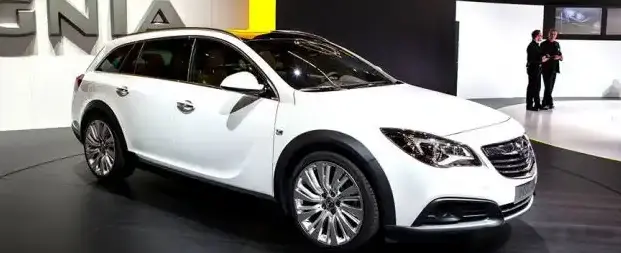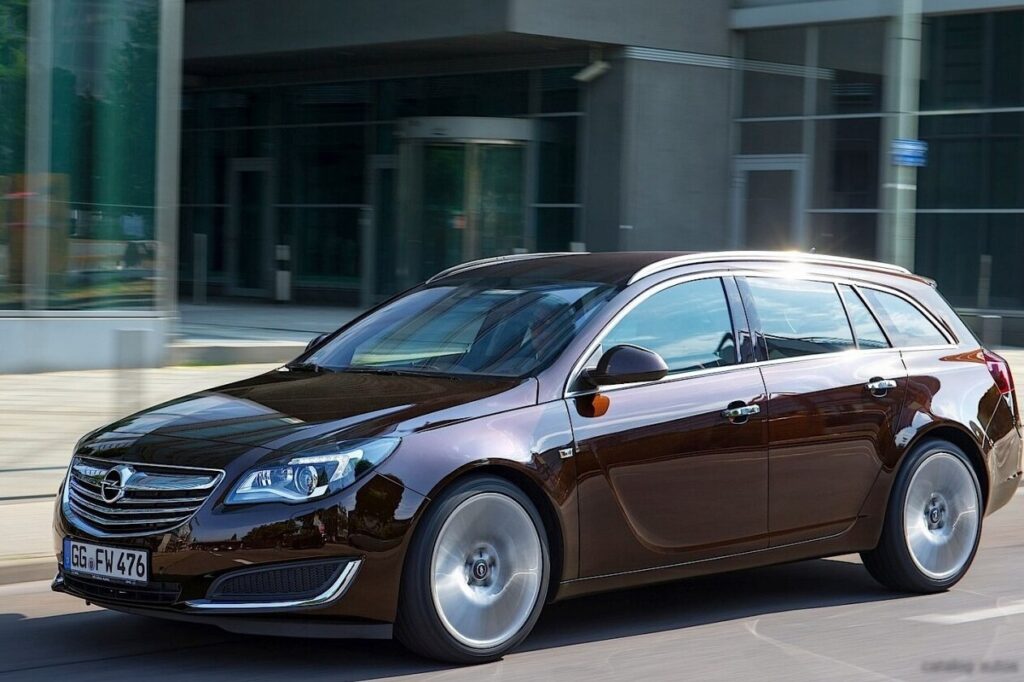
The Opel Insignia Sports Tourer, specifically the 2.0 CDTI (130 hp) Ecotec variant produced from July 2013 to June 2015, represents a significant offering in the European D-segment station wagon market. This model falls within the A generation (facelift) of the Insignia, built on the GM Delta platform (often referred to as the 1HX0/A3 platform). Positioned as a mid-range option, it aimed to balance fuel efficiency, practicality, and reasonable performance for family and business users. The Sports Tourer body style, Opel’s designation for a station wagon, provided increased cargo capacity compared to the hatchback version, making it a popular choice for those needing versatile space.
Technical Specifications
| Brand | Opel |
| Model | Insignia |
| Generation | Insignia Sports Tourer (A, facelift 2013) |
| Type (Engine) | 2.0 CDTI (130 Hp) Ecotec |
| Start of production | July, 2013 |
| End of production | June, 2015 |
| Powertrain Architecture | Internal Combustion engine |
| Body type | Station wagon (estate) |
| Seats | 5 |
| Doors | 5 |
| Fuel consumption (urban) | 5.9 l/100 km (39.9 US mpg, 47.9 UK mpg, 16.9 km/l) |
| Fuel consumption (extra urban) | 4 l/100 km (58.8 US mpg, 70.6 UK mpg, 25 km/l) |
| Fuel consumption (combined) | 4.7 l/100 km (50 US mpg, 60.1 UK mpg, 21.3 km/l) |
| CO2 emissions | 124 g/km |
| Fuel Type | Diesel |
| Acceleration 0 – 100 km/h | 11.6 sec |
| Acceleration 0 – 62 mph | 11.6 sec |
| Acceleration 0 – 60 mph | 11 sec |
| Maximum speed | 200 km/h (124.27 mph) |
| Emission standard | Euro 5 |
| Power | 130 Hp @ 4000 rpm |
| Torque | 300 Nm @ 1750-2500 rpm (221.27 lb.-ft. @ 1750-2500 rpm) |
| Engine layout | Front, Transverse |
| Engine Model/Code | A20DT |
| Engine displacement | 1956 cm3 (119.36 cu. in.) |
| Number of cylinders | 4 |
| Engine configuration | Inline |
| Cylinder Bore | 83 mm (3.27 in.) |
| Piston Stroke | 90.4 mm (3.56 in.) |
| Fuel injection system | Diesel Commonrail |
| Engine aspiration | Turbocharger, Intercooler |
| Engine oil capacity | 4.5 l (4.76 US qt | 3.96 UK qt) |
| Coolant | 9 l (9.51 US qt | 7.92 UK qt) |
| Trunk (boot) space – minimum | 540 l (19.07 cu. ft.) |
| Trunk (boot) space – maximum | 1530 l (54.03 cu. ft.) |
| Fuel tank capacity | 70 l (18.49 US gal | 15.4 UK gal) |
| Length | 4913 mm (193.43 in.) |
| Width | 1856 mm (73.07 in.) |
| Width including mirrors | 2084 mm (82.05 in.) |
| Height | 1513 mm (59.57 in.) |
| Wheelbase | 2737 mm (107.76 in.) |
| Front track | 1587 mm (62.48 in.) |
| Rear (Back) track | 1590 mm (62.6 in.) |
| Minimum turning circle | 11.4 m (37.4 ft.) |
| Drivetrain Architecture | Front wheel drive |
| Number of gears | 6 gears, manual transmission |
| Front brakes | Ventilated discs |
| Assisting systems | ABS (Anti-lock braking system) |
| Steering type | Steering rack and pinion |
| Power steering | Electric Steering |
Powertrain & Engine Architecture
The heart of this Insignia variant is the A20DT 2.0-liter four-cylinder diesel engine. This engine is part of Opel/Vauxhall’s Ecotec family, known for its focus on efficiency and refinement. The A20DT utilizes a common rail direct injection system, delivering fuel at extremely high pressure for optimized combustion. A turbocharger with an intercooler is employed to boost power output and improve torque across a wider rev range. The engine produces 130 horsepower at 4000 rpm and 300 Nm (221 lb-ft) of torque between 1750 and 2500 rpm. This torque curve provides good low-end responsiveness, suitable for everyday driving and hauling loads. The engine is transversely mounted in the front of the vehicle. The transmission is a six-speed manual gearbox, chosen for its efficiency and driver engagement, although an automatic option was available in other trims.
Driving Characteristics
The 130 hp 2.0 CDTI with the manual transmission delivers a respectable, if not exhilarating, driving experience. Acceleration from 0-60 mph takes around 11 seconds, and top speed is limited to 124 mph. The focus is on usability rather than outright performance. The gear ratios are tuned for fuel economy, with taller gearing in higher gears for relaxed cruising. While it doesn’t offer the punch of the higher-output 2.0 CDTI variants or the petrol engines, the 130 hp version provides sufficient power for overtaking and maintaining highway speeds. Compared to the more powerful versions, this trim feels less strained during acceleration, and the manual gearbox allows for greater control over engine speed. The relatively low power output also means the chassis isn’t pushed to its limits, resulting in a comfortable ride.
Equipment & Trim Levels
The 2.0 CDTI (130 hp) Ecotec typically came equipped as a mid-range trim level, often designated as ‘Exclusiv’ or similar depending on the specific market. Standard features generally included air conditioning, electric windows, a CD/radio system with auxiliary input, alloy wheels, and basic safety equipment like ABS and multiple airbags. Higher trim levels added features such as leather upholstery, a touchscreen infotainment system, parking sensors, and automatic climate control. Optional extras included a panoramic sunroof, navigation system, and upgraded audio systems. Interior upholstery was typically cloth, with a functional and durable design. The dashboard layout was clean and straightforward, prioritizing ease of use.
Chassis & Braking
The Insignia Sports Tourer’s chassis is based on a front-wheel-drive configuration with independent suspension at the front (typically McPherson struts) and a semi-independent torsion beam setup at the rear. This suspension setup provides a good balance between ride comfort and handling. The 130 hp variant, being lighter than some of the higher-powered models, benefits from a slightly more agile feel. Braking is handled by ventilated discs at the front and solid discs at the rear. ABS (Anti-lock Braking System) is standard, providing enhanced stopping power and stability. Stabilizer bars are fitted to both the front and rear axles to reduce body roll during cornering.
Market Reception & Comparison
The Opel Insignia Sports Tourer 2.0 CDTI (130 hp) was generally well-received by automotive critics as a practical and fuel-efficient family car. It was praised for its spacious interior, comfortable ride, and good fuel economy (around 50 US mpg combined). However, some reviewers noted that the engine lacked the refinement and performance of some of its competitors, and the interior materials weren’t as premium as those found in some other D-segment wagons. Compared to the 1.6 CDTI variant, the 2.0 CDTI offered more power and torque, albeit at a slightly higher price point. Against the petrol-powered Insignias, the 2.0 CDTI provided significantly better fuel economy, making it a more sensible choice for high-mileage drivers.
Legacy
The A20DT engine, while not without its share of common diesel issues like DPF (Diesel Particulate Filter) clogging and potential EGR valve problems, has proven to be relatively durable when properly maintained. The Insignia Sports Tourer 2.0 CDTI (130 hp) remains a popular choice in the used car market, offering a good balance of practicality, fuel efficiency, and affordability. Parts availability is generally good, and maintenance costs are reasonable. However, potential buyers should be aware of the common diesel engine issues and ensure the vehicle has a full service history. The Insignia Sports Tourer, in general, helped establish Opel as a serious contender in the competitive D-segment, offering a compelling alternative to established rivals like the Ford Mondeo and Volkswagen Passat.