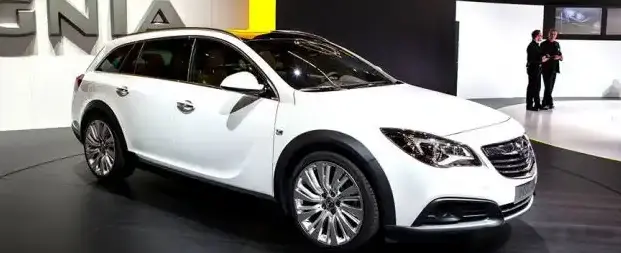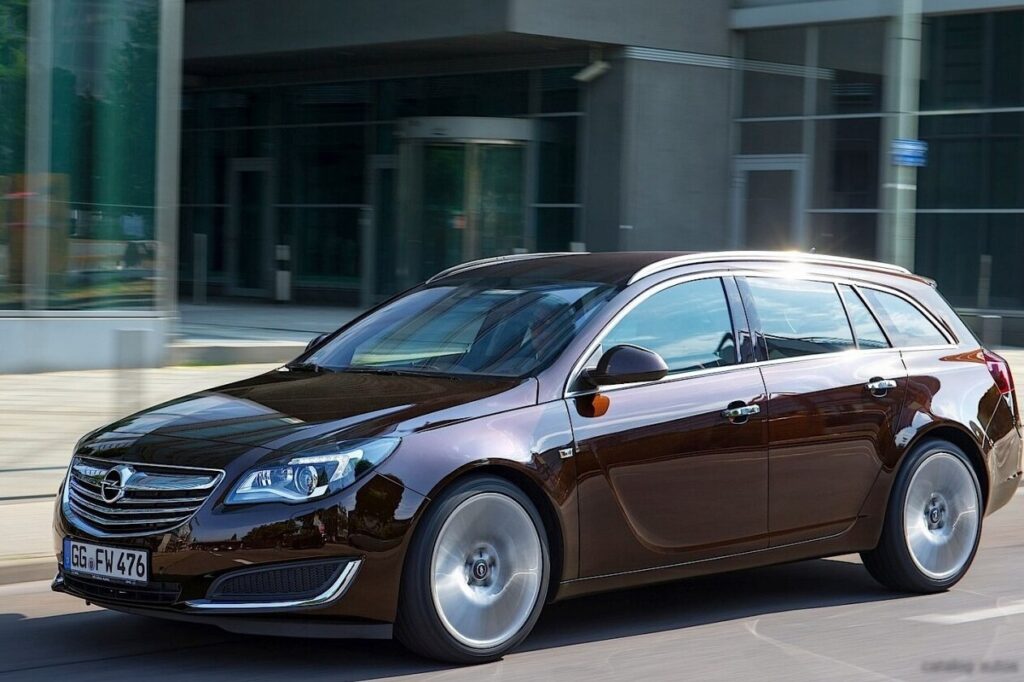
The Opel Insignia Sports Tourer, specifically the 2.0 CDTI variant producing 170 horsepower, represented a significant offering in the European D-segment station wagon market. Production of this particular configuration ran from July 2015 to January 2017, falling within the A generation (facelifted in 2013) of the Insignia. Positioned as a mid-range option, it aimed to balance fuel efficiency, practicality, and a reasonable level of performance for family and business users. The Sports Tourer body style, Opel’s designation for a station wagon, was crucial to the Insignia’s appeal, offering increased cargo capacity compared to the hatchback version.
Technical Specifications
| Brand | Opel |
| Model | Insignia |
| Generation | Insignia Sports Tourer (A, facelift 2013) |
| Type (Engine) | 2.0 CDTI (170 Hp) |
| Start of production | July, 2015 |
| End of production | January, 2017 |
| Powertrain Architecture | Internal Combustion engine |
| Body type | Station wagon (estate) |
| Seats | 5 |
| Doors | 5 |
| Fuel consumption (urban) | 5.8-5.7 l/100 km (40.6 – 41.3 US mpg) |
| Fuel consumption (extra urban) | 4.0-3.8 l/100 km (58.8 – 61.9 US mpg) |
| Fuel consumption (combined) | 4.7-4.5 l/100 km (50 – 52.3 US mpg) |
| CO2 emissions | 124-119 g/km |
| Fuel Type | Diesel |
| Acceleration 0 – 100 km/h | 9.9 sec |
| Acceleration 0 – 62 mph | 9.9 sec |
| Acceleration 0 – 60 mph | 9.4 sec |
| Maximum speed | 220 km/h (136.7 mph) |
| Emission standard | Euro 6 |
| Weight-to-power ratio | 9.8 kg/Hp |
| Weight-to-torque ratio | 4.1 kg/Nm |
| Power | 170 Hp @ 3750 rpm |
| Torque | 400 Nm @ 1750-2500 rpm (295.02 lb.-ft. @ 1750-2500 rpm) |
| Engine layout | Front, Transverse |
| Engine Model/Code | B20DTH |
| Engine displacement | 1956 cm3 (119.36 cu. in.) |
| Number of cylinders | 4 |
| Engine configuration | Inline |
| Cylinder Bore | 83 mm (3.27 in.) |
| Piston Stroke | 90.4 mm (3.56 in.) |
| Compression ratio | 16:1 |
| Fuel injection system | Diesel Commonrail |
| Engine aspiration | Turbocharger, Intercooler |
| Engine oil capacity | 4.9 l (5.18 US qt | 4.31 UK qt) |
| Coolant capacity | 7 l (7.4 US qt | 6.16 UK qt) |
| Kerb Weight | 1658 kg (3655.26 lbs.) |
| Max. weight | 2310 kg (5092.68 lbs.) |
| Max load | 652 kg (1437.41 lbs.) |
| Trunk (boot) space – minimum | 540 l (19.07 cu. ft.) |
| Trunk (boot) space – maximum | 1530 l (54.03 cu. ft.) |
| Fuel tank capacity | 70 l (18.49 US gal | 15.4 UK gal) |
| Max. roof load | 100 kg (220.46 lbs.) |
| Permitted trailer load with brakes (12%) | 1800 kg (3968.32 lbs.) |
| Permitted trailer load without brakes | 750 kg (1653.47 lbs.) |
| Length | 4913 mm (193.43 in.) |
| Width | 1856 mm (73.07 in.) |
| Width including mirrors | 2084 mm (82.05 in.) |
| Height | 1513 mm (59.57 in.) |
| Wheelbase | 2737 mm (107.76 in.) |
| Front track | 1587 mm (62.48 in.) |
| Rear track | 1590 mm (62.6 in.) |
| Minimum turning circle | 11.40 m (37.4 ft.) |
| Drivetrain | Front wheel drive |
| Number of gears | 6 |
| Gearbox type | Manual transmission |
| Front brakes | Ventilated discs |
| Rear brakes | Disc |
INTRODUCTION
The Opel Insignia Sports Tourer 2.0 CDTI (170 Hp) was a key variant within the broader Insignia range, launched as part of the A-generation’s facelift in 2013 and produced through 2017. Built on the GM Delta platform (specifically the 1HX0/A3 variant), the Insignia aimed to elevate Opel’s presence in the mid-size segment, competing with established rivals like the Ford Mondeo, Volkswagen Passat, and Peugeot 508. The Sports Tourer body style, a station wagon, was designed to appeal to buyers prioritizing cargo space and versatility. This 170 horsepower diesel engine, coupled with a manual transmission, offered a balance between fuel economy and acceptable performance, making it a popular choice for both private and fleet customers.
Powertrain & Engine Architecture
At the heart of this Insignia variant lies the B20DTH engine, a 2.0-liter inline-four cylinder diesel. This engine is a member of Opel/GM’s family of common-rail direct injection diesel engines. The B20DTH utilizes a high-pressure common rail fuel injection system, delivering fuel at up to 1800 bar for optimized combustion and reduced emissions. A turbocharger with an intercooler is employed to boost power output and improve torque delivery. The engine features a 16:1 compression ratio and utilizes four valves per cylinder (DOHC valvetrain). The 6-speed manual transmission was the standard offering for this trim, providing drivers with full control over gear selection. The engine also incorporates a diesel particulate filter (DPF) to meet stringent Euro 6 emission standards.
Driving Characteristics
The 170 horsepower and 400 Nm (295 lb-ft) of torque provided by the B20DTH engine delivered adequate performance for everyday driving. Acceleration from 0-62 mph (0-100 km/h) took approximately 9.9 seconds, and the car could reach a top speed of 220 km/h (136.7 mph). While not a particularly sporty vehicle, the engine offered a broad torque curve, making it responsive in most driving situations. The manual transmission allowed for precise gear changes, and the gear ratios were well-suited for both highway cruising and urban driving. Compared to the higher-output 2.0 CDTI BiTurbo variants, this 170 hp version felt less urgent in acceleration, but it offered significantly better fuel economy. Compared to the petrol engines, the diesel provided superior torque and fuel efficiency, albeit with a slightly more noticeable engine noise.
Equipment & Trim Levels
The Insignia Sports Tourer 2.0 CDTI (170 Hp) typically came equipped with a respectable level of standard features. These included air conditioning, electric windows, a CD/radio system with USB connectivity, and alloy wheels. Safety features such as ABS, ESP (Electronic Stability Program), and multiple airbags were also standard. Higher trim levels, such as ‘Sport’ or ‘Elite’, added features like leather upholstery, heated seats, a touchscreen infotainment system with navigation, and advanced driver-assistance systems like adaptive cruise control and lane departure warning. Interior upholstery was typically cloth on the base models, with leather options available on higher trims. The dashboard layout was functional and modern, with a focus on ergonomics.
Chassis & Braking
The Insignia Sports Tourer featured a MacPherson strut front suspension and a multi-link rear suspension, providing a comfortable ride and good handling characteristics. The suspension was tuned to prioritize comfort over outright sportiness. The front brakes were ventilated discs, while the rear brakes were solid discs. ABS (Anti-lock Braking System) and ESP (Electronic Stability Program) were standard safety features. Steering was provided by an electric power steering system, offering a light and precise feel. Stabilizer bars were fitted to both the front and rear axles to reduce body roll during cornering.
Market Reception & Comparison
The Opel Insignia Sports Tourer 2.0 CDTI (170 Hp) was generally well-received by automotive critics. It was praised for its spacious interior, comfortable ride, and good fuel economy. However, some critics noted that the interior materials weren’t quite as premium as those found in some of its rivals. Compared to the more powerful Insignia variants, this 170 hp version offered a more affordable entry point into the range, but at the expense of outright performance. Fuel economy figures of 4.7-4.5 l/100 km (50-52.3 US mpg) were competitive within its class. Reliability reports generally indicated good dependability, although DPF issues were a common concern with diesel engines of this era.
Legacy
The Opel Insignia Sports Tourer 2.0 CDTI (170 Hp) remains a relatively common sight on European roads today. The B20DTH engine, while not without its potential issues (such as DPF clogging and EGR valve problems), is generally considered a robust and reliable unit when properly maintained. In the used car market, these Insignias offer good value for money, providing a practical and fuel-efficient option for families and individuals. The Insignia’s success helped to establish Opel as a serious contender in the D-segment, and the Sports Tourer body style proved popular with buyers seeking a versatile and spacious vehicle.