Technical Specifications
| Brand | Opel |
| Model | Insignia |
| Generation | Insignia Sports Tourer (A, facelift 2013) |
| Type (Engine) | 2.0 CDTI (170 Hp) Automatic |
| Start of production | July, 2015 |
| End of production | January, 2017 |
| Powertrain Architecture | Internal Combustion engine |
| Body type | Station wagon (estate) |
| Seats | 5 |
| Doors | 5 |
| Fuel consumption (urban) | 7.8-7.7 l/100 km (30.2 – 30.5 US mpg) |
| Fuel consumption (extra urban) | 4.4-4.2 l/100 km (53.5 – 56 US mpg) |
| Fuel consumption (combined) | 5.7-5.5 l/100 km (41.3 – 42.8 US mpg) |
| CO2 emissions | 149-145 g/km |
| Fuel Type | Diesel |
| Acceleration 0 – 100 km/h | 9.9 sec |
| Acceleration 0 – 62 mph | 9.9 sec |
| Acceleration 0 – 60 mph | 9.4 sec |
| Maximum speed | 215 km/h (133.59 mph) |
| Emission standard | Euro 6 |
| Weight-to-power ratio | 9.8 kg/Hp |
| Weight-to-torque ratio | 4.2 kg/Nm |
| Power | 170 Hp @ 3750 rpm |
| Torque | 400 Nm @ 1750-2500 rpm (295.02 lb.-ft. @ 1750-2500 rpm) |
| Engine layout | Front, Transverse |
| Engine Model/Code | B20DTH |
| Engine displacement | 1956 cm3 (119.36 cu. in.) |
| Number of cylinders | 4 |
| Engine configuration | Inline |
| Cylinder Bore | 83 mm (3.27 in.) |
| Piston Stroke | 90.4 mm (3.56 in.) |
| Compression ratio | 16:1 |
| Fuel injection system | Diesel Commonrail |
| Engine aspiration | Turbocharger, Intercooler |
| Engine oil capacity | 4.9 l (5.18 US qt | 4.31 UK qt) |
| Coolant | 7 l (7.4 US qt | 6.16 UK qt) |
| Kerb Weight | 1665 kg (3670.7 lbs.) |
| Max. weight | 2320 kg (5114.72 lbs.) |
| Max load | 655 kg (1444.03 lbs.) |
| Trunk (boot) space – minimum | 540 l (19.07 cu. ft.) |
| Trunk (boot) space – maximum | 1530 l (54.03 cu. ft.) |
| Fuel tank capacity | 70 l (18.49 US gal | 15.4 UK gal) |
| Max. roof load | 100 kg (220.46 lbs.) |
| Permitted trailer load with brakes (12%) | 1800 kg (3968.32 lbs.) |
| Permitted trailer load without brakes | 750 kg (1653.47 lbs.) |
| Length | 4913 mm (193.43 in.) |
| Width | 1856 mm (73.07 in.) |
| Width including mirrors | 2084 mm (82.05 in.) |
| Height | 1513 mm (59.57 in.) |
| Wheelbase | 2737 mm (107.76 in.) |
| Front track | 1587 mm (62.48 in.) |
| Rear (Back) track | 1590 mm (62.6 in.) |
| Minimum turning circle | 11.40 m (37.4 ft.) |
| Drivetrain Architecture | Front wheel drive |
| Number of gears and type of gearbox | 6 gears, automatic transmission |
| Front brakes | Ventilated discs |
| Rear brakes | Disc |
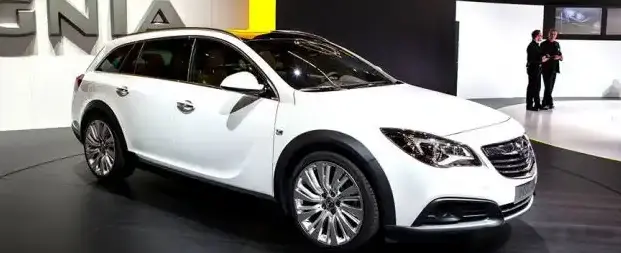
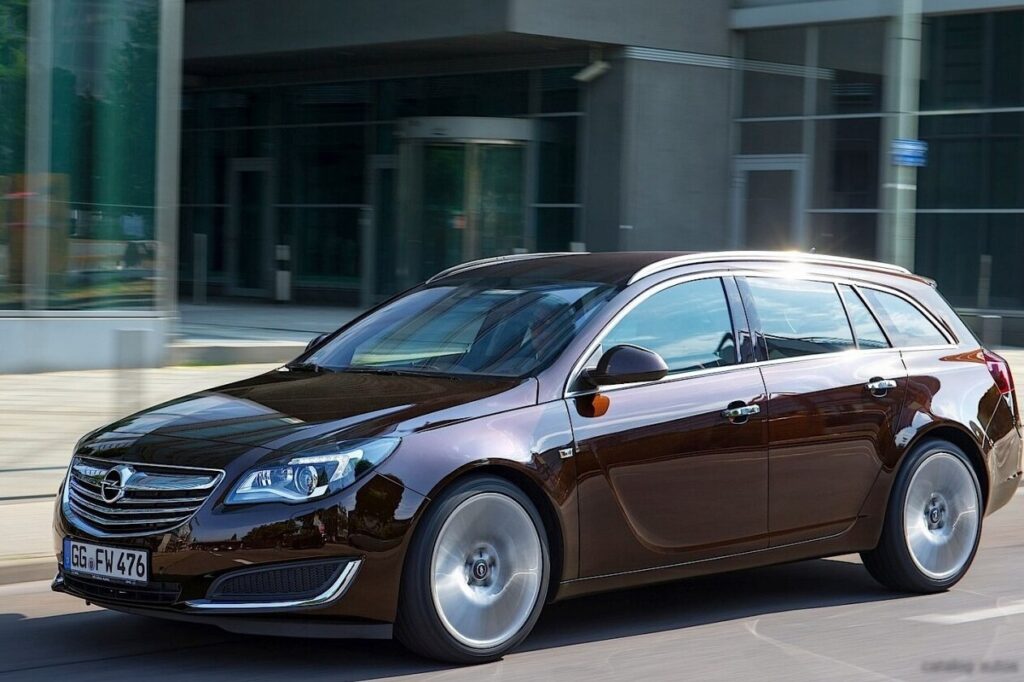
The Opel Insignia Sports Tourer, specifically the 2.0 CDTI (170 hp) Automatic variant produced from July 2015 to January 2017, was a key offering in the European D-segment station wagon market. This model belongs to the A generation (first generation) of the Insignia, benefiting from the 2013 facelift which brought both styling refinements and technological upgrades. Positioned as a mid-range option within the Insignia lineup, it aimed to strike a balance between fuel efficiency, practicality, and comfortable cruising for families and business users. The Sports Tourer body style, Opel’s term for a station wagon, provided increased cargo capacity compared to the hatchback version, making it a popular choice for those needing versatile space.
Powertrain & Engine Architecture
At the heart of the Insignia 2.0 CDTI Automatic lies the B20DTH engine, a 1.956-liter inline-four cylinder diesel. This engine is part of Opel/Vauxhall’s family of common-rail direct injection diesel engines. The B20DTH utilizes a turbocharger with an intercooler to enhance power and efficiency. The common-rail direct injection system, sourced from Bosch, delivers fuel directly into the cylinders at extremely high pressure, optimizing combustion. The engine features a variable geometry turbocharger (VGT) which adjusts the turbine vanes to improve boost across the rev range, contributing to the engine’s 400 Nm (295 lb-ft) of torque available from 1750 to 2500 rpm. The automatic transmission is a six-speed unit, providing smooth gear changes and contributing to the car’s relaxed cruising character. While not a dual-clutch transmission, it was well-regarded for its reliability and suitability for everyday driving.
Driving Characteristics
The 170 hp and 400 Nm of torque provide adequate performance for the Insignia Sports Tourer. Acceleration from 0-60 mph takes approximately 9.4 seconds, and top speed is rated at 133.59 mph. However, the focus is more on effortless cruising and fuel economy than outright speed. The automatic transmission is tuned for comfort, with relatively smooth shifts. Compared to the 2.0 CDTI variants with manual transmissions, the automatic version feels slightly less responsive, particularly during quick overtaking maneuvers. The gear ratios are optimized for fuel efficiency, meaning the engine doesn’t always feel as lively as some of its competitors. Compared to higher-output versions of the Insignia, such as those with 195 hp, this variant offers a more economical and relaxed driving experience.
Equipment & Trim Levels
The 2.0 CDTI Automatic typically came equipped with a respectable level of standard features. These included air conditioning, alloy wheels (usually 17-inch), a touchscreen infotainment system with Bluetooth connectivity, cruise control, and front and rear electric windows. Safety features such as ABS, ESP (Electronic Stability Program), and multiple airbags were standard. Higher trim levels, such as SE Nav or Elite, added features like leather upholstery, heated front seats, a more advanced infotainment system with navigation, and parking sensors. Optional extras included a panoramic sunroof, adaptive cruise control, and a premium sound system.
Chassis & Braking
The Insignia Sports Tourer utilizes a MacPherson strut front suspension and a multi-link rear suspension. This setup provides a good balance between ride comfort and handling. The 2.0 CDTI Automatic variant typically featured ventilated front disc brakes and solid disc rear brakes. The steering is electric power-assisted, offering a light and precise feel. Stabilizer bars are fitted to both the front and rear axles to reduce body roll during cornering. The suspension tuning is geared towards comfort, prioritizing a smooth ride over sporty handling.
Market Reception & Comparison
The Opel Insignia Sports Tourer 2.0 CDTI Automatic was generally well-received by automotive critics. It was praised for its spacious interior, comfortable ride, and good fuel economy. However, some critics noted that the automatic transmission could feel a bit sluggish at times, and the engine lacked the punch of some of its rivals. Compared to other station wagons in its class, such as the Ford Mondeo Estate and Volkswagen Passat Variant, the Insignia offered a competitive package in terms of price, space, and features. Fuel economy figures of 5.5-5.7 l/100km were considered respectable for a vehicle of this size and weight.
Legacy
The B20DTH engine, while generally reliable, is known to require regular maintenance, particularly regarding the diesel particulate filter (DPF) and the EGR valve. Proper servicing and the use of quality diesel fuel are crucial to prevent issues. The six-speed automatic transmission is also considered relatively robust, but fluid changes should be performed according to the manufacturer’s recommendations. In the used car market, the Insignia Sports Tourer 2.0 CDTI Automatic represents a good value proposition for buyers seeking a spacious, comfortable, and economical station wagon. Its blend of practicality and affordability has ensured its continued popularity among families and those requiring a versatile vehicle.