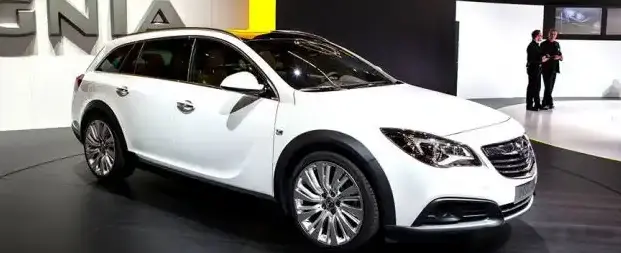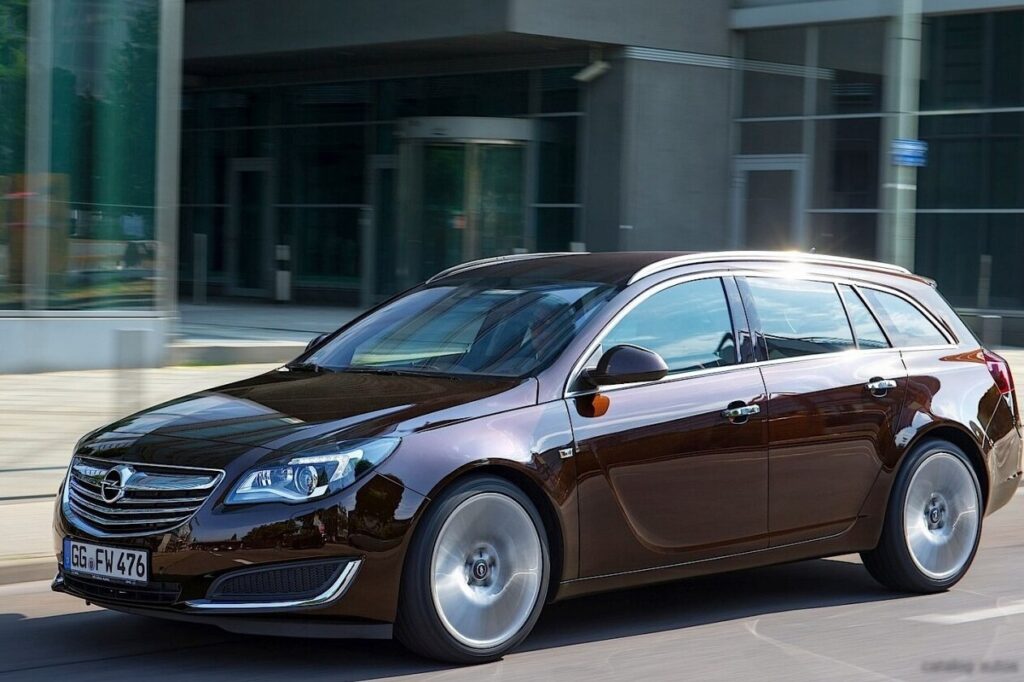
The Opel Insignia Sports Tourer OPC 2.8 V6, produced from September 2013 to January 2017, represented the high-performance variant of Opel’s flagship wagon. Positioned as the range-topping model within the facelifted first-generation (A) Insignia lineup, the OPC (Opel Performance Center) offered a significant step up in power and handling compared to the standard Insignia Sports Tourer trims. It was primarily marketed in Europe as a competitor to performance-oriented wagons like the Audi S4 Avant and BMW 3 Series Touring, offering a blend of practicality, space, and spirited driving dynamics. The “OPC” designation signified Opel’s commitment to delivering a more engaging driving experience, and this model was a key part of that strategy.
Technical Specifications
| Brand | Opel |
| Model | Insignia |
| Generation | Insignia Sports Tourer (A, facelift 2013) |
| Type (Engine) | OPC 2.8 V6 (325 Hp) AWD Turbo Ecotec |
| Start of production | September, 2013 |
| End of production | January, 2017 |
| Powertrain Architecture | Internal Combustion engine |
| Body type | Station wagon (estate) |
| Seats | 5 |
| Doors | 5 |
| Fuel consumption (economy) – urban | 16 l/100 km (14.7 US mpg, 17.7 UK mpg, 6.3 km/l) |
| Fuel consumption (economy) – extra urban | 7.9 l/100 km (29.8 US mpg, 35.8 UK mpg, 12.7 km/l) |
| Fuel consumption (economy) – combined | 10.9 l/100 km (21.6 US mpg, 25.9 UK mpg, 9.2 km/l) |
| CO2 emissions | 255 g/km |
| Fuel Type | Petrol (Gasoline) |
| Acceleration 0 – 100 km/h | 6 sec |
| Acceleration 0 – 62 mph | 6 sec |
| Acceleration 0 – 60 mph | 5.7 sec |
| Maximum speed | 250 km/h (155.34 mph) |
| Emission standard | Euro 5 |
| Weight-to-power ratio | 5.7 kg/Hp, 174.3 Hp/tonne |
| Weight-to-torque ratio | 4.3 kg/Nm, 233.2 Nm/tonne |
| Power | 325 Hp @ 5250 rpm |
| Power per litre | 116.4 Hp/l |
| Torque | 435 Nm @ 5250 rpm (320.84 lb.-ft. @ 5250 rpm) |
| Engine layout | Front, Transverse |
| Engine Model/Code | A28NER, B28NER |
| Engine displacement | 2792 cm3 (170.38 cu. in.) |
| Number of cylinders | 6 |
| Engine configuration | V-engine |
| Cylinder Bore | 89 mm (3.5 in.) |
| Piston Stroke | 74.8 mm (2.94 in.) |
| Compression ratio | 9.5:1 |
| Fuel injection system | Multi-port manifold injection |
| Engine aspiration | Turbocharger, Intercooler |
| Engine oil capacity | 6.3 l (6.66 US qt | 5.54 UK qt) |
| Coolant | 6.7 l (7.08 US qt | 5.9 UK qt) |
| Kerb Weight | 1865 kg (4111.62 lbs.) |
| Max. weight | 2475 kg (5456.44 lbs.) |
| Max load | 610 kg (1344.82 lbs.) |
| Trunk (boot) space – minimum | 540 l (19.07 cu. ft.) |
| Trunk (boot) space – maximum | 1530 l (54.03 cu. ft.) |
| Fuel tank capacity | 70 l (18.49 US gal | 15.4 UK gal) |
| Max. roof load | 100 kg (220.46 lbs.) |
| Permitted trailer load with brakes (12%) | 2000 kg (4409.25 lbs.) |
| Permitted trailer load without brakes | 750 kg (1653.47 lbs.) |
| Length | 4908 mm (193.23 in.) |
| Width | 1858 mm (73.15 in.) |
| Width including mirrors | 2084 mm (82.05 in.) |
| Height | 1520 mm (59.84 in.) |
| Wheelbase | 2737 mm (107.76 in.) |
| Front track | 1585 mm (62.4 in.) |
| Rear (Back) track | 1587 mm (62.48 in.) |
| Minimum turning circle | 11.4 m (37.4 ft.) |
| Drive wheel | All wheel drive (4×4) |
| Number of gears and type of gearbox | 6 gears, manual transmission |
| Front brakes | Ventilated discs |
| Assisting systems | ABS (Anti-lock braking system) |
| Steering type | Steering rack and pinion |
| Power steering | Electric Steering |
Powertrain & Engine Architecture
The heart of the Insignia OPC was the 2.8-liter V6 engine, designated A28NER or B28NER depending on minor revisions. This engine was a naturally aspirated design, but crucially, it was paired with a twin-scroll turbocharger and intercooler to boost power output to 325 horsepower and 435 Nm (320.84 lb-ft) of torque. The engine featured multi-port fuel injection and a compression ratio of 9.5:1. The engine’s transverse mounting and all-wheel-drive system contributed to its balanced handling characteristics. The six-speed manual transmission was the only gearbox option, providing drivers with full control over the engine’s power delivery. The engine oil capacity was 6.3 liters, and it required a specific oil specification to ensure optimal performance and longevity.
Driving Characteristics
The Insignia OPC 2.8 V6 offered a noticeably more engaging driving experience than its lower-powered siblings. The turbocharger provided strong mid-range acceleration, with peak torque available from 5250 rpm. While not as brutally fast as some dedicated sports cars, the OPC delivered a responsive and confident feel, particularly when combined with the all-wheel-drive system. The six-speed manual transmission allowed for precise gear changes, and the relatively short gear ratios helped to maximize acceleration. Compared to the 2.0-liter turbocharged four-cylinder models, the V6 offered a smoother power delivery and a more refined engine note. The all-wheel-drive system provided excellent traction in various weather conditions, making it a practical choice for year-round driving.
Equipment & Trim Levels
The OPC trim level came generously equipped as standard. Interior features included sport seats upholstered in Morrocana (a leatherette material) with OPC branding, a leather-wrapped steering wheel, and aluminum pedal covers. The dashboard featured unique OPC-specific trim elements. Standard equipment also included automatic climate control, a touchscreen infotainment system, and a suite of safety features such as ABS, traction control, and stability control. Optional extras included adaptive cruise control, a panoramic sunroof, and upgraded audio systems. The exterior was distinguished by a more aggressive body kit, including a rear spoiler, side skirts, and unique alloy wheels.
Chassis & Braking
The Insignia OPC featured a specially tuned chassis designed to enhance handling and stability. The suspension was lowered and stiffened compared to the standard Insignia models, and thicker stabilizer bars were used to reduce body roll. The front brakes were equipped with ventilated discs, while the rear brakes utilized solid discs. The all-wheel-drive system employed a multi-plate clutch to distribute torque between the front and rear axles, optimizing traction and handling. The electric power steering provided precise and responsive steering feel.
Market Reception & Comparison
The Insignia OPC 2.8 V6 was generally well-received by automotive critics, who praised its performance, handling, and practicality. However, some reviewers noted that its fuel economy was relatively poor, and its ride quality could be firm on rough roads. Compared to the more common 2.0-liter turbocharged models, the OPC offered a significant performance upgrade but came at a higher price point. The V6 engine also required more frequent and potentially more expensive maintenance than the four-cylinder engines. Against rivals like the Audi S4 Avant and BMW 3 Series Touring, the Insignia OPC offered a compelling value proposition, providing similar performance and features at a lower cost.
Legacy
The Opel Insignia OPC 2.8 V6 remains a desirable used car for enthusiasts seeking a practical and engaging performance wagon. The 2.8L V6 engine, while complex, has proven to be relatively reliable when properly maintained. Common issues include turbocharger wear and potential oil leaks. The all-wheel-drive system is generally robust, but regular maintenance is essential. Today, the Insignia OPC represents a unique offering in the used car market, combining the practicality of a station wagon with the performance of a sports sedan. Its blend of power, handling, and space continues to appeal to drivers who want a versatile and enjoyable driving experience.