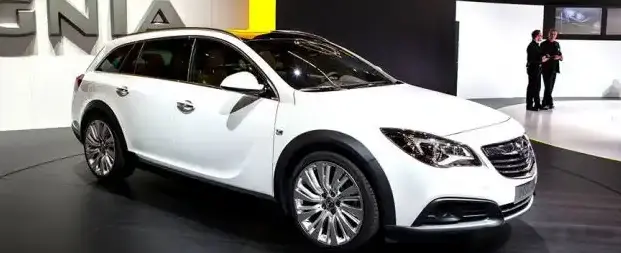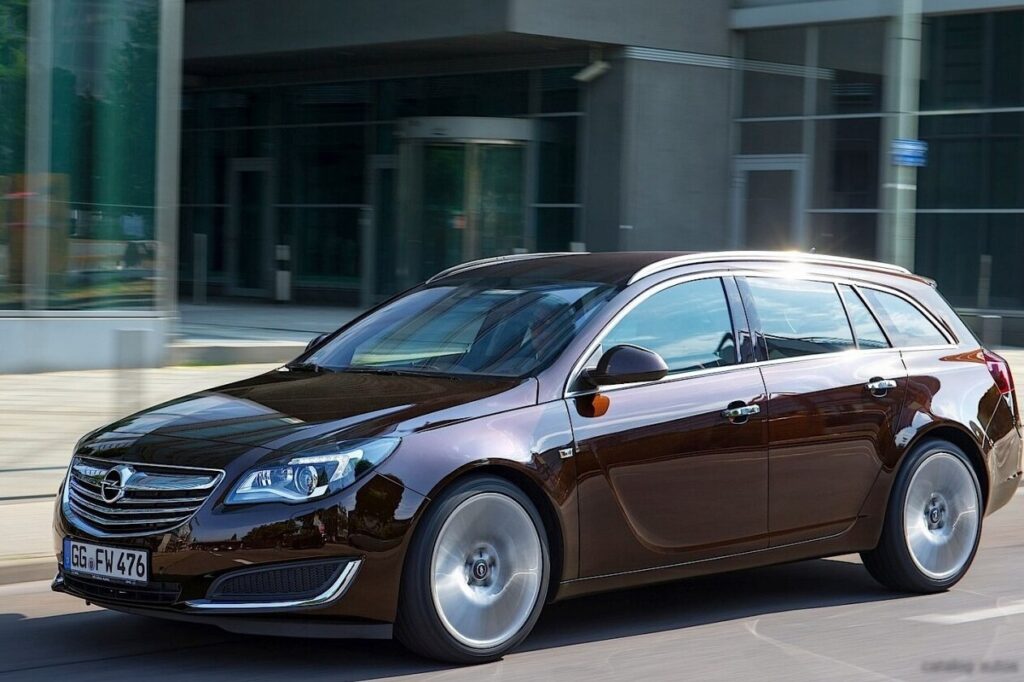
The Opel Insignia Sports Tourer OPC 2.8 V6, produced from September 2013 to January 2017, represented the high-performance variant of Opel’s flagship wagon. Positioned as the range-topping model within the facelifted ‘A’ generation (2013-2017) Insignia lineup, the OPC (Opel Performance Center) offered a significant performance upgrade over the standard Insignia models, competing with performance estates like the Audi S4 Avant and BMW 3 Series Touring. This model was primarily marketed in Europe, offering a blend of practicality, space, and spirited driving dynamics. The “Unlimited” designation referred to the removal of the electronic speed limiter, allowing for a higher top speed.
Technical Specifications
| Brand | Opel |
| Model | Insignia |
| Generation | Insignia Sports Tourer (A, facelift 2013) |
| Type (Engine) | OPC 2.8 V6 (325 Hp) AWD Turbo Ecotec Unlimited |
| Start of production | September, 2013 |
| End of production | January, 2017 |
| Powertrain Architecture | Internal Combustion engine |
| Body type | Station wagon (estate) |
| Seats | 5 |
| Doors | 5 |
| Fuel consumption (urban) | 16 l/100 km (14.7 US mpg, 17.7 UK mpg, 6.3 km/l) |
| Fuel consumption (extra urban) | 7.9 l/100 km (29.8 US mpg, 35.8 UK mpg, 12.7 km/l) |
| Fuel consumption (combined) | 10.9 l/100 km (21.6 US mpg, 25.9 UK mpg, 9.2 km/l) |
| CO2 emissions | 255 g/km |
| Fuel Type | Petrol (Gasoline) |
| Acceleration 0 – 100 km/h | 6 sec |
| Acceleration 0 – 62 mph | 6 sec |
| Acceleration 0 – 60 mph | 5.7 sec |
| Maximum speed | 270 km/h (167.77 mph) |
| Emission standard | Euro 5 |
| Weight-to-power ratio | 5.7 kg/Hp, 174.3 Hp/tonne |
| Weight-to-torque ratio | 4.3 kg/Nm, 233.2 Nm/tonne |
| Power | 325 Hp @ 5250 rpm |
| Power per litre | 116.4 Hp/l |
| Torque | 435 Nm @ 5250 rpm (320.84 lb.-ft. @ 5250 rpm) |
| Engine layout | Front, Transverse |
| Engine Model/Code | A28NER, B28NER |
| Engine displacement | 2792 cm3 (170.38 cu. in.) |
| Number of cylinders | 6 |
| Engine configuration | V-engine |
| Cylinder Bore | 89 mm (3.5 in.) |
| Piston Stroke | 74.8 mm (2.94 in.) |
| Compression ratio | 9.5:1 |
| Fuel injection system | Multi-port manifold injection |
| Engine aspiration | Turbocharger, Intercooler |
| Engine oil capacity | 6.3 l (6.66 US qt | 5.54 UK qt) |
| Coolant | 6.7 l (7.08 US qt | 5.9 UK qt) |
| Kerb Weight | 1865 kg (4111.62 lbs.) |
| Max. weight | 2475 kg (5456.44 lbs.) |
| Max load | 610 kg (1344.82 lbs.) |
| Trunk (boot) space – minimum | 540 l (19.07 cu. ft.) |
| Trunk (boot) space – maximum | 1530 l (54.03 cu. ft.) |
| Fuel tank capacity | 70 l (18.49 US gal | 15.4 UK gal) |
| Max. roof load | 100 kg (220.46 lbs.) |
| Permitted trailer load with brakes (12%) | 2000 kg (4409.25 lbs.) |
| Permitted trailer load without brakes | 750 kg (1653.47 lbs.) |
| Length | 4908 mm (193.23 in.) |
| Width | 1858 mm (73.15 in.) |
| Width including mirrors | 2084 mm (82.05 in.) |
| Height | 1520 mm (59.84 in.) |
| Wheelbase | 2737 mm (107.76 in.) |
| Front track | 1585 mm (62.4 in.) |
| Rear (Back) track | 1587 mm (62.48 in.) |
| Minimum turning circle | 11.4 m (37.4 ft.) |
| Drive wheel | All wheel drive (4×4) |
| Number of gears and type of gearbox | 6 gears, manual transmission |
| Front brakes | Ventilated discs |
| Assisting systems | ABS (Anti-lock braking system) |
| Steering type | Steering rack and pinion |
| Power steering | Electric Steering |
INTRODUCTION
The Opel Insignia Sports Tourer OPC 2.8 V6, launched in 2013 following the facelift of the original Insignia A, was designed to deliver a compelling combination of performance and practicality. Building upon the already spacious and well-equipped Insignia Sports Tourer (wagon), the OPC variant aimed to challenge established players in the performance estate segment. It featured a potent 2.8-liter turbocharged V6 engine, all-wheel drive, and a host of chassis and styling upgrades. The facelift brought revised front and rear styling, along with updated interior technology, further enhancing the Insignia’s appeal.
Powertrain & Engine Architecture
The heart of the Insignia OPC is the A28NER (or B28NER) 2.8-liter V6 engine. This engine is a naturally aspirated 2792cc V6, boosted by a twin-scroll turbocharger. It utilizes multi-port fuel injection and features a cast iron block with an aluminum cylinder head. The engine produces 325 horsepower at 5250 rpm and 435 Nm (320.84 lb-ft) of torque at the same engine speed. The engine’s design prioritizes a broad torque curve for strong in-gear acceleration. The standard transmission was a six-speed manual gearbox, delivering power to all four wheels via Opel’s electronically controlled all-wheel-drive system. This system, developed by Haldex, dynamically distributes torque between the front and rear axles based on traction conditions.
Driving Characteristics
The Insignia OPC offered a surprisingly engaging driving experience for a large wagon. The turbocharged V6 provided strong and linear power delivery, with minimal turbo lag. The all-wheel-drive system instilled confidence in various weather conditions, providing excellent grip and stability. While not as overtly sporty as some of its rivals, the OPC offered a comfortable ride quality, making it suitable for long-distance journeys. The six-speed manual transmission was well-matched to the engine’s characteristics, offering precise shifts. Acceleration from 0-62 mph (0-100 km/h) took approximately 6 seconds, and the electronically limited top speed of 155 mph (250 km/h) could be removed with the “Unlimited” option, allowing for a top speed of 168 mph (270 km/h).
Equipment & Trim Levels
The OPC trim level was comprehensively equipped. Standard features included sports seats upholstered in Morrocana (a leather-like material) with OPC branding, a leather-wrapped steering wheel, aluminum pedals, and unique exterior styling cues such as a rear spoiler, aggressive front bumper, and side skirts. Infotainment was provided by Opel’s IntelliLink system with a touchscreen display, offering navigation, Bluetooth connectivity, and USB ports. Optional extras included adaptive cruise control, heated seats, and a premium sound system. The interior featured a dark color scheme with contrasting stitching, emphasizing the car’s sporty character.
Chassis & Braking
The Insignia OPC featured a specially tuned chassis to enhance handling and stability. The suspension was lowered and stiffened compared to standard Insignia models, and featured upgraded dampers and springs. The front suspension utilized the HiPerStrut design, which minimized torque steer and improved steering precision. Braking duties were handled by ventilated discs all around, providing ample stopping power. The electronic stability control (ESC) system was recalibrated to allow for a more dynamic driving experience, with a less intrusive intervention threshold.
Market Reception & Comparison
The Insignia OPC was generally well-received by automotive critics, who praised its performance, spaciousness, and value for money. However, some reviewers noted that the interior quality didn’t quite match that of its premium German rivals. Compared to the standard Insignia models, the OPC offered a significant performance upgrade, but at the cost of some fuel economy. Against competitors like the Audi S4 Avant and BMW 3 Series Touring, the OPC offered a more affordable alternative, but lacked the brand prestige and refinement of those models. The 2.0-liter turbocharged petrol and diesel variants of the Insignia offered better fuel economy but lacked the outright performance and distinctive V6 engine note of the OPC.
Legacy
The Opel Insignia OPC 2.8 V6 remains a relatively rare and sought-after vehicle in the used car market. The 2.8L V6 engine, while robust, requires regular maintenance, including oil changes and timing belt replacements. The Haldex all-wheel-drive system also requires periodic servicing. Despite these maintenance requirements, the OPC’s combination of performance, practicality, and relative affordability has ensured its continued appeal to enthusiasts. It represents a compelling option for those seeking a spacious and capable performance estate car that offers a unique driving experience.