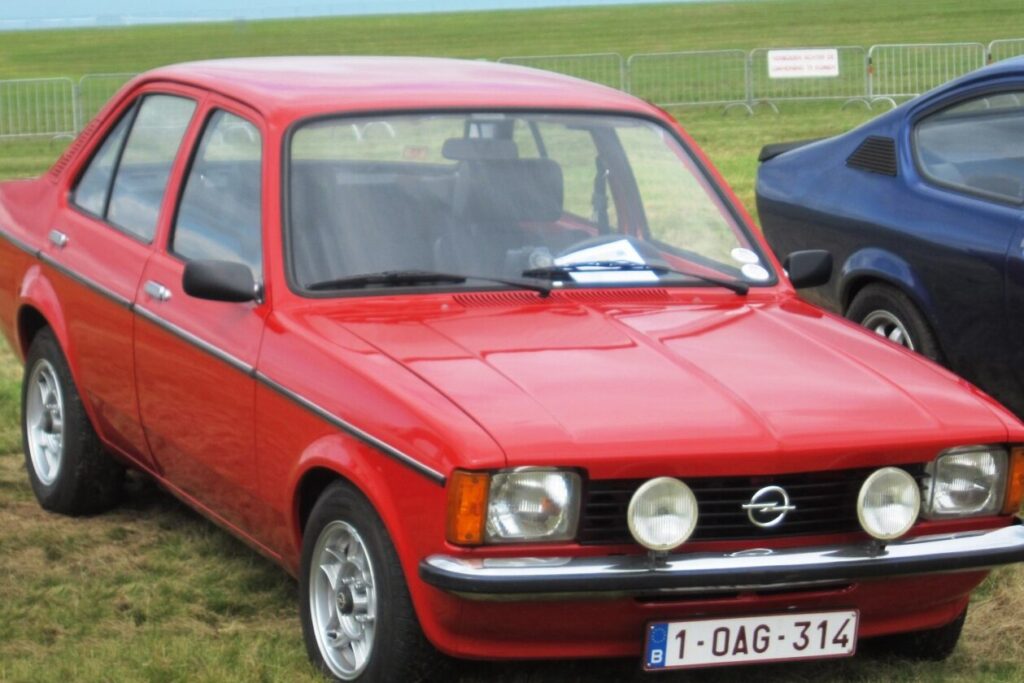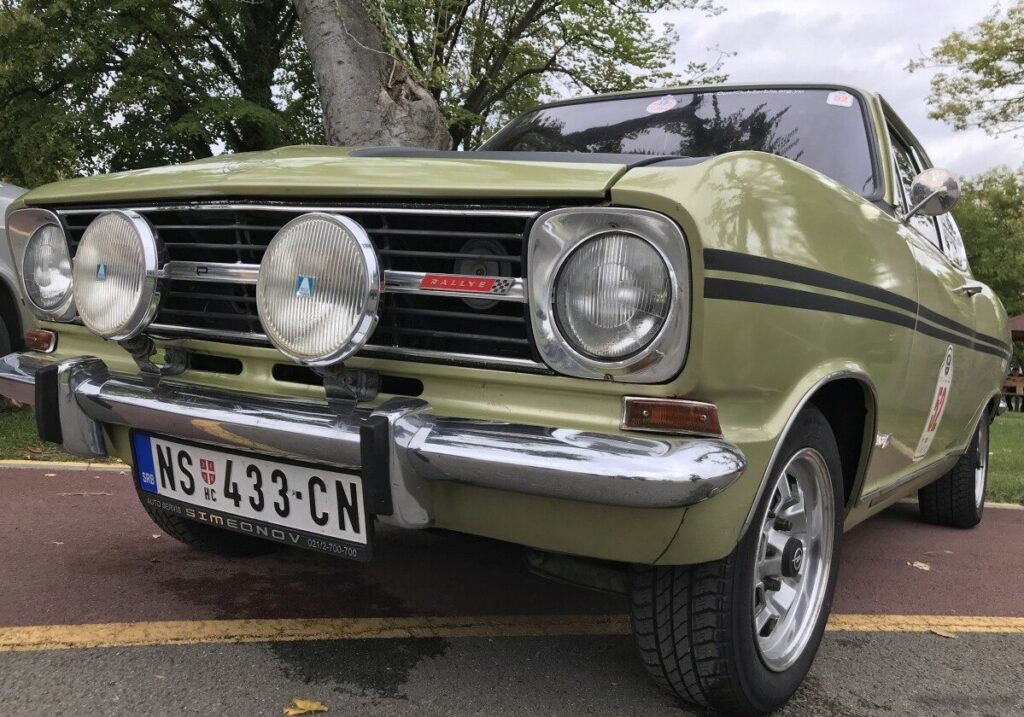
The Opel Kadett B Coupe 1.1, producing 55 horsepower, was a significant model within the broader Kadett B range manufactured between 1965 and 1973. Representing the entry-level offering in the coupe body style, it played a crucial role in providing affordable personal transportation in post-war Europe, particularly in Germany. The Kadett B, as a whole, was Opel’s response to growing demand for modern, compact cars, and the Coupe variant offered a more stylish alternative to the sedan. This specific 1.1-liter engine and four-speed manual transmission combination was aimed at buyers prioritizing economy and practicality over outright performance.
Technical Specifications
| Brand | Opel |
| Model | Kadett |
| Generation | Kadett B Coupe |
| Type (Engine) | 1.1 (55 Hp) |
| Start of production | 1965 |
| End of production | 1973 |
| Powertrain Architecture | Internal Combustion engine |
| Body type | Coupe |
| Seats | 5 |
| Doors | 2 |
| Fuel Type | Petrol (Gasoline) |
| Maximum speed | 130 km/h (80.78 mph) |
| Weight-to-power ratio | 13.6 kg/Hp, 73.3 Hp/tonne |
| Weight-to-torque ratio | 9.4 kg/Nm, 106.7 Nm/tonne |
| Power | 55 Hp @ 5600 rpm |
| Power per litre | 51 Hp/l |
| Torque | 80 Nm @ 2800-3200 rpm (59 lb.-ft. @ 2800-3200 rpm) |
| Engine layout | Front, Longitudinal |
| Engine Model/Code | 11N |
| Engine displacement | 1078 cm3 (65.78 cu. in.) |
| Number of cylinders | 4 |
| Engine configuration | Inline |
| Cylinder Bore | 75 mm (2.95 in.) |
| Piston Stroke | 61 mm (2.4 in.) |
| Compression ratio | 7.8:1 |
| Number of valves per cylinder | 2 |
| Fuel injection system | Carburettor |
| Engine aspiration | Naturally aspirated engine |
| Valvetrain | OHV |
| Engine oil capacity | 2.8 l (2.96 US qt | 2.46 UK qt) |
| Coolant | 5.1 l (5.39 US qt | 4.49 UK qt) |
| Kerb Weight | 750 kg (1653.47 lbs) |
| Max. weight | 1280 kg (2821.92 lbs) |
| Max load | 530 kg (1168.45 lbs) |
| Trunk (boot) space – minimum | 460 l (16.24 cu. ft.) |
| Fuel tank capacity | 40 l (10.57 US gal | 8.8 UK gal) |
| Length | 4182 mm (164.65 in.) |
| Width | 1573 mm (61.93 in.) |
| Height | 1405 mm (55.31 in.) |
| Wheelbase | 2416 mm (95.12 in.) |
| Front track | 1250 mm (49.21 in.) |
| Rear (Back) track | 1274 mm (50.16 in.) |
| Ride height (ground clearance) | 173 mm (6.81 in.) |
| Minimum turning circle (turning diameter) | 9.4 m (30.84 ft.) |
| Drivetrain Architecture | The Internal combustion engine (ICE) drives the rear wheels of the vehicle. |
| Drive wheel | Rear wheel drive |
| Number of gears and type of gearbox | 4 gears, manual transmission |
| Front suspension | Double wishbone, Transverse stabilizer |
| Rear suspension | Transverse stabilizer, Trailing arm |
| Front brakes | Disc |
| Rear brakes | Drum |
| Steering type | Steering rack and pinion |
Powertrain & Engine Architecture
The heart of the Kadett B Coupe 1.1 was the 11N engine, a 1078cc inline-four cylinder unit. This engine utilized an overhead valve (OHV) valvetrain and a single carburetor for fuel delivery. The 11N was a relatively simple design, prioritizing reliability and low manufacturing costs. Its longitudinal front engine placement and rear-wheel drive configuration were typical for European cars of the era. The four-speed manual transmission was a standard feature, offering a direct mechanical linkage for precise gear changes. While not particularly powerful, the engine’s torque curve was reasonably flat, providing adequate pulling power for everyday driving. The engine’s relatively low compression ratio of 7.8:1 meant it could run on lower octane fuel, a significant advantage in markets where premium gasoline was expensive or unavailable.
Driving Characteristics
The 1.1-liter Kadett B Coupe offered modest performance. With 55 horsepower, acceleration was leisurely, and top speed was around 80.78 mph. Compared to the more powerful 1.7-liter or later fuel-injected versions, the 1.1 felt significantly slower. However, the lighter weight of the 1.1-liter engine contributed to better handling balance. The four-speed manual transmission allowed drivers to keep the engine in its optimal power band, but frequent gear changes were necessary, especially when tackling hills or overtaking. The steering, utilizing a rack and pinion system, was relatively precise for its time, providing a decent level of driver feedback. The overall driving experience was characterized by simplicity and practicality, rather than sporty excitement.
Equipment & Trim Levels
The Kadett B Coupe 1.1 was generally sparsely equipped, reflecting its position as the entry-level model. Standard features typically included basic cloth upholstery, a simple dashboard layout with minimal instrumentation, and manually operated windows and door locks. Optional extras, such as a radio, whitewall tires, and upgraded interior trim, were available, but added to the vehicle’s cost. The interior was functional and durable, designed to withstand the rigors of daily use. The coupe body style itself was considered a step up in terms of aesthetics compared to the standard sedan, offering a more streamlined and sporty appearance.
Chassis & Braking
The Kadett B Coupe utilized a body-on-frame construction, which was common for cars of that era. The front suspension employed a double wishbone setup with a transverse stabilizer bar, while the rear suspension featured a trailing arm design with a transverse stabilizer. This suspension configuration provided a reasonable level of ride comfort and handling stability. Braking was accomplished via disc brakes on the front wheels and drum brakes on the rear. While adequate for the car’s performance capabilities, the braking system lacked the sophistication of more modern designs. The relatively light weight of the 1.1-liter model helped to mitigate the limitations of the braking system.
Market Reception & Comparison
The Kadett B Coupe 1.1 was well-received in its target market as an affordable and reliable means of transportation. Critics praised its fuel economy and ease of maintenance. However, its modest performance was often noted. Compared to the more powerful Kadett B variants, such as the 1.7-liter, the 1.1 offered a significantly different driving experience. The 1.7-liter provided more spirited acceleration and a higher top speed, but at the expense of fuel economy. The 1.1 appealed to buyers who prioritized practicality and affordability over performance, such as students, young families, and those seeking a basic commuter car.
Legacy
The Opel Kadett B Coupe 1.1, while not the most powerful or technologically advanced version of the Kadett B, holds a significant place in automotive history. Its simple, robust design contributed to its longevity, and many examples remain on the road today. The 11N engine is known for its reliability, and parts availability is generally good. In the used car market, the Kadett B Coupe 1.1 is often sought after by enthusiasts and collectors who appreciate its classic styling and straightforward mechanicals. It represents a bygone era of automotive engineering, characterized by simplicity, durability, and affordability. The Kadett B, in general, laid the foundation for Opel’s future success in the compact car segment, and the 1.1-liter variant played a vital role in making personal transportation accessible to a wider range of buyers.