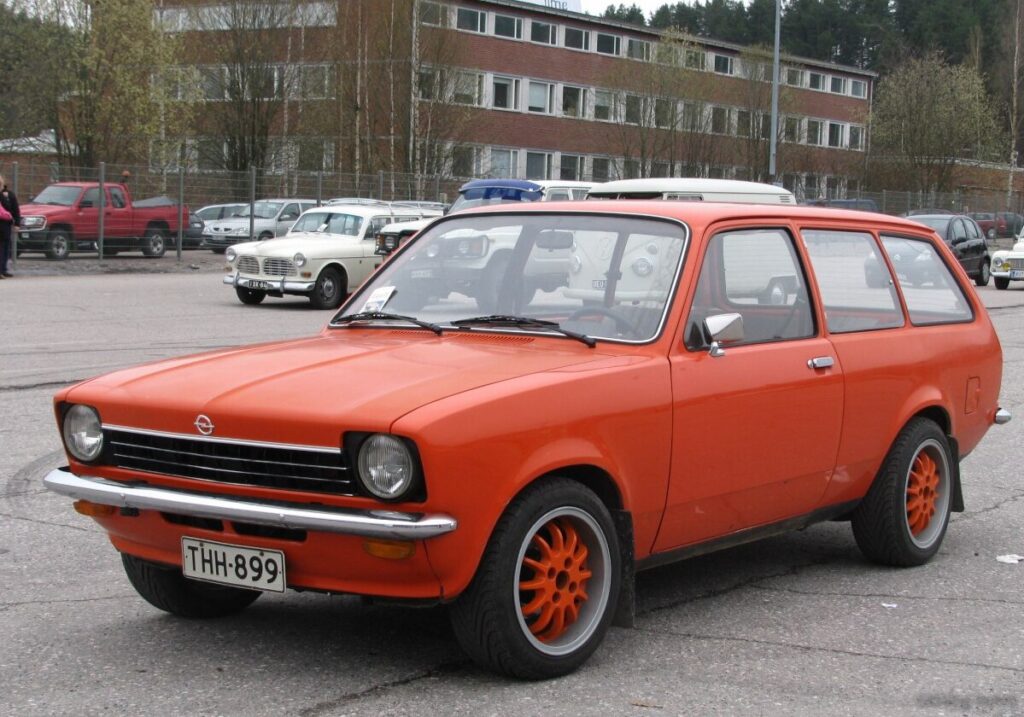
The Opel Kadett C Caravan 1.2, producing 52 horsepower, was a mainstay of the European family car market from 1973 to 1979. Positioned as the entry-level variant of the Kadett C Caravan range, it offered practical, affordable transportation for families. The Kadett C, launched in 1972, represented a significant step forward for Opel, building upon the success of the Kadett B. The Caravan body style, a station wagon or estate in American terminology, was particularly popular for its increased cargo capacity and versatility. This 1.2-liter version played a crucial role in attracting budget-conscious buyers, offering a balance between economy and usability.
Technical Specifications
| Brand | Opel |
| Model | Kadett |
| Generation | Kadett C Caravan |
| Type (Engine) | 1.2 (52 Hp) |
| Start of production | 1973 |
| End of production | 1979 |
| Powertrain Architecture | Internal Combustion engine |
| Body type | Station wagon (estate) |
| Seats | 5 |
| Doors | 3-5 |
| Fuel consumption (combined) | 8.5 l/100 km |
| Fuel consumption (US mpg) | 27.7 |
| Fuel consumption (UK mpg) | 33.2 |
| Fuel consumption (km/l) | 11.8 |
| Fuel Type | Petrol (Gasoline) |
| Acceleration 0 – 100 km/h | 22.5 sec |
| Acceleration 0 – 62 mph | 22.5 sec |
| Acceleration 0 – 60 mph | 21.4 sec |
| Maximum speed | 130 km/h (80.78 mph) |
| Weight-to-power ratio | 15.8 kg/Hp |
| Power | 52 Hp @ 5600 rpm |
| Power per litre | 43.5 Hp/l |
| Engine layout | Front, Transverse |
| Engine Model/Code | 12N |
| Engine displacement | 1196 cm3 (72.98 cu. in.) |
| Number of cylinders | 4 |
| Engine configuration | Inline |
| Cylinder Bore | 79 mm (3.11 in.) |
| Piston Stroke | 61 mm (2.4 in.) |
| Compression ratio | 7.8:1 |
| Number of valves per cylinder | 2 |
| Fuel injection system | Carburettor |
| Engine aspiration | Naturally aspirated |
| Engine oil capacity | 2.8 l (2.96 US qt | 2.46 UK qt) |
| Coolant capacity | 4.7 l (4.97 US qt | 4.14 UK qt) |
| Kerb Weight | 820 kg (1807.79 lbs.) |
| Max. weight | 1270 kg (2799.87 lbs.) |
| Max load | 450 kg (992.08 lbs.) |
| Fuel tank capacity | 43 l (11.36 US gal | 9.46 UK gal) |
| Max. roof load | 60 kg (132.28 lbs.) |
| Permitted trailer load (braked) | 800 kg (1763.7 lbs.) |
| Permitted trailer load (unbraked) | 430 kg (947.99 lbs.) |
| Length | 4140 mm (162.99 in.) |
| Width | 1580 mm (62.2 in.) |
| Height | 1385 mm (54.53 in.) |
| Wheelbase | 2395 mm (94.29 in.) |
| Front track | 1300 mm (51.18 in.) |
| Rear track | 1299 mm (51.14 in.) |
| Turning circle | 9.2 m (30.18 ft.) |
| Drivetrain | Front wheel drive |
| Gearbox | 4 gears, manual transmission |
| Front brakes | Drum |
| Rear brakes | Drum |
| Tire size | 155/80 SR13 |
| Wheel rim size | 13 |
Powertrain & Engine Architecture
The heart of the Kadett C Caravan 1.2 was the Opel 12N engine, a 1196cc inline-four cylinder unit. This engine was a relatively simple design, featuring a cast iron block and cylinder head, and a two-valve per cylinder configuration. Fuel delivery was handled by a single downdraft carburetor, a common setup for vehicles of this era. The 12N engine produced 52 horsepower at 5600 rpm, and 73 lb-ft of torque. The engine was transversely mounted, driving the front wheels through a four-speed manual transmission. This front-wheel-drive layout was becoming increasingly common in Europe, offering advantages in terms of packaging and traction, especially in inclement weather. The 12N engine, while not particularly powerful, was known for its durability and relative simplicity, making it relatively easy and inexpensive to maintain.
Driving Characteristics
The 1.2-liter Kadett C Caravan was not a performance car. Acceleration was leisurely, taking around 22.5 seconds to reach 62 mph. However, it was perfectly adequate for everyday driving, particularly in urban environments. The four-speed manual transmission was well-matched to the engine’s characteristics, providing reasonable flexibility. Compared to the more powerful 1.6-liter and 1.9-liter versions of the Kadett C, the 1.2 offered a more economical driving experience, but at the expense of outright performance. The relatively light weight of the vehicle (around 1808 lbs) helped to mitigate the lack of power. The front-wheel-drive configuration provided decent handling, although it lacked the sophistication of more modern systems.
Equipment & Trim Levels
The 1.2-liter Kadett C Caravan was typically offered with a fairly basic level of equipment. Standard features included cloth upholstery, a basic instrument panel, and manually operated windows and door locks. Optional extras included a radio, a heated rear window, and upgraded interior trim. The interior was functional and durable, designed to withstand the rigors of family use. The Caravan body style offered a generous amount of cargo space, making it ideal for carrying luggage, groceries, or other bulky items. Trim levels were relatively limited on the base 1.2 model, focusing on providing essential transportation at an affordable price.
Chassis & Braking
The Kadett C Caravan featured a relatively simple chassis design. It utilized a MacPherson strut front suspension and a rigid axle rear suspension. The braking system consisted of drum brakes on all four wheels, which were adequate for the vehicle’s weight and performance. Steering was by a rack and pinion system, providing reasonable precision. The suspension was tuned for comfort rather than sporty handling, providing a relatively smooth ride over uneven surfaces. The 1.2-liter model typically featured smaller tires (155/80 SR13) compared to the higher-powered versions, reflecting its more modest performance capabilities.
Market Reception & Comparison
The Kadett C Caravan 1.2 was well-received in the European market as an affordable and practical family car. Critics praised its fuel economy and durability, but noted its lack of performance. Compared to the 1.6-liter and 1.9-liter versions, the 1.2 offered significantly lower running costs, but at the expense of acceleration and overall driving enjoyment. The 1.2 was particularly popular with buyers who prioritized economy and reliability over performance. It competed with other small family cars of the era, such as the Ford Escort and the Volkswagen Golf.
Legacy
The Opel Kadett C Caravan 1.2, while not a particularly exciting vehicle, played an important role in providing affordable transportation to families in Europe during the 1970s. The 12N engine proved to be a durable and reliable unit, and many examples are still on the road today. In the used car market, the 1.2-liter version is often sought after by enthusiasts looking for a classic and affordable Opel. Its simplicity and ease of maintenance make it a popular choice for restoration projects. The Kadett C Caravan, in general, is remembered as a practical and well-built car that helped to establish Opel as a major player in the European automotive market.