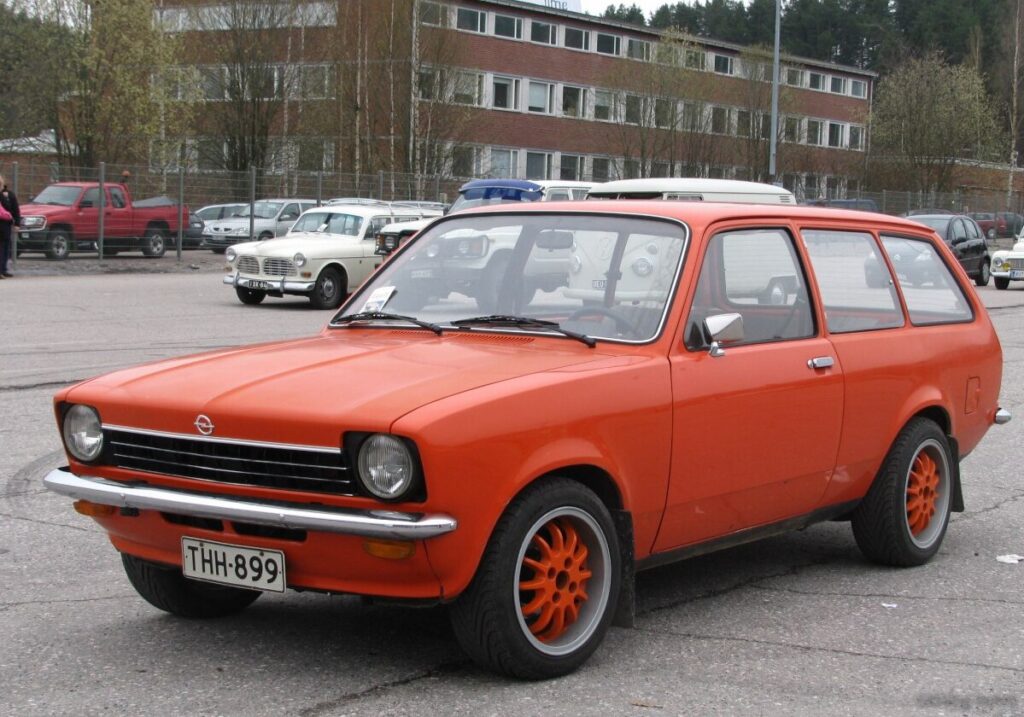
The Opel Kadett C Caravan 1.2, producing 55 horsepower, was a mainstay of the German automotive market from 1973 to 1979. Positioned as the entry-level variant of the Kadett C Caravan (estate) range, it offered affordable family transportation during a period of economic change. This model, built on the Kadett C platform, represented a practical and economical choice for buyers prioritizing functionality over outright performance. It was a popular choice for families and businesses needing a versatile vehicle for everyday use. The Kadett C series, and particularly the Caravan, played a significant role in establishing Opel as a major player in the European compact car segment.
Technical Specifications
| Brand | Opel |
| Model | Kadett |
| Generation | Kadett C Caravan |
| Type (Engine) | 1.2 (55 Hp) |
| Start of production | 1973 |
| End of production | 1979 |
| Powertrain Architecture | Internal Combustion engine |
| Body type | Station wagon (estate) |
| Seats | 5 |
| Doors | 3-5 |
| Fuel Type | Petrol (Gasoline) |
| Acceleration 0 – 100 km/h | 20 sec |
| Acceleration 0 – 62 mph | 20 sec |
| Acceleration 0 – 60 mph | 19 sec |
| Maximum speed | 138 km/h (85.75 mph) |
| Weight-to-power ratio | 14.5 kg/Hp, 68.8 Hp/tonne |
| Weight-to-torque ratio | 9.5 kg/Nm, 105 Nm/tonne |
| Power | 55 Hp @ 5400 rpm |
| Power per litre | 46 Hp/l |
| Torque | 84 Nm @ 3400 rpm (61.96 lb.-ft. @ 3400 rpm) |
| Engine layout | Front, Longitudinal |
| Engine Model/Code | 12N |
| Engine displacement | 1196 cm3 (72.98 cu. in.) |
| Number of cylinders | 4 |
| Engine configuration | Inline |
| Cylinder Bore | 79 mm (3.11 in.) |
| Piston Stroke | 61 mm (2.4 in.) |
| Compression ratio | 7.8:1 |
| Number of valves per cylinder | 2 |
| Fuel injection system | Carburettor |
| Engine aspiration | Naturally aspirated engine |
| Valvetrain | OHV |
| Engine oil capacity | 2.8 l (2.96 US qt | 2.46 UK qt) |
| Coolant | 4.6 l (4.86 US qt | 4.05 UK qt) |
| Kerb Weight | 800 kg (1763.7 lbs) |
| Max. weight | 1250 kg (2755.78 lbs) |
| Max load | 450 kg (992.08 lbs) |
| Length | 4140 mm (162.99 in) |
| Width | 1580 mm (62.2 in) |
| Height | 1385 mm (54.53 in) |
| Wheelbase | 2395 mm (94.29 in) |
| Front track | 1300 mm (51.18 in) |
| Rear (Back) track | 1299 mm (51.14 in) |
| Minimum turning circle | 9.2 m (30.18 ft) |
| Drivetrain Architecture | The Internal combustion engine (ICE) drives the rear wheels of the vehicle. |
| Drive wheel | Rear wheel drive |
| Number of gears | 4 gears, manual transmission |
| Front brakes | Disc |
| Rear brakes | Drum |
Powertrain & Engine Architecture
The heart of the Kadett C Caravan 1.2 was the 12N engine, a 1.2-liter (1196 cc) inline-four cylinder unit. This engine utilized an overhead valve (OHV) valvetrain and a single carburetor for fuel delivery. The 12N engine was known for its simplicity and durability, though it wasn’t a powerhouse. Its longitudinal front-engine layout was typical for European cars of the era. The 55 horsepower output was achieved at 5400 rpm, while peak torque of 84 Nm (61.96 lb-ft) arrived at 3400 rpm. The engine’s relatively low compression ratio of 7.8:1 was a factor in its ability to run on the lower octane fuels commonly available at the time. The four-speed manual transmission was the standard offering, providing a straightforward driving experience.
Driving Characteristics
The 1.2-liter engine and manual transmission combination in the Kadett C Caravan resulted in a driving experience focused on economy and practicality. Acceleration was leisurely, taking approximately 20 seconds to reach 62 mph (100 km/h). The car’s top speed was around 85.75 mph (138 km/h). The four-speed gearbox offered reasonable control, but required frequent shifting to maintain momentum, especially when loaded with passengers or cargo. Compared to the more powerful Kadett C variants, such as those equipped with larger engines, the 1.2 felt noticeably underpowered, particularly on inclines or when overtaking. However, its lighter weight compared to higher-spec models helped to mitigate some of the performance deficit. The rear-wheel-drive configuration provided predictable handling, but lacked the sophistication of more modern front-wheel-drive systems.
Equipment & Trim Levels
The Kadett C Caravan 1.2 was typically offered with a basic level of equipment, reflecting its position as the entry-level model. Standard features generally included cloth upholstery, basic instrumentation (speedometer, fuel gauge, temperature gauge), and manually operated windows and door locks. The interior was functional and durable, prioritizing practicality over luxury. Optional extras, such as a radio, upgraded upholstery, and a sunroof, were available, but added to the vehicle’s cost. The trim level was often identified by minimal badging, focusing on the “Caravan” designation to highlight the vehicle’s estate body style.
Chassis & Braking
The Kadett C Caravan featured a relatively simple chassis design. It utilized a conventional rear-wheel-drive layout with a solid rear axle and leaf springs. Front suspension consisted of independent coil springs and wishbones. Braking was accomplished via disc brakes on the front wheels and drum brakes on the rear. The braking system was adequate for the car’s weight and performance, but lacked the stopping power of more modern systems. Stabilizer bars were not typically included as standard equipment on the base 1.2 model, contributing to a slightly more pronounced body roll during cornering.
Market Reception & Comparison
The Kadett C Caravan 1.2 was generally well-received as an affordable and practical family vehicle. Critics acknowledged its fuel efficiency and durability, but noted its lack of performance. Compared to other Kadett C variants, such as the 1.6-liter models, the 1.2 offered significantly lower running costs but at the expense of driving enjoyment. The 1.6-liter versions provided a noticeable performance boost, making them more suitable for drivers who frequently carried passengers or cargo or drove on highways. The 1.2’s simplicity also translated to lower maintenance costs, making it an attractive option for budget-conscious buyers. Its main competitors included other European compact estates, such as the Ford Cortina Estate and the Hillman Avenger Estate.
Legacy
The Opel Kadett C Caravan 1.2, while not the most powerful or technologically advanced vehicle of its time, remains a fondly remembered classic. The 12N engine proved to be remarkably durable, and many examples are still on the road today. In the used car market, these Kadetts are appreciated for their simplicity, affordability, and nostalgic appeal. Parts availability can be a challenge, but a dedicated community of enthusiasts continues to support the preservation of these vehicles. The Kadett C Caravan 1.2 represents a significant chapter in Opel’s history, embodying the brand’s commitment to providing practical and reliable transportation to the masses.