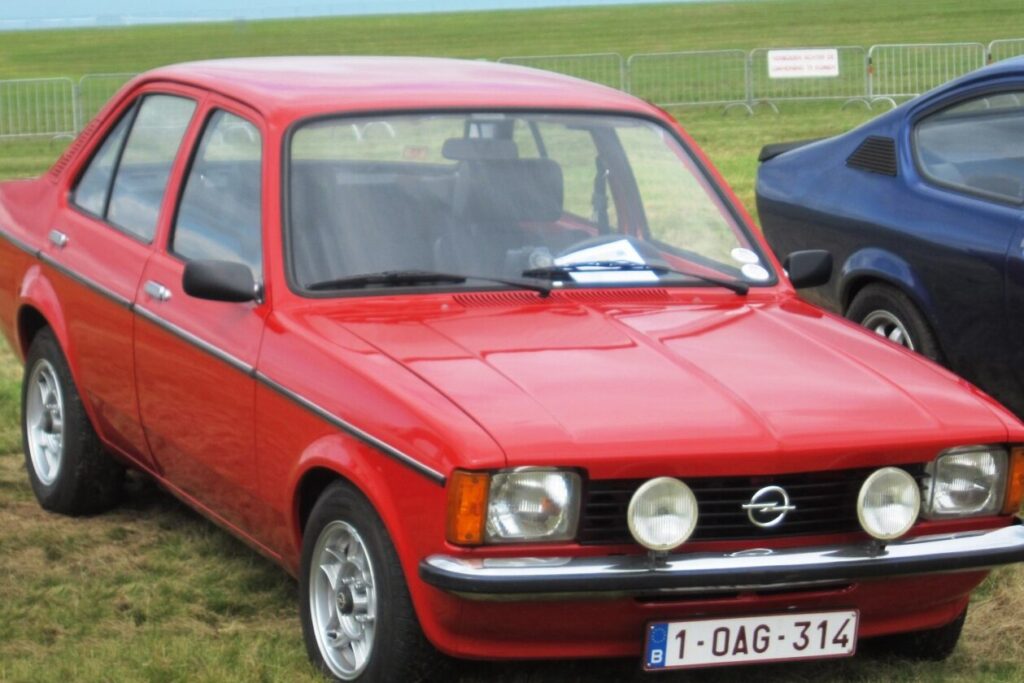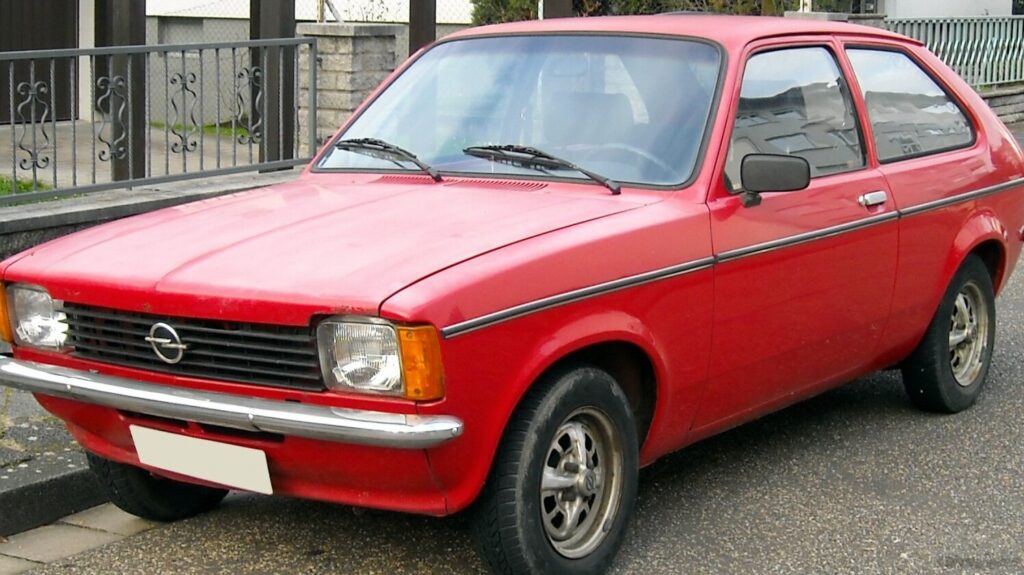
The Opel Kadett C City 1.0, produced between 1974 and 1979, represented the entry point into the Kadett C range, a pivotal model for Opel during a period of significant automotive change. Positioned as a compact, affordable hatchback, the City 1.0 was designed to appeal to budget-conscious buyers in Europe, particularly those seeking a practical and economical vehicle for urban driving. It was part of the larger Kadett C series (1973-1979), which aimed to modernize Opel’s offerings and compete with increasingly popular rivals like the Ford Escort and Volkswagen Golf. The “City” designation denoted a more basic trim level, focusing on essential transportation rather than luxury features.
Technical Specifications
| Brand | Opel |
| Model | Kadett |
| Generation | Kadett C City |
| Type (Engine) | 1.0 (40 Hp) |
| Start of production | 1974 |
| End of production | 1979 |
| Powertrain Architecture | Internal Combustion engine |
| Body type | Hatchback |
| Seats | 5 |
| Doors | 3 |
| Fuel consumption (combined) | 7.4 l/100 km (31.8 US mpg, 38.2 UK mpg, 13.5 km/l) |
| Fuel Type | Petrol (Gasoline) |
| Acceleration 0 – 100 km/h | 26.5 sec |
| Acceleration 0 – 62 mph | 26.5 sec |
| Acceleration 0 – 60 mph | 25.2 sec |
| Maximum speed | 122 km/h (75.81 mph) |
| Weight-to-power ratio | 19.9 kg/Hp, 50.3 Hp/tonne |
| Weight-to-torque ratio | 11.4 kg/Nm, 88.1 Nm/tonne |
| Power | 40 Hp @ 5400 rpm |
| Power per litre | 40.3 Hp/l |
| Torque | 70 Nm (51.63 lb.-ft.) |
| Engine layout | Front, Longitudinal |
| Engine Model/Code | 10N |
| Engine displacement | 993 cm3 (60.6 cu. in.) |
| Number of cylinders | 4 |
| Engine configuration | Inline |
| Cylinder Bore | 72 mm (2.83 in.) |
| Piston Stroke | 61 mm (2.4 in.) |
| Compression ratio | 7.9:1 |
| Number of valves per cylinder | 2 |
| Fuel injection system | Carburettor |
| Engine aspiration | Naturally aspirated |
| Engine oil capacity | 2.8 l (2.96 US qt | 2.46 UK qt) |
| Coolant | 4.9 l (5.18 US qt | 4.31 UK qt) |
| Kerb Weight | 795 kg (1752.67 lbs.) |
| Max. weight | 1205 kg (2656.57 lbs.) |
| Max load | 410 kg (903.9 lbs.) |
| Trunk (boot) space – maximum | 410 l (14.48 cu. ft.) |
| Fuel tank capacity | 37 l (9.77 US gal | 8.14 UK gal) |
| Max. roof load | 60 kg (132.28 lbs.) |
| Permitted trailer load with brakes (12%) | 800 kg (1763.7 lbs.) |
| Permitted trailer load without brakes | 430 kg (947.99 lbs.) |
| Length | 3895 mm (153.35 in.) |
| Width | 1580 mm (62.2 in.) |
| Height | 1375 mm (54.13 in.) |
| Wheelbase | 2395 mm (94.29 in.) |
| Front track | 1300 mm (51.18 in.) |
| Rear (Back) track | 1299 mm (51.14 in.) |
| Minimum turning circle | 9.2 m (30.18 ft.) |
| Drivetrain Architecture | Rear wheel drive |
| Drive wheel | Rear wheel drive |
| Number of gears and type of gearbox | 4 gears, manual transmission |
| Front brakes | Drum |
| Rear brakes | Drum |
| Tires size | 155/80 SR13 |
| Wheel rims size | 13 |
Powertrain & Engine Architecture
The heart of the Kadett C City 1.0 was the Opel 10N engine, a 993cc inline-four cylinder unit. This engine, while modest in displacement, was designed for fuel efficiency and reliability. It featured a single overhead camshaft (SOHC) and two valves per cylinder. Fuel delivery was handled by a single downdraft carburetor, a common setup for vehicles of this era. The 10N engine produced 40 horsepower at 5400 rpm and 70 Nm (51.63 lb-ft) of torque. The engine was mounted longitudinally in the front of the vehicle, driving the rear wheels. The transmission was a four-speed manual gearbox, chosen for its simplicity and cost-effectiveness. This configuration was typical for European economy cars of the 1970s.
Driving Characteristics
The Kadett C City 1.0 was not a performance car. Its 40 horsepower and relatively high weight (795 kg / 1752.67 lbs) resulted in leisurely acceleration. Zero to 60 mph took approximately 25.2 seconds, and the top speed was around 75.81 mph. The four-speed manual transmission offered relatively widely spaced gear ratios, prioritizing fuel economy over spirited driving. The engine felt strained at higher speeds, and overtaking required careful planning. Compared to other Kadett C variants, such as the 1.2 or 1.6 models, the City 1.0 was significantly slower. However, its light steering and compact size made it relatively easy to maneuver in urban environments. The rear-wheel-drive layout provided predictable handling, although it lacked the stability of front-wheel-drive cars.
Equipment & Trim Levels
The “City” trim level was the most basic offering in the Kadett C range. Standard equipment was minimal, focusing on essential features. The interior typically featured simple cloth upholstery, a basic dashboard with minimal instrumentation, and vinyl floor coverings. Features like a radio, heated rear window, or upgraded trim were typically optional extras. The Kadett C City 1.0 was designed to be a no-frills transportation solution, appealing to buyers who prioritized affordability over comfort and convenience.
Chassis & Braking
The Kadett C City 1.0 utilized a relatively simple chassis design. It featured a conventional body-on-frame construction. The suspension consisted of independent front suspension with coil springs and a rigid rear axle with leaf springs. Braking was handled by drum brakes on all four wheels, which were adequate for the car’s weight and performance but lacked the stopping power of disc brakes. The steering was a recirculating ball system, providing light but somewhat imprecise steering feel. The relatively narrow tires (155/80 SR13) contributed to the car’s modest grip levels.
Market Reception & Comparison
The Kadett C City 1.0 was generally well-received as an affordable and economical option in the European market. Critics praised its fuel efficiency and practicality, but noted its lack of performance and basic interior. Compared to the larger-engined Kadett C models, the City 1.0 offered significantly lower running costs but at the expense of driving enjoyment. It competed directly with other small, budget-oriented hatchbacks like the Ford Fiesta and Volkswagen Polo. The City 1.0’s reliability was generally good, although the carburetor required periodic adjustment and maintenance.
Legacy
The Opel Kadett C City 1.0, while not a particularly exciting vehicle, played an important role in making personal transportation accessible to a wider range of buyers. The 10N engine proved to be a durable and reliable powerplant, and many examples of the City 1.0 remain on the road today. In the used car market, these Kadetts are often sought after by enthusiasts looking for a classic, affordable, and easy-to-maintain vehicle. While parts availability can be a challenge, the Kadett C’s simple design makes it relatively easy to repair and restore. The City 1.0 represents a snapshot of 1970s automotive engineering, prioritizing practicality and economy over performance and luxury.