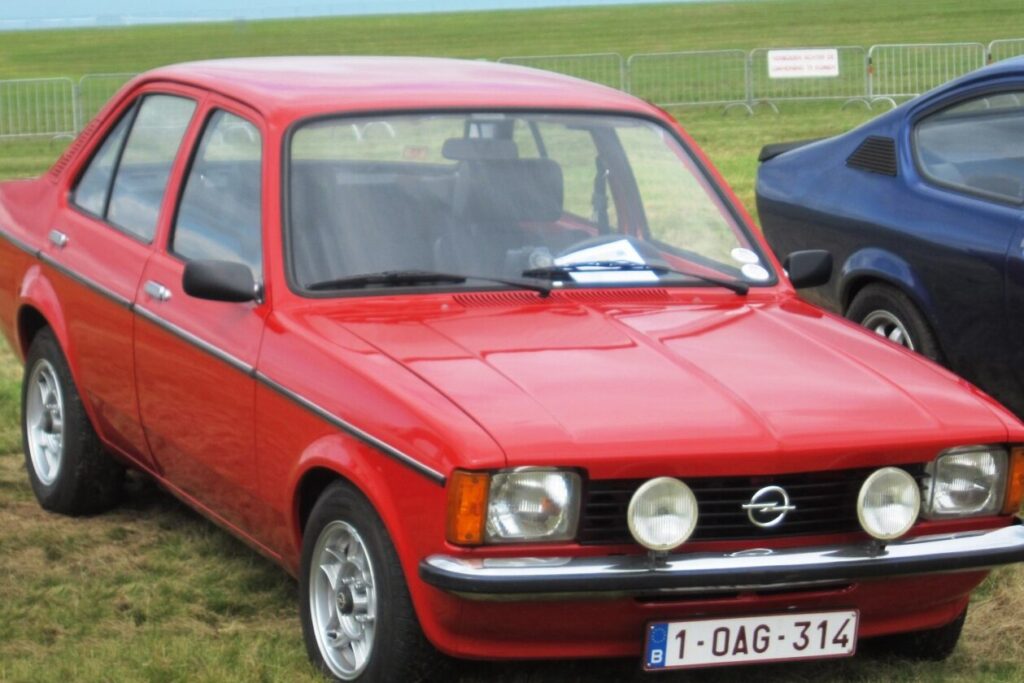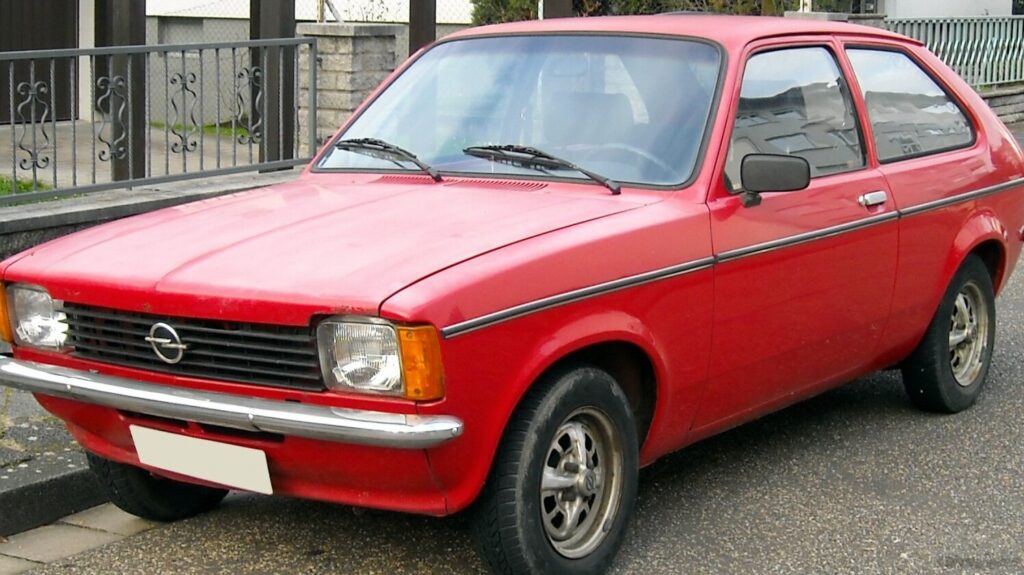
The Opel Kadett C City 1.2, producing 51 horsepower, was a mainstay of the European small car market from 1973 to 1979. Positioned as the entry-level variant of the Kadett C range, it offered affordable transportation during a period of economic uncertainty. The Kadett C, built on the GM T-platform, represented a significant step forward for Opel, offering improved comfort, safety, and styling compared to its predecessor, the Kadett B. The “City” designation specifically denoted the three-door hatchback body style, which was becoming increasingly popular for its practicality and ease of parking in urban environments. This particular 1.2-liter engine and four-speed manual transmission combination was aimed at buyers prioritizing fuel economy and low running costs over outright performance.
Technical Specifications
| Brand | Opel |
| Model | Kadett |
| Generation | Kadett C City |
| Type (Engine) | 1.2 (51 Hp) |
| Start of production | 1973 |
| End of production | 1979 |
| Powertrain Architecture | Internal Combustion engine |
| Body type | Hatchback |
| Seats | 5 |
| Doors | 3 |
| Fuel consumption (combined) | 8.5 l/100 km (27.7 US mpg, 33.2 UK mpg, 11.8 km/l) |
| Fuel Type | Petrol (Gasoline) |
| Acceleration 0 – 100 km/h | 21.5 sec |
| Acceleration 0 – 62 mph | 21.5 sec |
| Acceleration 0 – 60 mph | 20.4 sec |
| Maximum speed | 130 km/h (80.78 mph) |
| Weight-to-power ratio | 15.6 kg/Hp (64.2 Hp/tonne) |
| Weight-to-torque ratio | 9.9 kg/Nm (100.6 Nm/tonne) |
| Power | 51 Hp @ 5600 rpm |
| Power per litre | 42.6 Hp/l |
| Torque | 80 Nm @ 3400 rpm (59 lb.-ft. @ 3400 rpm) |
| Engine layout | Front, Transverse |
| Engine Model/Code | 12N |
| Engine displacement | 1196 cm3 (72.98 cu. in.) |
| Number of cylinders | 4 |
| Engine configuration | Inline |
| Cylinder Bore | 79 mm (3.11 in.) |
| Piston Stroke | 61 mm (2.4 in.) |
| Compression ratio | 7.8:1 |
| Number of valves per cylinder | 2 |
| Fuel injection system | Carburettor |
| Engine aspiration | Naturally aspirated |
| Engine oil capacity | 2.8 l (2.96 US qt | 2.46 UK qt) |
| Coolant | 4.7 l (4.97 US qt | 4.14 UK qt) |
| Kerb Weight | 795 kg (1752.67 lbs.) |
| Max. weight | 1205 kg (2656.57 lbs.) |
| Max load | 410 kg (903.9 lbs.) |
| Trunk (boot) space – minimum | 410 l (14.48 cu. ft.) |
| Fuel tank capacity | 37 l (9.77 US gal | 8.14 UK gal) |
| Permitted trailer load with brakes (12%) | 800 kg (1763.7 lbs.) |
| Permitted trailer load without brakes | 430 kg (947.99 lbs.) |
| Length | 3895 mm (153.35 in.) |
| Width | 1580 mm (62.2 in.) |
| Height | 1375 mm (54.13 in.) |
| Wheelbase | 2395 mm (94.29 in.) |
| Front track | 1300 mm (51.18 in.) |
| Rear (Back) track | 1299 mm (51.14 in.) |
| Minimum turning circle | 9.2 m (30.18 ft.) |
| Drivetrain Architecture | Front wheel drive |
| Number of gears and type of gearbox | 4 gears, manual transmission |
| Front brakes | Drum |
| Rear brakes | Drum |
| Tires size | 155/80 SR13 |
| Wheel rims size | 13 |
Powertrain & Engine Architecture
The heart of the Kadett C City 1.2 was the Opel 12N engine, a 1196cc inline-four cylinder unit. This engine was a relatively simple design, featuring a single overhead camshaft and two valves per cylinder. Fuel delivery was handled by a Solex carburetor, a common setup for the time, prioritizing simplicity and cost-effectiveness over sophisticated fuel injection. The 12N engine produced 51 horsepower at 5600 rpm and 80 Nm (59 lb-ft) of torque at 3400 rpm. The four-speed manual transmission was a standard unit for Opel, offering a relatively long gearing aimed at maximizing fuel efficiency. The transmission was connected to the front wheels via driveshafts, making the Kadett C City a front-wheel-drive vehicle – a configuration becoming increasingly common in Europe for its packaging advantages and improved traction in adverse conditions.
Driving Characteristics
The Kadett C City 1.2 was not a performance car. Its 0-60 mph time of around 20.4 seconds and top speed of 80.78 mph reflected its modest power output. However, it was perfectly adequate for urban driving and shorter journeys. The long gearing of the four-speed manual transmission meant that the engine rarely felt strained at cruising speeds, contributing to a relatively quiet and comfortable ride. Compared to the more powerful Kadett C variants, such as the 1.6S, the 1.2 felt noticeably slower, particularly when accelerating or climbing hills. The manual transmission offered a more engaging driving experience than the optional three-speed automatic, which further reduced performance. The steering was light and easy, making it maneuverable in tight spaces, but lacked the precision of more modern systems.
Equipment & Trim Levels
The Kadett C City 1.2 was typically equipped with basic but functional features. Standard equipment included cloth upholstery, vinyl floor covering, and a basic instrument panel. The interior was designed with practicality in mind, offering ample space for passengers considering the car’s compact dimensions. Optional extras included a radio, heated rear window, and upgraded upholstery. The City trim level generally represented the most basic specification within the Kadett C range, focusing on affordability and essential features. Higher trim levels, such as the Berlina and GTE, offered more luxurious appointments and performance-oriented upgrades.
Chassis & Braking
The Kadett C City utilized a relatively simple chassis design. It featured independent front suspension with MacPherson struts and a torsion beam rear suspension. The braking system consisted of drum brakes on all four wheels, which were adequate for the car’s weight and performance. The suspension was tuned for comfort rather than sporty handling, providing a reasonably smooth ride over uneven surfaces. The car’s relatively light weight (795 kg or 1752.67 lbs) helped to compensate for the lack of sophisticated suspension components and braking power.
Market Reception & Comparison
The Kadett C City 1.2 was well-received in its target market as an affordable and reliable small car. Critics praised its fuel economy and practicality, but noted its lack of performance. Compared to other small cars of the era, such as the Ford Fiesta and Volkswagen Polo, the Kadett C City offered a good balance of price, space, and fuel efficiency. The 1.6-liter Kadett C models offered significantly more performance but came at a higher price point. The 1.2-liter engine was generally considered reliable, but required regular maintenance to ensure optimal performance. Fuel economy was a key selling point, averaging around 27.7 US mpg.
Legacy
The Opel Kadett C City 1.2, while not a particularly exciting car, played an important role in providing affordable transportation to a wide range of buyers in Europe during the 1970s. The 12N engine proved to be reasonably durable, and many examples are still on the road today, often cherished by classic car enthusiasts. The Kadett C’s simple design and readily available parts make it relatively easy to maintain and repair. In the used car market, the Kadett C City 1.2 remains an affordable and accessible classic, offering a nostalgic glimpse into a bygone era of automotive history. Its enduring appeal lies in its simplicity, reliability, and the memories it evokes for those who grew up with it.