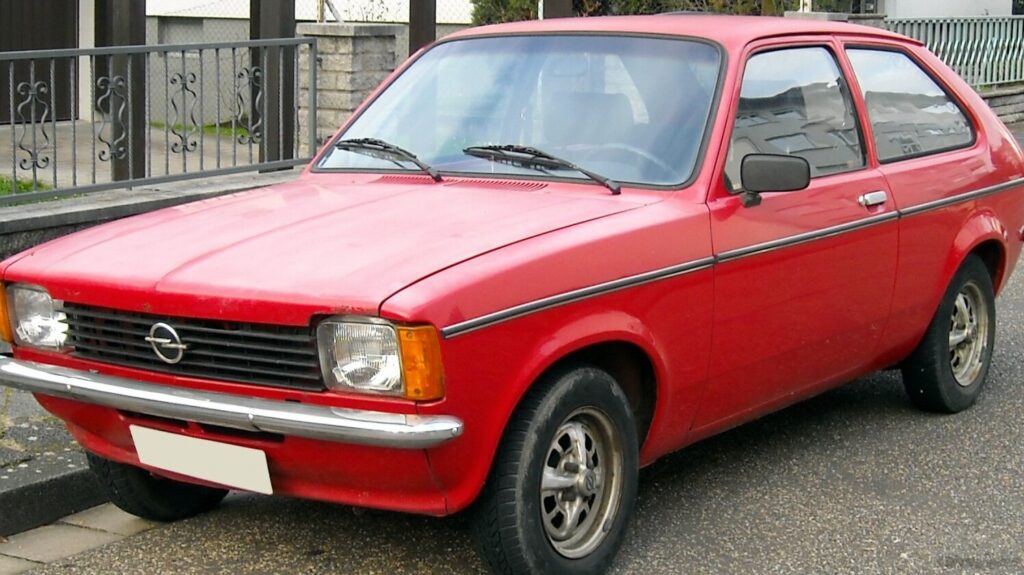
The Opel Kadett C City 1.2 S, produced between 1973 and 1979, represented a key entry point into the Kadett C range, Opel’s popular compact offering. Positioned as a practical and affordable hatchback, the 1.2 S variant aimed at buyers seeking economical transportation with a degree of style. It was a significant model for Opel, contributing to the Kadett C’s success in the competitive European small car market. The Kadett C itself was built upon the GM T-platform, shared with other vehicles like the Vauxhall/Bedford Chevette and Isuzu Gemini, allowing for economies of scale in production. The “City” designation denoted the three-door hatchback body style, differentiating it from the four-door saloon versions.
Technical Specifications
| Brand | Opel |
| Model | Kadett |
| Generation | Kadett C City |
| Type (Engine) | 1.2 S (60 Hp) |
| Start of production | 1973 |
| End of production | 1979 |
| Powertrain Architecture | Internal Combustion engine |
| Body type | Hatchback |
| Seats | 5 |
| Doors | 3 |
| Fuel consumption (combined) | 8.1 l/100 km (29 US mpg, 34.9 UK mpg, 12.3 km/l) |
| Fuel Type | Petrol (Gasoline) |
| Acceleration 0 – 100 km/h | 18 sec |
| Acceleration 0 – 62 mph | 18 sec |
| Acceleration 0 – 60 mph | 17.1 sec |
| Maximum speed | 140 km/h (86.99 mph) |
| Weight-to-power ratio | 13.3 kg/Hp, 75.5 Hp/tonne |
| Weight-to-torque ratio | 9 kg/Nm, 110.7 Nm/tonne |
| Power | 60 Hp @ 5400 rpm |
| Power per litre | 50.2 Hp/l |
| Torque | 88 Nm @ 3400 rpm (64.91 lb.-ft. @ 3400 rpm) |
| Engine layout | Front, Transverse |
| Engine Model/Code | 12S |
| Engine displacement | 1196 cm3 (72.98 cu. in.) |
| Number of cylinders | 4 |
| Engine configuration | Inline |
| Cylinder Bore | 79 mm (3.11 in.) |
| Piston Stroke | 61 mm (2.4 in.) |
| Compression ratio | 9:1 |
| Number of valves per cylinder | 2 |
| Fuel injection system | Carburettor |
| Engine aspiration | Naturally aspirated |
| Engine oil capacity | 2.8 l (2.96 US qt | 2.46 UK qt) |
| Coolant | 4.7 l (4.97 US qt | 4.14 UK qt) |
| Kerb Weight | 795 kg (1752.67 lbs.) |
| Max. weight | 1205 kg (2656.57 lbs.) |
| Max load | 410 kg (903.9 lbs.) |
| Trunk (boot) space – minimum | 410 l (14.48 cu. ft.) |
| Fuel tank capacity | 37 l (9.77 US gal | 8.14 UK gal) |
| Max. roof load | 60 kg (132.28 lbs.) |
| Permitted trailer load with brakes (12%) | 800 kg (1763.7 lbs.) |
| Permitted trailer load without brakes | 430 kg (947.99 lbs.) |
| Length | 3895 mm (153.35 in.) |
| Width | 1580 mm (62.2 in.) |
| Height | 1375 mm (54.13 in.) |
| Wheelbase | 2395 mm (94.29 in.) |
| Front track | 1300 mm (51.18 in.) |
| Rear (Back) track | 1299 mm (51.14 in.) |
| Minimum turning circle | 9.2 m (30.18 ft.) |
| Drivetrain Architecture | Front wheel drive |
| Number of gears and type of gearbox | 4 gears, manual transmission |
| Front brakes | Drum |
| Rear brakes | Drum |
| Tires size | 155/80 SR13 |
| Wheel rims size | 13 |
Powertrain & Engine Architecture
The Kadett C City 1.2 S was powered by the Opel 12S engine, a 1196 cc inline-four cylinder unit. This engine, a mainstay of the Kadett C range, featured a relatively simple design with a single overhead camshaft and two valves per cylinder. Fuel delivery was handled by a Solex carburetor, typical for the era. The 12S engine produced 60 horsepower at 5400 rpm and 88 Nm (65 lb-ft) of torque at 3400 rpm. The engine’s design prioritized fuel economy and reliability over outright performance. The four-speed manual transmission was the standard offering for this variant, providing a straightforward driving experience. The transverse engine layout, common in front-wheel-drive cars, helped maximize interior space.
Driving Characteristics
The 1.2 S, with its 60 horsepower, wasn’t designed for rapid acceleration. Acceleration from 0 to 60 mph took around 17.1 seconds, and top speed was approximately 87 mph. However, the engine proved to be reasonably responsive in everyday driving situations. The four-speed gearbox offered adequate ratios for city and highway use, although it lacked the versatility of a five-speed transmission. Compared to the more powerful Kadett C variants, such as those equipped with larger engines, the 1.2 S felt noticeably slower. However, its lighter weight and simpler mechanicals contributed to a more nimble and forgiving driving experience. The steering was light and relatively precise, making it easy to maneuver in urban environments.
Equipment & Trim Levels
The Kadett C City 1.2 S was generally equipped with basic, but functional, features. Standard equipment included cloth upholstery, vinyl floor covering, and a basic instrument panel. The interior was designed with practicality in mind, offering ample space for passengers and luggage. Optional extras included a radio, heated rear window, and upgraded upholstery. The trim level was fairly basic, reflecting the car’s position as an entry-level model. The exterior featured simple steel wheels, chrome bumpers, and basic exterior trim.
Chassis & Braking
The Kadett C City utilized a relatively simple chassis design. It featured independent front suspension with MacPherson struts and a solid rear axle with leaf springs. The braking system consisted of drum brakes on all four wheels, which were adequate for the car’s weight and performance. Steering was of the rack and pinion type, providing reasonable precision. The suspension setup prioritized ride comfort over sporty handling, resulting in a relatively soft and compliant ride. The car’s modest weight contributed to its overall stability and ease of handling.
Market Reception & Comparison
The Kadett C City 1.2 S was well-received in the European market as an affordable and reliable small car. Critics praised its fuel economy and practicality, but noted its lack of outright performance. Compared to other Kadett C variants, such as the 1.6 S, the 1.2 S offered a more economical option for buyers who prioritized fuel efficiency over speed. It competed with other popular small cars of the era, such as the Ford Fiesta, Volkswagen Polo, and Renault 5. The 1.2 S generally offered a better value proposition than some of its competitors, providing a good balance of features and affordability.
Legacy
The Opel Kadett C City 1.2 S, while not a performance icon, remains a fondly remembered classic among enthusiasts. Its simple mechanicals and robust construction contribute to its relatively good reliability, even today. While finding well-maintained examples can be challenging, the 1.2 S is becoming increasingly sought after by collectors and enthusiasts. The 12S engine, while not particularly powerful, is known for its durability and ease of maintenance. The Kadett C City 1.2 S represents a significant chapter in Opel’s history, embodying the spirit of affordable and practical motoring that defined the 1970s.