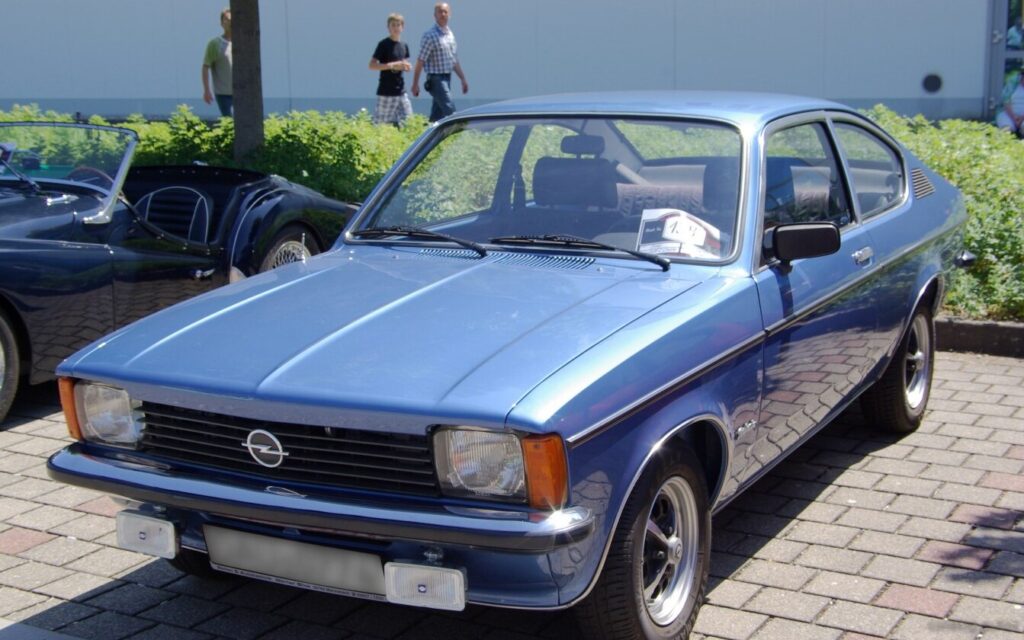
The Opel Kadett C Coupe 1.0, producing 40 horsepower, was a variant of the Kadett C Coupe manufactured between 1973 and 1979. Positioned as the entry-level offering within the Kadett C Coupe range, it provided affordable transportation for the European market. The Kadett C, launched in 1972, represented a significant update to the Kadett line, offering a more modern design and improved features compared to its predecessor, the Kadett B. The Coupe version, with its two-door body style, aimed for a more sporty aesthetic, though the 1.0-liter engine prioritized economy over outright performance.
Technical Specifications
| Brand | Opel |
| Model | Kadett |
| Generation | Kadett C Coupe |
| Type (Engine) | 1.0 (40 Hp) |
| Start of production | 1973 |
| End of production | 1979 |
| Powertrain Architecture | Internal Combustion engine |
| Body type | Coupe |
| Seats | 5 |
| Doors | 2 |
| Fuel consumption (combined) | 7.4 l/100 km (31.8 US mpg, 38.2 UK mpg, 13.5 km/l) |
| Fuel Type | Petrol (Gasoline) |
| Acceleration 0 – 100 km/h | 26.5 sec |
| Acceleration 0 – 62 mph | 26.5 sec |
| Acceleration 0 – 60 mph | 25.2 sec |
| Maximum speed | 125 km/h (77.67 mph) |
| Weight-to-power ratio | 19.8 kg/Hp (50.6 Hp/tonne) |
| Weight-to-torque ratio | 11.4 kg/Nm (87.3 Nm/tonne) |
| Power | 40 Hp @ 5400 rpm |
| Power per litre | 40.3 Hp/l |
| Torque | 69 Nm @ 3400 rpm (50.89 lb.-ft. @ 3400 rpm) |
| Engine layout | Front, Longitudinal |
| Engine Model/Code | 10N |
| Engine displacement | 993 cm3 (60.6 cu. in.) |
| Number of cylinders | 4 |
| Engine configuration | Inline |
| Cylinder Bore | 72 mm (2.83 in.) |
| Piston Stroke | 61 mm (2.4 in.) |
| Compression ratio | 7.9:1 |
| Number of valves per cylinder | 2 |
| Fuel injection system | Carburettor |
| Engine aspiration | Naturally aspirated engine |
| Valvetrain | OHV |
| Engine oil capacity | 2.8 l (2.96 US qt | 2.46 UK qt) |
| Coolant | 4.9 l (5.18 US qt | 4.31 UK qt) |
| Kerb Weight | 790 kg (1741.65 lbs.) |
| Max. weight | 1205 kg (2656.57 lbs.) |
| Max load | 415 kg (914.92 lbs.) |
| Fuel tank capacity | 43 l (11.36 US gal | 9.46 UK gal) |
| Max. roof load | 60 kg (132.28 lbs.) |
| Permitted trailer load with brakes (12%) | 800 kg (1763.7 lbs.) |
| Permitted trailer load without brakes | 430 kg (947.99 lbs.) |
| Length | 4127 mm (162.48 in.) |
| Width | 1580 mm (62.2 in.) |
| Height | 1340 mm (52.76 in.) |
| Wheelbase | 2395 mm (94.29 in.) |
| Front track | 1300 mm (51.18 in.) |
| Rear (Back) track | 1299 mm (51.14 in.) |
| Minimum turning circle | 9.2 m (30.18 ft.) |
| Drivetrain Architecture | Rear wheel drive |
| Number of gears and type of gearbox | 4 gears, manual transmission |
| Front brakes | Drum |
| Rear brakes | Drum |
| Tires size | 155 SR13 |
| Wheel rims size | 13 |
Powertrain & Engine Architecture
The heart of the Kadett C Coupe 1.0 was the Opel 10N engine, a 993cc inline-four cylinder unit. This engine utilized a single overhead valve (OHV) valvetrain and a carburetor for fuel delivery. The 10N was a relatively simple design, prioritizing reliability and low manufacturing costs over high performance. Its longitudinal front engine placement and rear-wheel drive configuration were typical for European cars of the era. The 4-speed manual transmission was the only gearbox option available with this engine, contributing to its affordability. The engine’s modest output of 40 horsepower at 5400 rpm and 69 Nm (50.89 lb-ft) of torque at 3400 rpm reflected its small displacement and basic technology.
Driving Characteristics
The 1.0-liter Kadett C Coupe offered modest performance. Acceleration was slow, taking approximately 26.5 seconds to reach 100 km/h (62 mph). Top speed was limited to around 125 km/h (77.67 mph). The four-speed manual transmission featured relatively widely spaced gear ratios, requiring frequent shifting to maintain optimal engine speed. Compared to the more powerful Kadett C variants, such as those equipped with 1.2 or 1.6-liter engines, the 1.0-liter model felt significantly underpowered, particularly when carrying passengers or navigating hilly terrain. However, its light weight (790 kg / 1741.65 lbs) helped to mitigate some of the performance deficit. The rear-wheel drive setup provided predictable handling, but lacked the sophistication of more modern front-wheel drive systems.
Equipment & Trim Levels
The 1.0-liter Kadett C Coupe was the base model, and as such, came with a relatively sparse equipment list. Standard features typically included basic cloth upholstery, vinyl floor covering, and a simple dashboard layout. Options were limited, but could include a radio, upgraded seat fabrics, and a sunroof. The interior was functional and durable, designed for practicality rather than luxury. Exterior trim was also minimal, with basic chrome bumpers and steel wheels with hubcaps. The focus was on providing a basic, affordable coupe for everyday transportation.
Chassis & Braking
The Kadett C Coupe utilized a body-on-frame construction, which was common for the time. The suspension consisted of independent front suspension with coil springs and a rigid rear axle with leaf springs. Braking was accomplished via drum brakes on all four wheels. The suspension setup provided a comfortable ride, but handling was not particularly sharp. The drum brakes offered adequate stopping power for the car’s weight and performance, but lacked the stopping power and fade resistance of disc brakes. The relatively narrow tires (155 SR13) further limited grip.
Market Reception & Comparison
The Kadett C Coupe 1.0 was primarily aimed at budget-conscious buyers. Critics generally acknowledged its affordability and fuel economy (7.4 l/100 km / 31.8 US mpg), but noted its lack of performance. Compared to the 1.2-liter and 1.6-liter Kadett C Coupes, the 1.0-liter model offered significantly less power and refinement. The 1.2-liter provided a noticeable improvement in performance without a substantial increase in price, making it a more popular choice for many buyers. The 1.6-liter models, while more expensive, offered a more substantial performance upgrade and were often chosen by those seeking a more engaging driving experience. The 1.0-liter model’s main advantage was its low purchase price and relatively low running costs.
Legacy
The Opel Kadett C Coupe 1.0, while not a performance icon, played an important role in providing affordable transportation to a wide range of European buyers. The 10N engine proved to be relatively reliable, and many examples remain on the road today. However, due to its low power output and basic features, it is not highly sought after by collectors. Parts availability can be a challenge, but many components are still available through specialist suppliers. The Kadett C Coupe 1.0 represents a snapshot of automotive engineering from the 1970s, prioritizing practicality and affordability over outright performance and luxury. It’s a testament to simple, durable design, and a reminder of a time when cars were built to be functional and reliable, rather than technologically advanced.