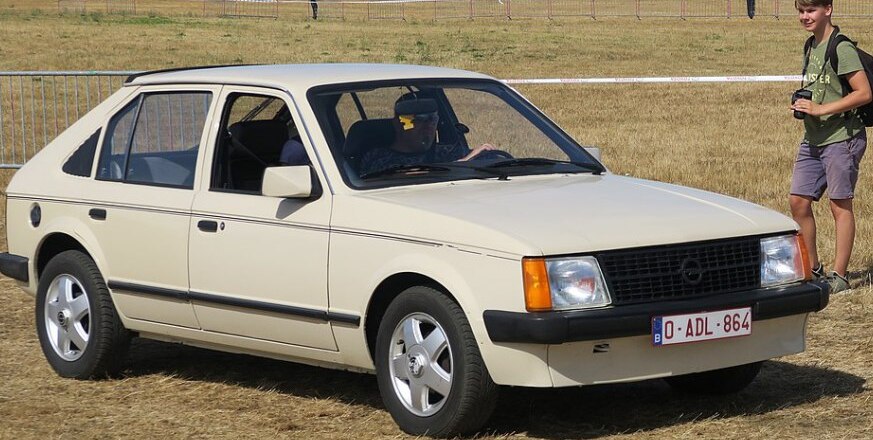
The Opel Kadett D 1.0, produced between 1979 and 1981, represented the entry point into the Kadett D range, a significant model for Opel in the European compact car segment. Positioned as an affordable and economical option, this variant featured a small-displacement, 1.0-liter engine paired with a five-speed manual transmission. The Kadett D itself was a crucial model for Opel, building upon the success of the Kadett C and offering a modern, practical vehicle for a growing market. It was available in three and five-door hatchback body styles, catering to diverse customer needs. This 1.0-liter version, while not known for its performance, played a vital role in attracting budget-conscious buyers.
Technical Specifications
| Brand | Opel |
| Model | Kadett |
| Generation | Kadett D |
| Type (Engine) | 1.0 (40 Hp) |
| Start of production | 1979 |
| End of production | 1981 |
| Powertrain Architecture | Internal Combustion engine |
| Body type | Hatchback |
| Seats | 5 |
| Doors | 3-5 |
| Fuel Type | Petrol (Gasoline) |
| Acceleration 0 – 100 km/h | 25 sec |
| Acceleration 0 – 62 mph | 25 sec |
| Acceleration 0 – 60 mph | 23.8 sec |
| Maximum speed | 127 km/h (78.91 mph) |
| Weight-to-power ratio | 20.4 kg/Hp, 49.1 Hp/tonne |
| Weight-to-torque ratio | 12.3 kg/Nm, 81 Nm/tonne |
| Power | 40 Hp @ 5400 rpm |
| Power per litre | 40.3 Hp/l |
| Torque | 66 Nm @ 3400 rpm (48.68 lb.-ft. @ 3400 rpm) |
| Engine layout | Front, Transverse |
| Engine Model/Code | 10N |
| Engine displacement | 993 cm3 (60.6 cu. in.) |
| Number of cylinders | 4 |
| Engine configuration | Inline |
| Cylinder Bore | 72 mm (2.83 in.) |
| Piston Stroke | 61 mm (2.4 in.) |
| Compression ratio | 7.9:1 |
| Number of valves per cylinder | 2 |
| Fuel injection system | Carburettor |
| Engine aspiration | Naturally aspirated engine |
| Valvetrain | OHV |
| Engine oil capacity | 2.8 l (2.96 US qt | 2.46 UK qt) |
| Kerb Weight | 815 kg (1796.77 lbs.) |
| Max. weight | 1270 kg (2799.87 lbs.) |
| Max load | 455 kg (1003.1 lbs.) |
| Trunk (boot) space – minimum | 490 l (17.3 cu. ft.) |
| Trunk (boot) space – maximum | 1360 l (48.03 cu. ft.) |
| Fuel tank capacity | 42 l (11.1 US gal | 9.24 UK gal) |
| Length | 3998 mm (157.4 in.) |
| Width | 1636 mm (64.41 in.) |
| Height | 1380 mm (54.33 in.) |
| Wheelbase | 2514 mm (98.98 in.) |
| Front track | 1400 mm (55.12 in.) |
| Rear (Back) track | 1406 mm (55.35 in.) |
| Minimum turning circle | 10.5 m (34.45 ft.) |
| Drivetrain Architecture | The Internal combustion engine (ICE) drives the front wheels of the vehicle. |
| Drive wheel | Front wheel drive |
| Number of gears and type of gearbox | 5 gears, manual transmission |
| Front brakes | Disc |
| Rear brakes | Drum |
Powertrain & Engine Architecture
The heart of the Kadett D 1.0 was the 10N engine, a 993cc inline-four cylinder unit. This engine utilized a single overhead valve (OHV) valvetrain and a carburetor for fuel delivery. The 10N was a relatively simple design, prioritizing reliability and affordability over outright performance. Its small displacement and modest compression ratio of 7.9:1 resulted in an output of 40 horsepower at 5400 rpm and 66 Nm (48.68 lb-ft) of torque at 3400 rpm. The five-speed manual transmission was a standard feature, offering a reasonable spread of gears to maximize the engine’s limited power. The transmission’s ratios were geared towards economy, rather than rapid acceleration.
Driving Characteristics
Driving the Kadett D 1.0 was an exercise in maximizing momentum. Acceleration was slow, with 0-60 mph taking approximately 23.8 seconds. The engine felt strained at higher speeds, and overtaking required careful planning. However, the car was perfectly adequate for urban driving and shorter journeys. The five-speed gearbox allowed drivers to keep the engine within its optimal rev range, improving fuel economy. Compared to the more powerful Kadett D variants, such as the 1.3 or 1.6 models, the 1.0 felt significantly underpowered. The manual transmission also provided a more engaging driving experience than the optional three-speed automatic available on higher-spec models.
Equipment & Trim Levels
The 1.0-liter Kadett D was typically the base model, featuring a relatively sparse equipment list. Standard features included cloth upholstery, basic instrumentation, and manually operated windows and door locks. The interior was functional and durable, prioritizing practicality over luxury. Optional extras included a radio, upgraded upholstery, and a sunroof. The trim level was generally identified by minimal badging, reflecting its position as the entry-level offering. The focus was on providing a basic, reliable mode of transportation at the lowest possible price point.
Chassis & Braking
The Kadett D 1.0 utilized a relatively simple chassis design. It featured independent front suspension with MacPherson struts and a torsion beam rear axle. The braking system consisted of disc brakes on the front wheels and drum brakes on the rear. The suspension was tuned for comfort, providing a reasonably smooth ride, although it could feel somewhat wallowy when pushed hard. The relatively light weight of the 1.0-liter model helped to mitigate the limitations of the braking system. Stabilizer bars were not typically fitted to the base 1.0-liter model, further contributing to its softer handling characteristics.
Market Reception & Comparison
The Kadett D 1.0 was generally well-received as an affordable and economical option. Critics acknowledged its lack of performance but praised its fuel efficiency and reliability. Compared to other small cars of the era, such as the Ford Fiesta and Volkswagen Polo, the Kadett D 1.0 offered a spacious interior and a practical hatchback body style. However, it lagged behind some competitors in terms of refinement and driving dynamics. The 1.3 and 1.6-liter Kadett D models offered significantly improved performance and were often preferred by drivers who prioritized driving enjoyment over fuel economy. The 1.0-liter version primarily appealed to first-time car buyers and those on a tight budget.
Legacy
The Opel Kadett D 1.0, while not a performance icon, holds a place in automotive history as a representative of affordable, practical transportation in the late 1970s and early 1980s. The 10N engine proved to be remarkably durable, and many examples are still on the road today. In the used car market, the 1.0-liter Kadett D is often sought after by enthusiasts looking for a simple, reliable classic car. Its low running costs and ease of maintenance make it an attractive option for those seeking a nostalgic driving experience. The Kadett D, as a whole, laid the foundation for Opel’s continued success in the compact car segment, and the 1.0-liter variant played a crucial role in making that success accessible to a wider range of buyers.