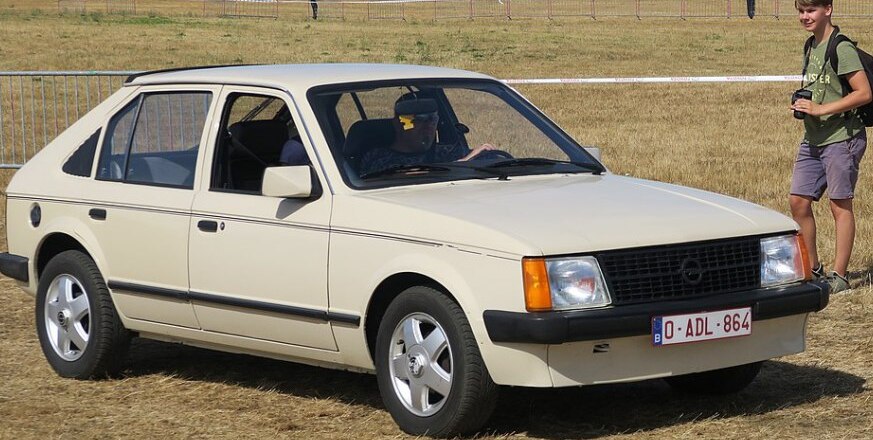
The Opel Kadett D 1.0, produced between 1979 and 1981, represented the entry point into the Kadett D range, a mainstay of the European compact car market. Positioned as an affordable and economical option, this variant utilized a small-displacement engine to appeal to budget-conscious buyers. The Kadett D itself was a significant model for Opel, building upon the success of its predecessors and offering a modern, practical vehicle in both 3-door and 5-door hatchback configurations. It was part of the larger Kadett lineage, a nameplate that had been a fixture in Opel’s lineup since 1936, and the D generation represented a substantial leap forward in terms of design, technology, and overall refinement.
Technical Specifications
| Brand | Opel |
| Model | Kadett |
| Generation | Kadett D |
| Type (Engine) | 1.0 (50 Hp) |
| Start of production | 1979 |
| End of production | 1981 |
| Powertrain Architecture | Internal Combustion engine |
| Body type | Hatchback |
| Seats | 5 |
| Doors | 3-5 |
| Fuel Type | Petrol (Gasoline) |
| Acceleration 0 – 100 km/h | 19.5 sec |
| Acceleration 0 – 62 mph | 19.5 sec |
| Acceleration 0 – 60 mph | 18.5 sec |
| Maximum speed | 137 km/h (85.13 mph) |
| Weight-to-power ratio | 16.3 kg/Hp, 61.3 Hp/tonne |
| Weight-to-torque ratio | 11.6 kg/Nm, 85.9 Nm/tonne |
| Power | 50 Hp @ 5800 rpm |
| Power per litre | 50.4 Hp/l |
| Torque | 70 Nm @ 3400-3800 rpm (51.63 lb.-ft. @ 3400-3800 rpm) |
| Engine layout | Front, Transverse |
| Engine Model/Code | 10S |
| Engine displacement | 993 cm3 (60.6 cu. in.) |
| Number of cylinders | 4 |
| Engine configuration | Inline |
| Cylinder Bore | 72 mm (2.83 in.) |
| Piston Stroke | 61 mm (2.4 in.) |
| Compression ratio | 8.8:1 |
| Number of valves per cylinder | 2 |
| Fuel injection system | Carburettor |
| Engine aspiration | Naturally aspirated engine |
| Valvetrain | OHV |
| Engine oil capacity | 2.8 l (2.96 US qt | 2.46 UK qt) |
| Coolant | 4.9 l (5.18 US qt | 4.31 UK qt) |
| Kerb Weight | 815 kg (1796.77 lbs.) |
| Max. weight | 1270 kg (2799.87 lbs.) |
| Max load | 455 kg (1003.1 lbs.) |
| Trunk (boot) space – minimum | 490 l (17.3 cu. ft.) |
| Trunk (boot) space – maximum | 1360 l (48.03 cu. ft.) |
| Fuel tank capacity | 42 l (11.1 US gal | 9.24 UK gal) |
| Length | 3998 mm (157.4 in.) |
| Width | 1636 mm (64.41 in.) |
| Height | 1380 mm (54.33 in.) |
| Wheelbase | 2514 mm (98.98 in.) |
| Front track | 1400 mm (55.12 in.) |
| Rear (Back) track | 1406 mm (55.35 in.) |
| Minimum turning circle | 10.5 m (34.45 ft.) |
| Drivetrain Architecture | The Internal combustion engine (ICE) drives the front wheels of the vehicle. |
| Drive wheel | Front wheel drive |
| Number of gears | 4 gears, manual transmission |
| Front brakes | Disc |
| Rear brakes | Drum |
Powertrain & Engine Architecture
The heart of the Kadett D 1.0 was the 10S engine, a 993cc inline-four cylinder unit. This engine featured a relatively simple overhead valve (OHV) valvetrain and utilized a single carburetor for fuel delivery. The 10S engine was known for its durability, though its performance was modest. The engine’s design prioritized fuel economy and reliability over outright power. It produced 50 horsepower at 5800 rpm and 70 Nm (51.63 lb-ft) of torque between 3400 and 3800 rpm. This power was transmitted to the front wheels through a four-speed manual transmission, the only gearbox option available with this engine. The transverse engine layout was a common feature of front-wheel-drive cars of the era, contributing to efficient packaging within the Kadett’s compact footprint.
Driving Characteristics
The Kadett D 1.0 offered a utilitarian driving experience. Acceleration was slow, with a 0-60 mph time of around 18.5 seconds, and a top speed of 85 mph. The four-speed manual transmission was geared to maximize fuel efficiency, meaning frequent shifting was required to maintain momentum, especially when encountering hills or overtaking. Compared to higher-spec Kadett D models, such as those equipped with the 1.3 or 1.6-liter engines, the 1.0 felt significantly underpowered. However, the light weight of the vehicle (approximately 1797 lbs) helped to mitigate some of the performance deficit. The steering was light and relatively precise, making it easy to maneuver in urban environments. The suspension, while basic, provided a reasonably comfortable ride, although it could become unsettled on rough roads.
Equipment & Trim Levels
The 1.0-liter Kadett D was typically the base model, and as such, it came with a fairly limited range of standard equipment. Interior appointments were functional rather than luxurious, with simple cloth upholstery and a basic dashboard layout. Standard features generally included front seats, a steering wheel, and basic instrumentation (speedometer, fuel gauge, temperature gauge). Options were available, such as a radio, upgraded upholstery, and a rear window wiper. The trim level was often identified by minimal badging, reflecting its position as the entry-level variant. The focus was on providing a practical and affordable vehicle, and as such, creature comforts were kept to a minimum.
Chassis & Braking
The Kadett D 1.0 utilized a relatively simple chassis design. It featured independent front suspension with MacPherson struts and a twist-beam rear axle. The braking system consisted of disc brakes on the front wheels and drum brakes on the rear. The braking performance was adequate for the vehicle’s weight and power, but it lacked the stopping power of more powerful Kadett D models. The suspension setup was tuned for comfort and ride quality, prioritizing a smooth ride over sporty handling. Stabilizer bars were often omitted on the base 1.0 model to further reduce cost.
Market Reception & Comparison
The Kadett D 1.0 was generally well-received as an affordable and economical option in the European market. Critics acknowledged its practicality and fuel efficiency, but also noted its lack of performance. Compared to the 1.3 and 1.6-liter Kadett D models, the 1.0 offered significantly less power and refinement. However, it was also considerably cheaper to purchase and operate. The 1.0 appealed to buyers who prioritized economy and reliability over performance, such as first-time car owners or those seeking a low-cost commuter vehicle. Its fuel economy was a key selling point, particularly during the energy crises of the late 1970s and early 1980s.
Legacy
The Opel Kadett D 1.0, while not the most powerful or desirable variant of the D generation, remains a significant vehicle in Opel’s history. The 10S engine proved to be remarkably durable, and many examples are still on the road today. In the used car market, the 1.0-liter Kadett D is often sought after by enthusiasts looking for a simple, affordable, and reliable classic car. Its low running costs and ease of maintenance make it an attractive option for those seeking a vintage vehicle that is practical for everyday use. While not a performance icon, the Kadett D 1.0 represents a crucial part of the Kadett’s legacy, offering accessible transportation to a wide range of buyers during a pivotal period in automotive history.