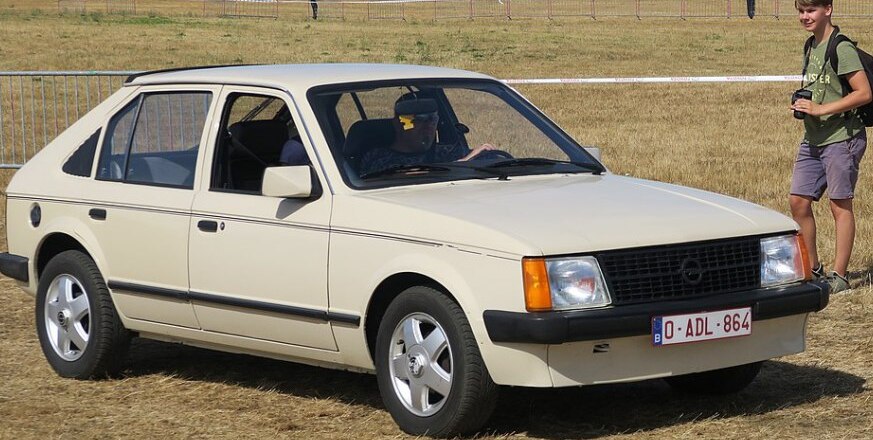
The Opel Kadett D 1.2, producing 54 horsepower, represented the entry point into the Kadett D range, manufactured between 1982 and 1984. Positioned as an affordable and economical option, this variant played a significant role in Opel’s strategy to offer a practical family car to a broad European audience. The Kadett D, built on the GM T-platform (internally designated as the 1HX0/A3), aimed to modernize Opel’s offerings and compete with rivals like the Volkswagen Golf and Ford Escort. The 1.2-liter engine and four-speed manual transmission combination was specifically targeted at buyers prioritizing fuel efficiency and low running costs over outright performance.
Technical Specifications
| Brand | Opel |
| Model | Kadett |
| Generation | Kadett D |
| Type (Engine) | 1.2 (54 Hp) |
| Start of production | 1982 |
| End of production | 1984 |
| Powertrain Architecture | Internal Combustion engine |
| Body type | Hatchback |
| Seats | 5 |
| Doors | 3-5 |
| Fuel Type | Petrol (Gasoline) |
| Acceleration 0 – 100 km/h | 18 sec |
| Acceleration 0 – 62 mph | 18 sec |
| Acceleration 0 – 60 mph | 17.1 sec |
| Maximum speed | 145 km/h (90.1 mph) |
| Weight-to-power ratio | 15.6 kg/Hp, 64.3 Hp/tonne |
| Weight-to-torque ratio | 9.3 kg/Nm, 107.1 Nm/tonne |
| Power | 54 Hp @ 5600 rpm |
| Power per litre | 45.2 Hp/l |
| Torque | 90 Nm @ 2200 rpm (66.38 lb.-ft. @ 2200 rpm) |
| Engine layout | Front, Transverse |
| Engine Model/Code | 12N |
| Engine displacement | 1196 cm3 (72.98 cu. in.) |
| Number of cylinders | 4 |
| Engine configuration | Inline |
| Cylinder Bore | 77.8 mm (3.06 in.) |
| Piston Stroke | 62.9 mm (2.48 in.) |
| Compression ratio | 9:1 |
| Number of valves per cylinder | 2 |
| Fuel injection system | Carburettor |
| Engine aspiration | Naturally aspirated engine |
| Valvetrain | SOHC |
| Engine oil capacity | 2.75 l (2.91 US qt | 2.42 UK qt) |
| Coolant | 5.7 l (6.02 US qt | 5.02 UK qt) |
| Kerb Weight | 840 kg (1851.88 lbs.) |
| Max. weight | 1340 kg (2954.19 lbs.) |
| Max load | 500 kg (1102.31 lbs.) |
| Trunk (boot) space – minimum | 470 l (16.6 cu. ft.) |
| Trunk (boot) space – maximum | 1360 l (48.03 cu. ft.) |
| Fuel tank capacity | 42 l (11.1 US gal | 9.24 UK gal) |
| Length | 3998 mm (157.4 in.) |
| Width | 1636 mm (64.41 in.) |
| Height | 1380 mm (54.33 in.) |
| Wheelbase | 2514 mm (98.98 in.) |
| Front track | 1400 mm (55.12 in.) |
| Rear (Back) track | 1406 mm (55.35 in.) |
| Minimum turning circle | 10.7 m (35.1 ft.) |
Powertrain & Engine Architecture
The heart of the Kadett D 1.2 was the 12N engine, a 1.2-liter (1196 cc) inline-four cylinder unit. This engine utilized a single overhead camshaft (SOHC) valvetrain with two valves per cylinder. Fuel delivery was managed by a carburetor, a common feature for vehicles of this era, prioritizing simplicity and cost-effectiveness over the more advanced fuel injection systems. The 12N engine produced 54 horsepower at 5600 rpm and 90 Nm (66.38 lb-ft) of torque at 2200 rpm. The engine’s relatively low compression ratio of 9:1 was designed to accommodate the fuel quality available in European markets. The engine was transversely mounted, driving the front wheels. The transmission was a standard four-speed manual gearbox, chosen for its simplicity and contribution to the car’s overall affordability.
Driving Characteristics
The Kadett D 1.2, with its modest power output, offered a driving experience focused on practicality rather than performance. Acceleration was leisurely, taking approximately 18 seconds to reach 100 km/h (62 mph). The four-speed gearbox was geared for economy, with relatively tall ratios. This meant that while highway cruising was acceptable, overtaking required careful planning. Compared to the more powerful Kadett D variants, such as the 1.6-liter or diesel models, the 1.2 felt noticeably underpowered, especially when fully loaded. However, the light weight of the vehicle (around 840 kg or 1852 lbs) helped to mitigate some of the performance deficit. The steering was light and relatively precise, making it easy to maneuver in urban environments.
Equipment & Trim Levels
The 1.2-liter Kadett D typically represented the base trim level. Standard equipment was fairly basic, reflecting its position as an entry-level model. Features generally included cloth upholstery, a simple dashboard layout with analog gauges, and basic exterior trim. Optional extras, such as a radio, upgraded interior trim, and a sunroof, were available, but added to the vehicle’s cost. The interior was designed for functionality, with durable materials and a focus on maximizing space within the compact cabin. The 3 or 5-door hatchback body style provided versatile access to the rear cargo area.
Chassis & Braking
The Kadett D utilized a relatively simple chassis design. The front suspension consisted of MacPherson struts, while the rear suspension employed a twist-beam axle. This setup provided a reasonable balance between ride comfort and handling. Braking was accomplished via disc brakes on the front wheels and drum brakes on the rear. The braking system was adequate for the vehicle’s weight and performance, but lacked the stopping power of more advanced systems found on higher-end models. Stabilizer bars were often omitted on the base 1.2-liter model to further reduce costs.
Market Reception & Comparison
The Kadett D 1.2 was generally well-received as an affordable and reliable family car. Critics praised its fuel efficiency and low running costs, but noted its lack of performance. Compared to the other engines in the Kadett D lineup, the 1.2 offered the lowest price point but also the slowest acceleration and least refined driving experience. The 1.6-liter engine provided a significant performance boost, while the diesel models offered superior fuel economy. However, the 1.2 remained a popular choice for buyers on a tight budget or those primarily using the car for short urban commutes.
Legacy
The Opel Kadett D 1.2, while not known for its performance, has proven to be a surprisingly durable and reliable vehicle. Many examples are still on the road today, a testament to the robust engineering of the 12N engine and the overall build quality of the Kadett D. In the used car market, these models are often sought after by enthusiasts looking for a classic, affordable, and easy-to-maintain vehicle. The 12N engine, while simple, is relatively straightforward to repair and parts availability remains reasonable. The Kadett D 1.2 represents a significant chapter in Opel’s history, embodying the company’s commitment to providing practical and affordable transportation to the masses.