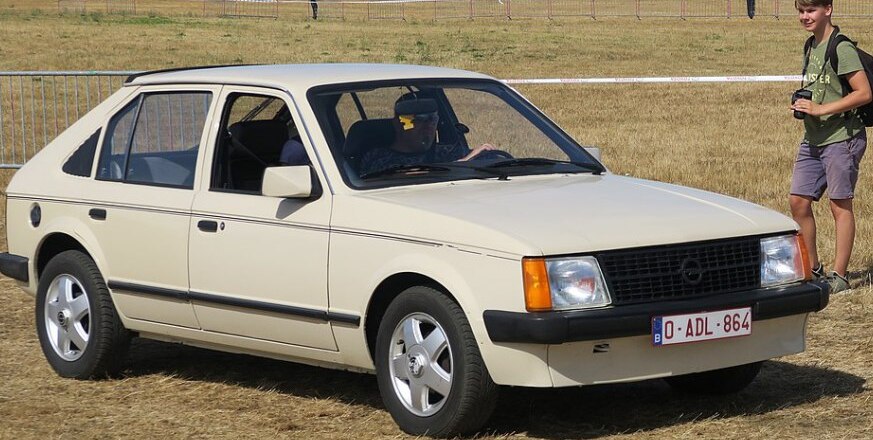
The Opel Kadett D 1.2 S, produced between 1979 and 1984, represented an entry-level offering within the broader Kadett D range. Positioned as a practical and economical hatchback, it served as a crucial model for Opel, particularly in European markets where fuel efficiency and affordability were paramount. The Kadett D, internally designated as the T85 chassis, was a significant step forward for Opel, offering improved space, comfort, and a more modern design compared to its predecessor, the Kadett C. The 1.2 S variant, with its modest 60 horsepower, was aimed at buyers seeking basic transportation with reasonable running costs. It was available in both 3-door and 5-door body styles.
Technical Specifications
| Brand | Opel |
| Model | Kadett |
| Generation | Kadett D |
| Type (Engine) | 1.2 S (60 Hp) |
| Start of production | 1979 |
| End of production | 1984 |
| Powertrain Architecture | Internal Combustion engine |
| Body type | Hatchback |
| Seats | 5 |
| Doors | 3-5 |
| Fuel Type | Petrol (Gasoline) |
| Acceleration 0 – 100 km/h | 16 sec |
| Acceleration 0 – 62 mph | 16 sec |
| Acceleration 0 – 60 mph | 15.2 sec |
| Maximum speed | 147 km/h (91.34 mph) |
| Weight-to-power ratio | 13.6 kg/Hp, 73.6 Hp/tonne |
| Weight-to-torque ratio | 9.3 kg/Nm, 108 Nm/tonne |
| Power | 60 Hp @ 5800 rpm |
| Power per litre | 50.2 Hp/l |
| Torque | 88 Nm @ 3000-3600 rpm (64.91 lb.-ft. @ 3000-3600 rpm) |
| Engine layout | Front, Transverse |
| Engine Model/Code | 12S, 12ST |
| Engine displacement | 1196 cm3 (72.98 cu. in.) |
| Number of cylinders | 4 |
| Engine configuration | Inline |
| Cylinder Bore | 79 mm (3.11 in.) |
| Piston Stroke | 61 mm (2.4 in.) |
| Compression ratio | 9:1 |
| Number of valves per cylinder | 2 |
| Fuel injection system | Carburettor |
| Engine aspiration | Naturally aspirated engine |
| Valvetrain | OHV |
| Engine oil capacity | 2.75 l (2.91 US qt | 2.42 UK qt) |
| Coolant | 5.7 l (6.02 US qt | 5.02 UK qt) |
| Kerb Weight | 815 kg (1796.77 lbs.) |
| Max. weight | 1270 kg (2799.87 lbs.) |
| Max load | 455 kg (1003.1 lbs.) |
| Trunk (boot) space – minimum | 490 l (17.3 cu. ft.) |
| Trunk (boot) space – maximum | 1360 l (48.03 cu. ft.) |
| Fuel tank capacity | 42 l (11.1 US gal | 9.24 UK gal) |
| Length | 3998 mm (157.4 in.) |
| Width | 1636 mm (64.41 in.) |
| Height | 1380 mm (54.33 in.) |
| Wheelbase | 2514 mm (98.98 in.) |
| Front track | 1400 mm (55.12 in.) |
| Rear (Back) track | 1406 mm (55.35 in.) |
| Minimum turning circle | 10.5 m (34.45 ft.) |
| Drivetrain Architecture | The Internal combustion engine (ICE) drives the front wheels of the vehicle. |
| Drive wheel | Front wheel drive |
| Number of gears | 4 gears, manual transmission |
| Front brakes | Disc |
| Rear brakes | Drum |
Powertrain & Engine Architecture
The heart of the Kadett D 1.2 S was the 1196cc inline-four cylinder engine, designated as either 12S or 12ST depending on minor variations. This engine featured a single overhead valve (OHV) valvetrain and utilized a carburetor for fuel delivery. The carburetor system, while simple and reliable, was less efficient than fuel injection systems becoming more common at the time. The engine produced 60 horsepower at 5800 rpm and 88 Nm (65 lb-ft) of torque between 3000 and 3600 rpm. The engine was transversely mounted, driving the front wheels. The transmission was a standard four-speed manual gearbox. This configuration was chosen for its cost-effectiveness and simplicity, contributing to the Kadett’s affordability.
Driving Characteristics
The 1.2 S offered modest performance. Acceleration was leisurely, taking around 16 seconds to reach 62 mph (100 km/h). Top speed was approximately 91 mph (147 km/h). The four-speed manual transmission was geared for economy rather than outright speed. Compared to the more powerful Kadett D variants, such as the 1.6S or the later GSi models, the 1.2 S felt significantly underpowered, especially when fully loaded or tackling inclines. However, its light weight and relatively nimble handling made it reasonably enjoyable to drive in urban environments. The gear ratios were spaced to maximize fuel efficiency, resulting in a somewhat ‘busy’ driving experience on the highway, requiring frequent gear changes to maintain speed.
Equipment & Trim Levels
The Kadett D 1.2 S was typically equipped with basic amenities. Standard features included cloth upholstery, a simple dashboard layout with analog gauges, and manually operated windows and door locks. The interior was functional and durable, prioritizing practicality over luxury. Optional extras included a radio, upgraded seat fabrics, and a sunroof. The trim level was generally considered the entry point into the Kadett D range, appealing to buyers on a tight budget. The 5-door version offered increased practicality for families, while the 3-door was favored by younger drivers.
Chassis & Braking
The Kadett D featured a MacPherson strut front suspension and a rigid axle rear suspension. The 1.2 S variant typically used drum brakes on the rear wheels and disc brakes on the front. The suspension setup was tuned for comfort and ride quality, rather than sporty handling. Stabilizer bars were often omitted on the base 1.2 S model, further contributing to its softer ride. The steering was a rack-and-pinion system, providing reasonable precision for everyday driving. The relatively light weight of the 1.2 S helped to compensate for the less sophisticated braking system.
Market Reception & Comparison
The Kadett D 1.2 S was well-received as an affordable and reliable family car. Critics praised its fuel efficiency and practicality, but noted its lack of performance. Compared to other Kadett D variants, such as the 1.6S, the 1.2 S offered significantly lower running costs but at the expense of driving enjoyment. The 1.6S, with its increased power, was a popular upgrade for those willing to spend a little more. The 1.2 S also competed with other small hatchbacks of the era, such as the Ford Fiesta and Volkswagen Polo, offering a comparable level of practicality and affordability.
Legacy
The Opel Kadett D 1.2 S, while not a performance icon, remains a fondly remembered car for many. Its simple, robust engine and durable construction contributed to its longevity. Today, well-maintained examples are sought after by classic car enthusiasts and collectors. The 12S engine, while not particularly powerful, proved to be relatively reliable, and parts availability remains reasonable. The Kadett D 1.2 S represents a significant chapter in Opel’s history, embodying the values of affordability, practicality, and reliability that defined the brand during the 1980s. Its enduring appeal lies in its simplicity and its ability to provide basic, dependable transportation.