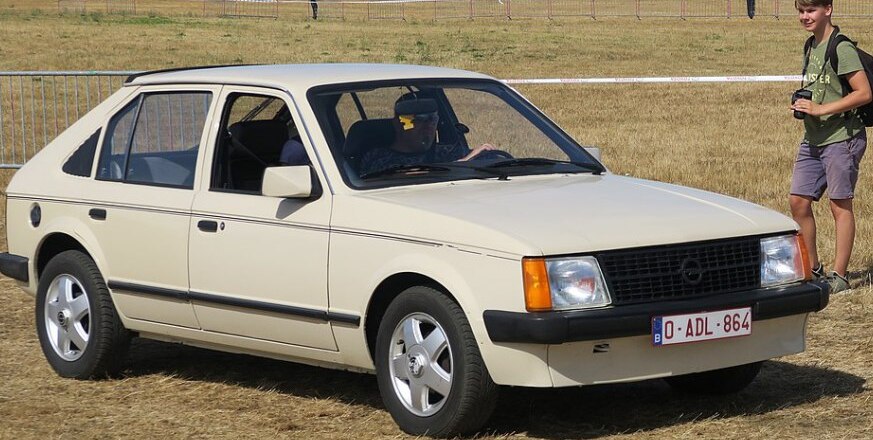
The Opel Kadett D 1.6 S, produced between 1981 and 1984, represented a significant step forward for Opel’s compact offering. Positioned as a sporty variant within the Kadett D range (1979-1984), the 1.6 S aimed to attract drivers seeking a blend of practicality and performance. It was a key model in Opel’s lineup during a period of increasing fuel efficiency demands and evolving automotive design. The Kadett D itself was built on the GM T-platform, shared with other vehicles like the Isuzu Gemini, Chevrolet Chevette, and Pontiac 1000, reflecting Opel’s integration within the General Motors empire. This particular 1.6 S configuration, with its 90 horsepower engine and typically a four-speed manual transmission (though an automatic was available), occupied a middle ground in the Kadett D lineup, offering more power than the base models but falling short of the more expensive and less common GSi variants.
Technical Specifications
| Brand | Opel |
| Model | Kadett |
| Generation | Kadett D |
| Type (Engine) | 1.6 S (90 Hp) |
| Start of production | 1981 |
| End of production | 1984 |
| Powertrain Architecture | Internal Combustion engine |
| Body type | Hatchback |
| Seats | 5 |
| Doors | 3-5 |
| Fuel Type | Petrol (Gasoline) |
| Acceleration 0 – 100 km/h | 11.5 sec |
| Acceleration 0 – 62 mph | 11.5 sec |
| Acceleration 0 – 60 mph | 10.9 sec |
| Maximum speed | 170 km/h (105.63 mph) |
| Weight-to-power ratio | 9.9 kg/Hp, 101.1 Hp/tonne |
| Weight-to-torque ratio | 7.1 kg/Nm, 141.6 Nm/tonne |
| Power | 90 Hp @ 5800 rpm |
| Power per litre | 56.3 Hp/l |
| Torque | 126 Nm @ 3800-4200 rpm (92.93 lb.-ft. @ 3800-4200 rpm) |
| Engine layout | Front, Transverse |
| Engine Model/Code | 16SH |
| Engine displacement | 1598 cm3 (97.52 cu. in.) |
| Number of cylinders | 4 |
| Engine configuration | Inline |
| Cylinder Bore | 80 mm (3.15 in.) |
| Piston Stroke | 79.5 mm (3.13 in.) |
| Compression ratio | 9.2:1 |
| Number of valves per cylinder | 2 |
| Fuel injection system | Carburettor |
| Engine aspiration | Naturally aspirated engine |
| Valvetrain | SOHC |
| Engine oil capacity | 3.25 l (3.43 US qt | 2.86 UK qt) |
| Coolant | 7.7 l (8.14 US qt | 6.78 UK qt) |
| Kerb Weight | 890 kg (1962.11 lbs.) |
| Max. weight | 1360 kg (2998.29 lbs.) |
| Max load | 470 kg (1036.17 lbs.) |
| Trunk (boot) space – minimum | 490 l (17.3 cu. ft.) |
| Trunk (boot) space – maximum | 1360 l (48.03 cu. ft.) |
| Fuel tank capacity | 42 l (11.1 US gal | 9.24 UK gal) |
| Length | 3998 mm (157.4 in.) |
| Width | 1636 mm (64.41 in.) |
| Height | 1380 mm (54.33 in.) |
| Wheelbase | 2514 mm (98.98 in.) |
| Front track | 1406 mm (55.35 in.) |
| Rear (Back) track | 1406 mm (55.35 in.) |
| Minimum turning circle | 10.5 m (34.45 ft.) |
Powertrain & Engine Architecture
The heart of the Kadett D 1.6 S was the 16SH engine, a 1.6-liter inline-four cylinder unit. This engine utilized a single overhead camshaft (SOHC) valvetrain, operating two valves per cylinder. Fuel delivery was managed by a carburetor, a common setup for the era, though less efficient and precise than fuel injection. The 16SH engine produced 90 horsepower at 5800 rpm and 126 Nm (93 lb-ft) of torque between 3800 and 4200 rpm. While not a high-revving engine, it offered a reasonable amount of power for its displacement. The four-speed manual transmission was the most common pairing, providing a direct and engaging driving experience. A three-speed automatic transmission was also offered, but it noticeably impacted acceleration and fuel economy. The engine’s transverse mounting, a space-saving design, was typical for front-wheel-drive vehicles of the time.
Driving Characteristics
The Kadett D 1.6 S, with the manual transmission, offered a reasonably spirited driving experience for its time. Acceleration to 60 mph took around 10.9 seconds, which was competitive with other cars in its class. The automatic transmission version was significantly slower, with a 0-60 mph time closer to 13 seconds. The gear ratios in the manual transmission were well-suited to everyday driving, providing adequate acceleration in most situations. The car felt nimble and easy to maneuver, thanks to its relatively light weight and front-wheel-drive layout. Compared to the base Kadett models with smaller engines, the 1.6 S offered a noticeable improvement in performance. However, it lacked the more aggressive tuning and sportier suspension of the later GSi models.
Equipment & Trim Levels
The 1.6 S trim level offered a step up in features compared to the base Kadett. Standard equipment typically included upgraded cloth upholstery, a more comprehensive instrument cluster, and a slightly more refined interior trim. Optional extras included a sunroof, upgraded stereo systems, and power windows. The interior design was functional and straightforward, reflecting the car’s focus on practicality. The dashboard layout was simple and easy to use, with clearly labeled controls. The 1.6 S often featured a sporty steering wheel and unique badging to differentiate it from other Kadett models.
Chassis & Braking
The Kadett D 1.6 S utilized a MacPherson strut front suspension and a twist-beam rear suspension. This setup provided a comfortable ride and decent handling characteristics. The front brakes were disc brakes, offering better stopping power than the drum brakes used on the rear wheels. Stabilizer bars were often included, helping to reduce body roll during cornering. The steering was rack-and-pinion, providing precise and responsive steering feel. The suspension was tuned for a balance between comfort and handling, making the car suitable for both everyday driving and occasional spirited runs.
Market Reception & Comparison
The Kadett D 1.6 S was generally well-received by automotive critics. It was praised for its practicality, fuel efficiency, and reasonable performance. However, some critics noted that the carburetor engine could be somewhat rough and that the automatic transmission significantly reduced performance. Compared to other cars in its class, such as the Volkswagen Golf and Ford Escort, the Kadett D 1.6 S offered a competitive package in terms of price, features, and fuel economy. The manual transmission version was generally preferred by enthusiasts due to its more engaging driving experience.
Legacy
The Opel Kadett D 1.6 S, while not a particularly rare or collectible car today, holds a nostalgic appeal for many enthusiasts. The 16SH engine, while not known for exceptional reliability, is relatively simple to maintain and repair. Parts availability is generally good, although some components may be becoming increasingly difficult to find. Well-maintained examples of the Kadett D 1.6 S can still provide reliable and affordable transportation. The car represents a significant chapter in Opel’s history, showcasing the company’s commitment to building practical and efficient compact cars. Its influence can be seen in subsequent Opel models, and it remains a popular choice among classic car enthusiasts.