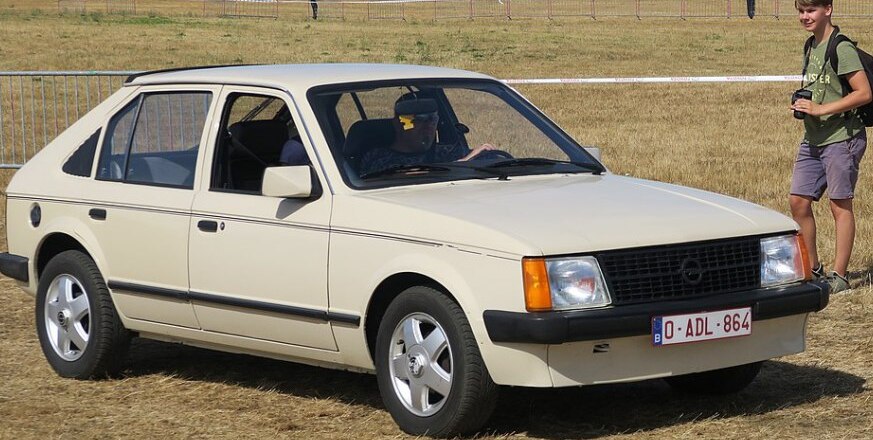
The Opel Kadett D 1.8 GTE was a performance-oriented variant of the Kadett D, produced between 1983 and 1984. Positioned as the flagship of the Kadett D range, the GTE (Gran Turismo Einspritzung – Grand Touring Fuel Injection) aimed to offer a sporty driving experience within the compact European hatchback segment. It represented a significant step up in performance compared to the standard Kadett models, and played a role in establishing Opel’s reputation for accessible performance cars. The Kadett D itself was built on Opel’s H-platform, and the 1.8 GTE was a key model in attracting a younger, more enthusiastic buyer base.
Technical Specifications
| Brand | Opel |
| Model | Kadett |
| Generation | Kadett D |
| Type (Engine) | 1.8 GTE (115 Hp) |
| Start of production | 1983 |
| End of production | 1984 |
| Powertrain Architecture | Internal Combustion engine |
| Body type | Hatchback |
| Seats | 5 |
| Doors | 3-5 |
| Fuel Type | Petrol (Gasoline) |
| Acceleration 0 – 100 km/h | 9.5 sec |
| Acceleration 0 – 62 mph | 9.5 sec |
| Acceleration 0 – 60 mph | 9 sec |
| Maximum speed | 187 km/h (116.2 mph) |
| Weight-to-power ratio | 8.5 kg/Hp, 117.3 Hp/tonne |
| Weight-to-torque ratio | 6.6 kg/Nm, 151 Nm/tonne |
| Power | 115 Hp @ 5800 rpm |
| Power per litre | 64 Hp/l |
| Torque | 148 Nm @ 4800 rpm (109.16 lb.-ft. @ 4800 rpm) |
| Engine layout | Front, Transverse |
| Engine Model/Code | 18E |
| Engine displacement | 1796 cm3 (109.6 cu. in.) |
| Number of cylinders | 4 |
| Engine configuration | Inline |
| Cylinder Bore | 84.8 mm (3.34 in.) |
| Piston Stroke | 79.5 mm (3.13 in.) |
| Compression ratio | 9.5:1 |
| Number of valves per cylinder | 2 |
| Fuel injection system | Multi-port manifold injection |
| Engine aspiration | Naturally aspirated engine |
| Valvetrain | SOHC |
| Engine oil capacity | 3.25 l (3.43 US qt | 2.86 UK qt) |
| Coolant | 7.5 l (7.93 US qt | 6.6 UK qt) |
| Kerb Weight | 980 kg (2160.53 lbs.) |
| Max. weight | 1440 kg (3174.66 lbs.) |
| Max load | 460 kg (1014.13 lbs.) |
| Trunk (boot) space – minimum | 470 l (16.6 cu. ft.) |
| Trunk (boot) space – maximum | 1360 l (48.03 cu. ft.) |
| Fuel tank capacity | 42 l (11.1 US gal | 9.24 UK gal) |
| Length | 3998 mm (157.4 in.) |
| Width | 1636 mm (64.41 in.) |
| Height | 1380 mm (54.33 in.) |
| Wheelbase | 2514 mm (98.98 in.) |
| Front track | 1400 mm (55.12 in.) |
| Rear (Back) track | 1406 mm (55.35 in.) |
| Minimum turning circle | 10.7 m (35.1 ft.) |
| Drivetrain Architecture | The Internal combustion engine (ICE) drives the front wheels of the vehicle. |
| Drive wheel | Front wheel drive |
| Number of gears | 5 gears, manual transmission |
| Front brakes | Disc |
| Rear brakes | Drum |
Powertrain & Engine Architecture
The heart of the Kadett D 1.8 GTE was the 18E engine, an inline four-cylinder unit displacing 1796 cc (109.6 cubic inches). This engine featured a single overhead camshaft (SOHC) valvetrain operating two valves per cylinder. Crucially, the GTE variant utilized Bosch multi-port fuel injection, a significant upgrade over the carburetors found in lower-spec Kadett models. This injection system, combined with a compression ratio of 9.5:1, allowed the engine to produce 115 horsepower at 5800 rpm and 148 Nm (109.16 lb-ft) of torque at 4800 rpm. The engine’s transverse mounting and front-wheel drive configuration were typical for European hatchbacks of the era. The 18E engine was known for its relative simplicity and durability, making it a reasonably reliable unit when properly maintained. The five-speed manual transmission was the only gearbox option available with the 1.8 GTE, geared to provide a balance between acceleration and fuel economy.
Driving Characteristics
The 1.8 GTE offered a noticeably more engaging driving experience than the standard Kadett. While not a true sports car, the increased power output and responsive fuel injection system provided brisk acceleration. Zero to 60 mph was achievable in around 9 seconds, and the car could reach a top speed of 116.2 mph. The five-speed gearbox allowed drivers to keep the engine in its optimal power band, and the front disc brakes provided adequate stopping power. Compared to the lower-powered Kadett variants, the GTE felt more composed and confident, particularly when driven on winding roads. However, it’s important to note that the Kadett D’s suspension was relatively basic, and the car could exhibit noticeable body roll during hard cornering. The GTE’s performance was a step above the base models, but it didn’t quite match the more focused performance offered by rivals like the Volkswagen Golf GTI.
Equipment & Trim Levels
The Kadett D 1.8 GTE came with a relatively generous level of standard equipment for its time. Interior features typically included sporty cloth upholstery, a sports steering wheel, and a more comprehensive instrument cluster than the base models. Exterior features included distinctive GTE badging, a rear spoiler, and often, alloy wheels. Optional extras included a sunroof, upgraded audio systems, and central locking. The interior design was functional and straightforward, reflecting the Kadett’s focus on practicality and affordability. The GTE trim aimed to elevate the interior ambiance with subtle sporty touches, but it remained a relatively utilitarian space.
Chassis & Braking
The Kadett D utilized a MacPherson strut front suspension and a twist-beam rear axle. The GTE variant often featured a slightly stiffer suspension setup compared to the standard models, aimed at improving handling. Front brakes were discs, providing better stopping power than the drum brakes found on the rear axle. The steering was a rack-and-pinion system, offering reasonable precision. While the chassis was competent, it wasn’t particularly sophisticated. The Kadett D’s relatively lightweight construction helped to offset the limitations of its suspension and braking systems.
Market Reception & Comparison
The Kadett D 1.8 GTE was generally well-received by automotive critics. It was praised for its lively performance, reasonable fuel economy, and affordable price. However, some critics noted that the car’s handling wasn’t as sharp as some of its rivals, and the interior was somewhat basic. Compared to other Kadett D variants, the 1.8 GTE offered a significant performance upgrade, but it also came with a higher price tag. The 1.3 and 1.6-liter Kadett models were more fuel-efficient and affordable, while the diesel variants offered even better fuel economy but significantly less power. The GTE appealed to buyers who wanted a sporty and practical hatchback without breaking the bank.
Legacy
The Opel Kadett D 1.8 GTE has become a sought-after classic car among enthusiasts. The 18E engine is known for its durability, and well-maintained examples can still provide reliable transportation today. However, finding parts can be challenging, and rust is a common issue with older Kadett D models. The GTE’s relative rarity and its status as a performance variant have contributed to its increasing value in the used car market. It represents a significant chapter in Opel’s history, and it remains a popular choice for classic car collectors and enthusiasts who appreciate its simple, yet effective design and engaging driving experience.