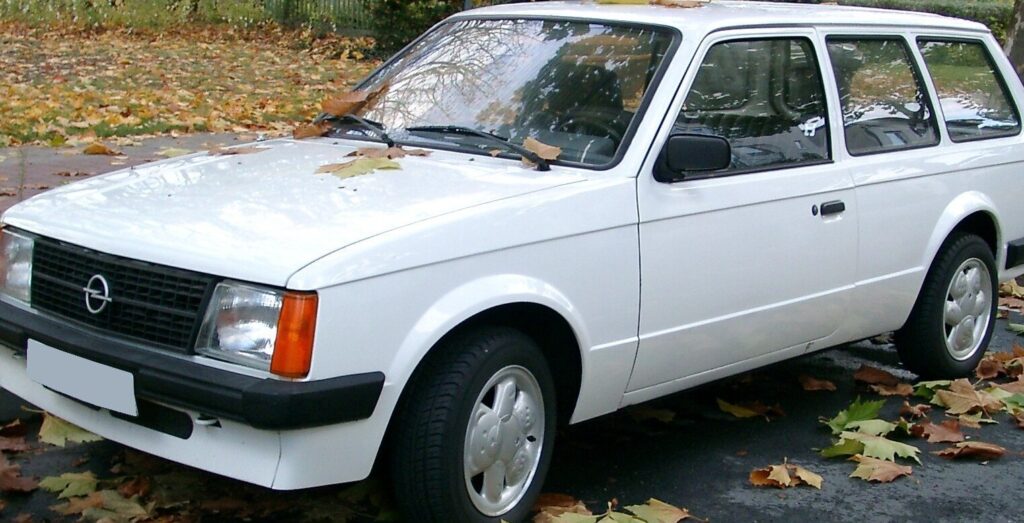
The Opel Kadett D Caravan 1.2, producing 53 horsepower, was a mainstay of the European family car market from 1979 to 1982. Representing the entry-level offering within the Kadett D Caravan range, this variant prioritized affordability and practicality over outright performance. It occupied a crucial position in Opel’s lineup, providing a budget-friendly option for families and individuals needing a versatile vehicle. The Kadett D, launched in 1979, was a significant update to the long-running Kadett series, built on the GM T-platform, and the Caravan (estate/station wagon) body style offered increased cargo capacity, making it a popular choice for those with active lifestyles.
Technical Specifications
| Brand | Opel |
| Model | Kadett |
| Generation | Kadett D Caravan |
| Type (Engine) | 1.2 (53 Hp) |
| Start of production | 1979 |
| End of production | 1982 |
| Powertrain Architecture | Internal Combustion engine |
| Body type | Station wagon (estate) |
| Seats | 5 |
| Doors | 3-5 |
| Fuel Type | Petrol (Gasoline) |
| Acceleration 0 – 100 km/h | 19.5 sec |
| Acceleration 0 – 62 mph | 19.5 sec |
| Acceleration 0 – 60 mph | 18.5 sec |
| Maximum speed | 140 km/h (86.99 mph) |
| Weight-to-power ratio | 16.5 kg/Hp, 60.6 Hp/tonne |
| Weight-to-torque ratio | 10.9 kg/Nm, 91.4 Nm/tonne |
| Power | 53 Hp @ 5400 rpm |
| Power per litre | 44.3 Hp/l |
| Torque | 80 Nm @ 3600 rpm (59 lb.-ft. @ 3600 rpm) |
| Engine layout | Front, Transverse |
| Engine Model/Code | 10S |
| Engine displacement | 1196 cm3 (72.98 cu. in.) |
| Number of cylinders | 4 |
| Engine configuration | Inline |
| Cylinder Bore | 79 mm (3.11 in.) |
| Piston Stroke | 61 mm (2.4 in.) |
| Compression ratio | 7.8:1 |
| Number of valves per cylinder | 2 |
| Fuel injection system | Carburettor |
| Engine aspiration | Naturally aspirated engine |
| Valvetrain | OHV |
| Engine oil capacity | 2.75 l (2.91 US qt | 2.42 UK qt) |
| Kerb Weight | 875 kg (1929.04 lbs.) |
| Max. weight | 1375 kg (3031.36 lbs.) |
| Max load | 500 kg (1102.31 lbs.) |
| Trunk (boot) space – minimum | 535 l (18.89 cu. ft.) |
| Trunk (boot) space – maximum | 1700 l (60.03 cu. ft.) |
| Fuel tank capacity | 50 l (13.21 US gal | 11 UK gal) |
| Length | 4207 mm (165.63 in.) |
| Width | 1636 mm (64.41 in.) |
| Height | 1400 mm (55.12 in.) |
| Wheelbase | 2514 mm (98.98 in.) |
| Front track | 1400 mm (55.12 in.) |
| Rear (Back) track | 1406 mm (55.35 in.) |
| Ride height (ground clearance) | 135 mm (5.31 in.) |
| Minimum turning circle | 10.5 m (34.45 ft.) |
| Drivetrain Architecture | Front wheel drive |
| Number of gears | 4 gears, manual transmission |
| Front brakes | Disc |
| Rear brakes | Drum |
Powertrain & Engine Architecture
The heart of the Kadett D Caravan 1.2 was the Opel 10S engine, a 1.2-liter (1196 cc) inline-four cylinder unit. This engine utilized a single overhead valve (OHV) valvetrain and a two-barrel carburetor for fuel delivery. The 10S engine produced 53 horsepower at 5400 rpm and 80 Nm (59 lb-ft) of torque at 3600 rpm. Its relatively low compression ratio of 7.8:1 was typical for the era and allowed it to run on lower octane fuel readily available in European markets. The engine was transversely mounted in the front of the vehicle, driving the front wheels. The four-speed manual transmission was the standard offering for this variant, providing a simple and robust drivetrain. The engine’s design prioritized reliability and fuel economy over high performance.
Driving Characteristics
The 1.2-liter Kadett D Caravan was not known for its speed. Acceleration was leisurely, taking approximately 19.5 seconds to reach 100 km/h (62 mph). Top speed was around 140 km/h (87 mph). The four-speed manual transmission offered a reasonable spread of gears, but the limited power output meant frequent downshifting was necessary, especially when encountering hills or overtaking. Compared to the more powerful Kadett D variants, such as those equipped with 1.6-liter or 1.8-liter engines, the 1.2 felt noticeably underpowered. However, the lighter engine weight contributed to a more nimble feel in city driving. The suspension, while basic, provided a comfortable ride, and the front disc brakes offered adequate stopping power.
Equipment & Trim Levels
The 1.2-liter Kadett D Caravan was typically offered with a basic level of equipment. Standard features included cloth upholstery, vinyl floor covering, and a simple dashboard layout. Power steering and central locking were generally not available on this base model. Optional extras included a radio, upgraded upholstery, and a sunroof. The interior was functional and durable, designed to withstand the rigors of family use. The exterior trim was minimal, with black plastic bumpers and steel wheels being common features. The focus was on providing a practical and affordable vehicle, rather than luxury or style.
Chassis & Braking
The Kadett D Caravan featured a MacPherson strut front suspension and a rigid axle rear suspension. The front suspension provided a reasonable level of comfort and handling, while the rear suspension was designed for load-carrying capacity. Brakes were disc on the front wheels and drum brakes on the rear. The braking system was adequate for the vehicle’s weight and performance, but lacked the sophistication of more modern systems. The steering was a recirculating ball system, which provided a relatively heavy feel but was reliable and durable. Stabilizer bars were not typically fitted to the base 1.2-liter model.
Market Reception & Comparison
The Kadett D Caravan 1.2 was well-received in the European market as an affordable and practical family car. Critics praised its fuel economy and reliability, but noted its lack of performance. Compared to other Kadett D variants, the 1.2 offered the lowest purchase price but also the lowest level of performance and equipment. The 1.6-liter and 1.8-liter models provided significantly more power and were popular with drivers who needed more performance or frequently carried heavy loads. The 1.2 was often chosen by budget-conscious buyers or those who primarily used the vehicle for short trips around town. Fuel economy was a key selling point, making it an attractive option in a period of rising fuel prices.
Legacy
The Opel Kadett D Caravan 1.2, while not a performance icon, remains a fondly remembered vehicle for many European car enthusiasts. The 10S engine proved to be remarkably durable, and many examples are still on the road today. The simple mechanical design makes it relatively easy to maintain and repair. In the used car market, these Kadetts are often sought after by collectors and enthusiasts looking for a classic and affordable vehicle. The 1.2-liter variant represents a significant piece of automotive history, embodying the practical and affordable family car ethos of the late 1970s and early 1980s. Its enduring reliability and simple design continue to appeal to those seeking a classic car experience.