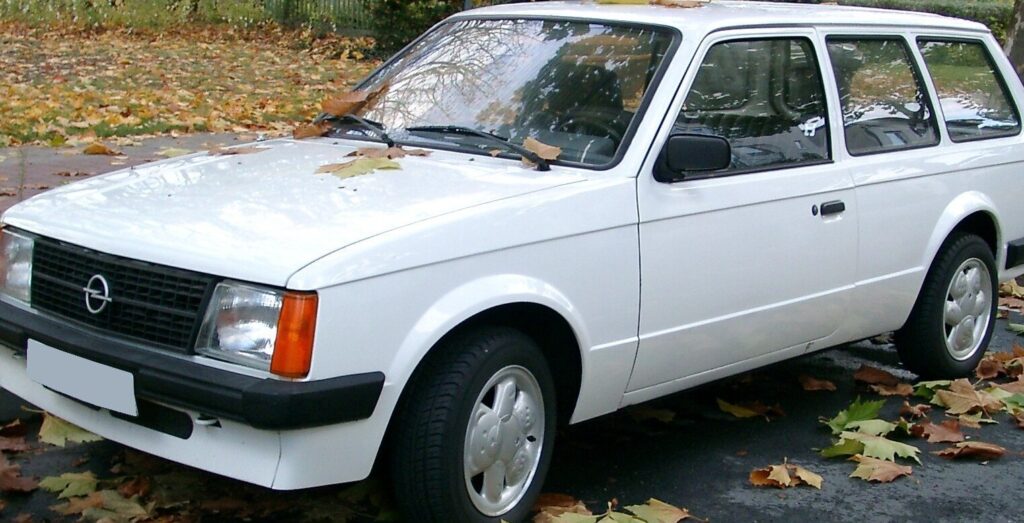
The Opel Kadett D Caravan 1.3 N, producing 60 horsepower, was a mainstay of the Kadett D range from 1979 to 1984. Positioned as the entry-level variant of the Caravan (estate) body style, it offered practical family transport at an affordable price point, primarily targeting budget-conscious buyers in Europe. The Kadett D, launched in 1979, represented a significant step forward for Opel, building upon the success of the C-series while incorporating more modern design and engineering. The Caravan body style, in particular, was popular for its increased cargo capacity, making it a favored choice for families and tradespeople.
Technical Specifications
| Brand | Opel |
| Model | Kadett |
| Generation | Kadett D Caravan |
| Type (Engine) | 1.3 N (60 Hp) |
| Start of production | 1979 |
| End of production | 1984 |
| Powertrain Architecture | Internal Combustion engine |
| Body type | Station wagon (estate) |
| Seats | 5 |
| Doors | 3-5 |
| Fuel Type | Petrol (Gasoline) |
| Acceleration 0 – 100 km/h | 16.5 sec |
| Acceleration 0 – 62 mph | 16.5 sec |
| Acceleration 0 – 60 mph | 15.7 sec |
| Maximum speed | 147 km/h (91.34 mph) |
| Weight-to-power ratio | 14.8 kg/Hp, 67.8 Hp/tonne |
| Weight-to-torque ratio | 9.4 kg/Nm, 106.2 Nm/tonne |
| Power | 60 Hp @ 5800 rpm |
| Power per litre | 46.3 Hp/l |
| Torque | 94 Nm @ 3400-3800 rpm (69.33 lb.-ft. @ 3400-3800 rpm) |
| Engine layout | Front, Transverse |
| Engine Model/Code | 13N, 13NB |
| Engine displacement | 1297 cm3 (79.15 cu. in.) |
| Number of cylinders | 4 |
| Engine configuration | Inline |
| Cylinder Bore | 75 mm (2.95 in.) |
| Piston Stroke | 73.4 mm (2.89 in.) |
| Compression ratio | 8.2:1 |
| Number of valves per cylinder | 2 |
| Fuel injection system | Carburettor |
| Engine aspiration | Naturally aspirated engine |
| Valvetrain | SOHC |
| Engine oil capacity | 3 l (3.17 US qt | 2.64 UK qt) |
| Coolant | 7 l (7.4 US qt | 6.16 UK qt) |
| Kerb Weight | 885 kg (1951.09 lbs.) |
| Max. weight | 1385 kg (3053.4 lbs.) |
| Max load | 500 kg (1102.31 lbs.) |
| Trunk (boot) space – minimum | 535 l (18.89 cu. ft.) |
| Trunk (boot) space – maximum | 1700 l (60.03 cu. ft.) |
| Fuel tank capacity | 50 l (13.21 US gal | 11 UK gal) |
| Length | 4207 mm (165.63 in.) |
| Width | 1636 mm (64.41 in.) |
| Height | 1400 mm (55.12 in.) |
| Wheelbase | 2514 mm (98.98 in.) |
| Front track | 1400 mm (55.12 in.) |
| Rear (Back) track | 1406 mm (55.35 in.) |
| Ride height (ground clearance) | 135 mm (5.31 in.) |
| Minimum turning circle | 10.5 m (34.45 ft.) |
| Drivetrain Architecture | The Internal combustion engine (ICE) drives the front wheels of the vehicle. |
| Drive wheel | Front wheel drive |
| Number of gears and type of gearbox | 4 gears, manual transmission |
| Front brakes | Disc |
| Rear brakes | Drum |
Powertrain & Engine Architecture
The heart of the Kadett D Caravan 1.3 N was the 13N (and later 13NB) inline-four cylinder engine. Displacing 1297cc, this engine featured a single overhead camshaft (SOHC) valvetrain operating two valves per cylinder. Fuel delivery was managed by a carburetor, a common setup for vehicles of this era and price point. The 13N engine was known for its simplicity and relative reliability, though it wasn’t a powerhouse. The 13NB variant, introduced later in the production run, incorporated minor revisions to improve emissions and fuel efficiency. The engine was transversely mounted, driving the front wheels. The four-speed manual transmission was the standard offering for this variant, providing a straightforward driving experience. The transmission’s gear ratios were geared towards economy rather than outright performance.
Driving Characteristics
The 1.3 N-powered Kadett D Caravan was not designed for speed. With only 60 horsepower on tap, acceleration was leisurely, taking approximately 16.5 seconds to reach 62 mph. However, the engine proved adequate for everyday driving, particularly in urban and rural environments. The manual transmission allowed for a reasonable degree of control, but the engine needed to be revved to extract the most performance. Compared to the more powerful Kadett variants, such as those equipped with the 1.6-liter engine or the later fuel-injected models, the 1.3 N felt noticeably slower. The focus was on fuel economy and affordability, making it a practical choice for those prioritizing cost-effectiveness over performance.
Equipment & Trim Levels
The 1.3 N Caravan typically came with a basic level of equipment. Standard features included cloth upholstery, a simple dashboard layout, and basic instrumentation. Power steering and central locking were generally not included as standard, but were often available as optional extras. The interior was functional and durable, designed to withstand the rigors of family use. Trim levels were relatively limited for the base 1.3 N model, with options primarily revolving around adding features like a radio, upgraded upholstery, or tinted glass. The emphasis was on providing a no-frills, affordable package.
Chassis & Braking
The Kadett D Caravan featured a MacPherson strut front suspension and a rigid axle rear suspension. The 1.3 N variant typically used drum brakes on the rear wheels, while the front wheels were equipped with disc brakes. This configuration was common for vehicles in this class during the late 1970s and early 1980s. The suspension provided a comfortable ride, although it wasn’t particularly sporty. Stabilizer bars were often omitted from the base 1.3 N model to keep costs down, resulting in slightly more body roll during cornering. The braking system was adequate for normal driving conditions, but lacked the stopping power of more advanced systems found on higher-spec Kadett models.
Market Reception & Comparison
The Kadett D Caravan 1.3 N was generally well-received as a practical and affordable family car. Critics praised its spacious interior, good fuel economy, and reasonable reliability. However, its lack of power and basic equipment levels were often noted. Compared to other vehicles in its class, such as the Ford Escort and Volkswagen Golf, the Kadett offered a competitive price point and a comfortable ride. The 1.6-liter Kadett variants offered significantly better performance, but came at a higher cost. The 1.3 N appealed to buyers who prioritized practicality and affordability over outright performance.
Legacy
The Opel Kadett D Caravan 1.3 N remains a relatively common sight on European roads today, testament to its durability and affordability. The 13N engine, while not particularly sophisticated, proved to be reasonably reliable, and parts availability remains good. The car has gained a following among classic car enthusiasts, particularly those seeking a simple and affordable vintage vehicle. While not a performance icon, the 1.3 N Caravan represents a significant chapter in Opel’s history, offering a glimpse into the automotive landscape of the late 1970s and early 1980s. Its enduring appeal lies in its practicality, affordability, and the nostalgic charm of a bygone era.