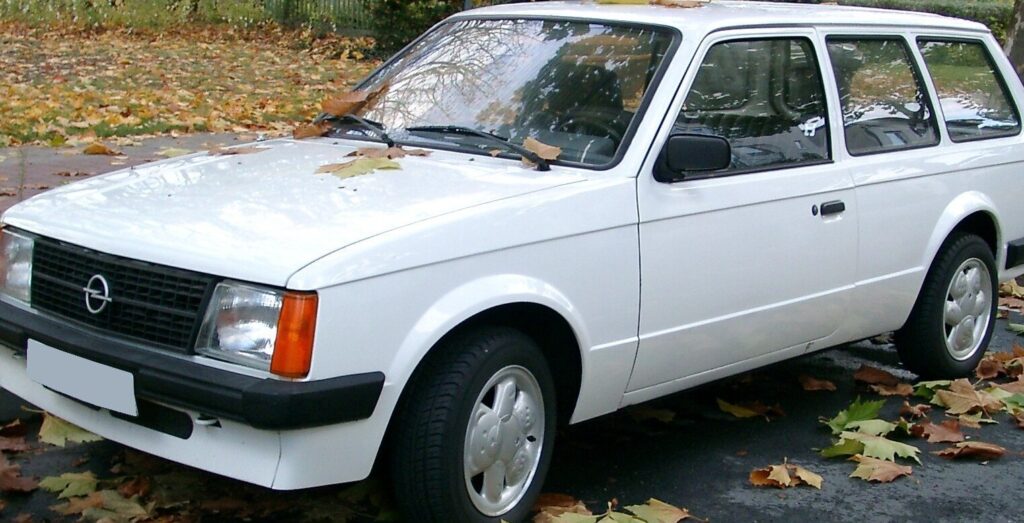
The Opel Kadett D Caravan 1.3 S, produced between 1979 and 1984, represented a practical and affordable option within the broader Kadett D range. Positioned as a mid-range trim level, it offered a balance between economy and usability, particularly appealing to families and those needing a versatile vehicle. The Kadett D, launched in 1979, was a significant model for Opel, built on the H-platform (internally designated as 1HX0/A3) and serving as the company’s mainstay in the compact segment. The Caravan body style, a station wagon, further enhanced the Kadett’s practicality, making it a popular choice in European markets.
Technical Specifications
| Brand | Opel |
| Model | Kadett |
| Generation | Kadett D Caravan |
| Type (Engine) | 1.3 S (75 Hp) |
| Start of production | 1979 |
| End of production | 1984 |
| Powertrain Architecture | Internal Combustion engine |
| Body type | Station wagon (estate) |
| Seats | 5 |
| Doors | 3-5 |
| Fuel Type | Petrol (Gasoline) |
| Acceleration 0 – 100 km/h | 14.5 sec |
| Acceleration 0 – 62 mph | 14.5 sec |
| Acceleration 0 – 60 mph | 13.8 sec |
| Maximum speed | 158 km/h (98.18 mph) |
| Weight-to-power ratio | 11.8 kg/Hp, 84.7 Hp/tonne |
| Weight-to-torque ratio | 8.8 kg/Nm, 114.1 Nm/tonne |
| Power | 75 Hp @ 5800 rpm |
| Power per litre | 57.8 Hp/l |
| Torque | 101 Nm @ 3800-4600 rpm (74.49 lb.-ft. @ 3800-4600 rpm) |
| Engine layout | Front, Transverse |
| Engine Model/Code | 13S, 13SC |
| Engine displacement | 1297 cm3 (79.15 cu. in.) |
| Number of cylinders | 4 |
| Engine configuration | Inline |
| Cylinder Bore | 75 mm (2.95 in.) |
| Piston Stroke | 73.4 mm (2.89 in.) |
| Compression ratio | 9.2:1 |
| Number of valves per cylinder | 2 |
| Fuel injection system | Carburettor |
| Engine aspiration | Naturally aspirated engine |
| Valvetrain | SOHC |
| Engine oil capacity | 3 l (3.17 US qt | 2.64 UK qt) |
| Coolant | 7 l (7.4 US qt | 6.16 UK qt) |
| Kerb Weight | 885 kg (1951.09 lbs.) |
| Max. weight | 1385 kg (3053.4 lbs.) |
| Max load | 500 kg (1102.31 lbs.) |
| Trunk (boot) space – minimum | 535 l (18.89 cu. ft.) |
| Trunk (boot) space – maximum | 1700 l (60.03 cu. ft.) |
| Fuel tank capacity | 50 l (13.21 US gal | 11 UK gal) |
| Length | 4207 mm (165.63 in.) |
| Width | 1636 mm (64.41 in.) |
| Height | 1400 mm (55.12 in.) |
| Wheelbase | 2514 mm (98.98 in.) |
| Front track | 1400 mm (55.12 in.) |
| Rear (Back) track | 1406 mm (55.35 in.) |
| Minimum turning circle | 10.5 m (34.45 ft.) |
Powertrain & Engine Architecture
The Kadett D Caravan 1.3 S was powered by the Opel 13S engine, a 1.3-liter (1297 cc) inline-four cylinder unit. Engine codes 13S and 13SC were used, with minor variations depending on the specific market and year. This engine featured a single overhead camshaft (SOHC) valvetrain with two valves per cylinder. Fuel delivery was handled by a carburetor, a common setup for vehicles of this era, prioritizing simplicity and cost-effectiveness over the more advanced fuel injection systems. The engine produced 75 horsepower at 5800 rpm and 101 Nm (74.49 lb-ft) of torque between 3800 and 4600 rpm. The engine was transversely mounted in the front of the vehicle, driving the front wheels. The standard transmission was a four-speed manual gearbox, although a three-speed automatic transmission was also available, albeit less common.
Driving Characteristics
The 1.3 S engine, paired with the four-speed manual transmission, provided adequate, though not exhilarating, performance. Acceleration from 0 to 60 mph took around 13.8 seconds, and the top speed was approximately 98 mph. The automatic transmission option, while offering convenience, noticeably reduced performance due to its less efficient power delivery and wider gear ratios. The engine felt relatively responsive at lower RPMs, making it suitable for everyday driving, but lacked significant power for overtaking maneuvers or climbing steep hills. The front-wheel-drive configuration provided reasonable handling, although it wasn’t particularly sporty. The suspension, tuned for comfort, absorbed bumps well, but resulted in some body roll during cornering.
Equipment & Trim Levels
The 1.3 S trim level offered a step up in features compared to the base Kadett Caravan. Standard equipment typically included cloth upholstery, a basic instrument cluster, and a two-speed windscreen wiper. Optional extras included a radio, upgraded interior trim, and a sunroof. The Caravan body style itself was a key feature, providing a generous 535 liters of luggage space (minimum) that expanded to 1700 liters with the rear seats folded down. This made the Kadett D Caravan a practical choice for families and those needing to transport larger items.
Chassis & Braking
The Kadett D Caravan featured a MacPherson strut front suspension and a rigid axle rear suspension. The 1.3 S model typically used drum brakes on the rear wheels and disc brakes on the front, providing adequate stopping power for its weight class. A stabilizer bar was often included in the front suspension to reduce body roll. The steering was a rack and pinion system, offering reasonably precise control. The chassis was designed to prioritize comfort and practicality over outright handling performance.
Market Reception & Comparison
The Kadett D Caravan 1.3 S was generally well-received as a practical and affordable family car. Critics praised its spacious interior, fuel efficiency, and relatively low running costs. However, the 1.3-liter engine was often criticized for its lack of power, particularly when compared to larger-engined Kadett variants like the 1.6 or the more performance-oriented GSi models. The automatic transmission version was often seen as a compromise, sacrificing performance for convenience. Compared to rivals like the Ford Escort Estate and the Volkswagen Golf, the Kadett D Caravan offered a competitive package in terms of price, space, and practicality.
Legacy
The Opel Kadett D Caravan 1.3 S, while not a particularly sought-after classic today, remains a reliable and affordable option in the used car market. The 13S engine is known for its durability, although regular maintenance is essential to prevent issues such as carburetor problems and oil leaks. Parts availability is generally good, although some specific trim pieces may be difficult to find. The Kadett D Caravan represents a significant chapter in Opel’s history, offering a glimpse into the automotive landscape of the late 1970s and early 1980s. Its blend of practicality, affordability, and reliability ensured its popularity with a wide range of buyers.