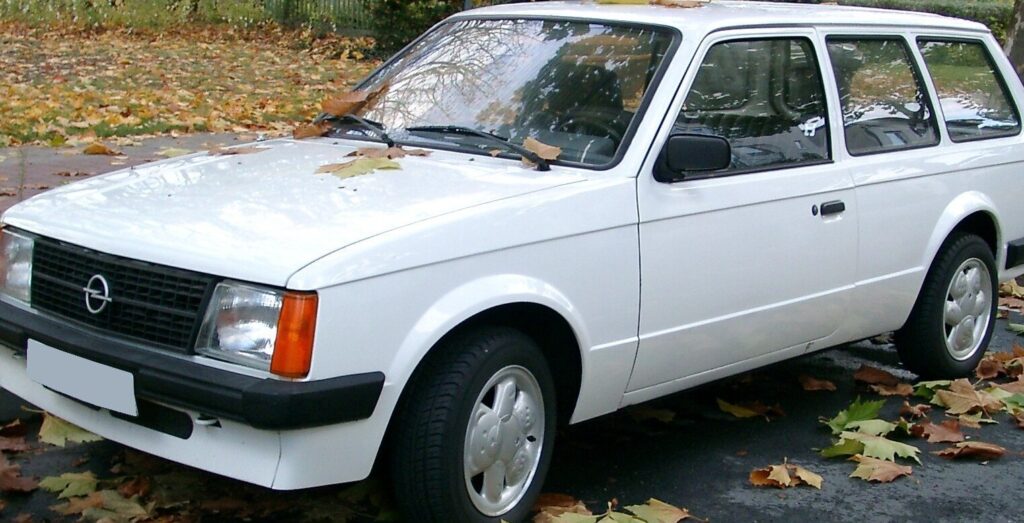
The Opel Kadett D Caravan 1.6 D, produced between 1982 and 1984, represented a practical and economical offering within the broader Kadett D range. Positioned as a diesel-powered variant of the popular Caravan (estate) body style, it catered to buyers prioritizing fuel efficiency and load-carrying capacity over outright performance. This model occupied the lower end of the Kadett D lineup, serving as a more affordable alternative to the gasoline-powered versions and offering a workhorse solution for families and commercial users. The Kadett D itself was a significant model for Opel, building upon the success of its predecessors and establishing a strong presence in the European compact car segment.
Technical Specifications
| Brand | Opel |
| Model | Kadett |
| Generation | Kadett D Caravan |
| Type (Engine) | 1.6 D (54 Hp) |
| Start of production | 1982 |
| End of production | 1984 |
| Powertrain Architecture | Internal Combustion engine |
| Body type | Station wagon (estate) |
| Seats | 5 |
| Doors | 3-5 |
| Fuel Type | Diesel |
| Acceleration 0 – 100 km/h | 20 sec |
| Acceleration 0 – 62 mph | 20 sec |
| Acceleration 0 – 60 mph | 19 sec |
| Maximum speed | 143 km/h (88.86 mph) |
| Weight-to-power ratio | 18.6 kg/Hp, 53.7 Hp/tonne |
| Weight-to-torque ratio | 10.5 kg/Nm, 95.5 Nm/tonne |
| Power | 54 Hp @ 4600 rpm |
| Power per litre | 33.8 Hp/l |
| Torque | 96 Nm @ 2400 rpm (70.81 lb.-ft. @ 2400 rpm) |
| Engine layout | Front, Transverse |
| Engine Model/Code | 16D |
| Engine displacement | 1598 cm3 (97.52 cu. in.) |
| Number of cylinders | 4 |
| Engine configuration | Inline |
| Cylinder Bore | 80 mm (3.15 in.) |
| Piston Stroke | 79.5 mm (3.13 in.) |
| Compression ratio | 23:1 |
| Number of valves per cylinder | 2 |
| Engine aspiration | Naturally aspirated engine |
| Valvetrain | SOHC |
| Engine oil capacity | 3.75 l (3.96 US qt | 3.3 UK qt) |
| Coolant | 7.5 l (7.93 US qt | 6.6 UK qt) |
| Kerb Weight | 1005 kg (2215.65 lbs.) |
| Max. weight | 1520 kg (3351.03 lbs.) |
| Max load | 515 kg (1135.38 lbs.) |
| Trunk (boot) space – minimum | 535 l (18.89 cu. ft.) |
| Trunk (boot) space – maximum | 1700 l (60.03 cu. ft.) |
| Fuel tank capacity | 50 l (13.21 US gal | 11 UK gal) |
| Length | 4207 mm (165.63 in.) |
| Width | 1636 mm (64.41 in.) |
| Height | 1400 mm (55.12 in.) |
| Wheelbase | 2514 mm (98.98 in.) |
| Front track | 1406 mm (55.35 in.) |
| Rear (Back) track | 1406 mm (55.35 in.) |
| Minimum turning circle | 10.7 m (35.1 ft.) |
| Drivetrain Architecture | The Internal combustion engine (ICE) drives the front wheels of the vehicle. |
| Drive wheel | Front wheel drive |
| Number of gears | 4 gears, manual transmission |
| Front brakes | Disc |
| Rear brakes | Drum |
Powertrain & Engine Architecture
The heart of the Kadett D Caravan 1.6 D was the 16D engine, a 1.6-liter inline-four diesel. This engine, a mainstay of Opel’s diesel offerings during the period, was known for its robustness and fuel economy rather than its performance. It featured a naturally aspirated configuration with a single overhead camshaft (SOHC) operating two valves per cylinder. The indirect injection system, common for diesels of the era, contributed to quieter operation compared to direct injection systems, but also resulted in slightly lower power output. The 16D produced 54 horsepower at 4600 rpm and 96 Nm (70.81 lb-ft) of torque at 2400 rpm. The engine was transversely mounted, driving the front wheels through a four-speed manual transmission. This configuration was chosen to maximize interior space and improve packaging efficiency.
Driving Characteristics
The 1.6 D-powered Kadett D Caravan was not a sporty vehicle. Acceleration was leisurely, taking approximately 20 seconds to reach 62 mph (100 km/h). The focus was on providing adequate power for everyday driving and hauling loads. The four-speed manual transmission was geared for economy, with relatively tall ratios. This meant that the engine needed to be revved to maintain speed, especially when loaded. Compared to the gasoline-powered Kadett D models, the diesel offered significantly better fuel economy, but at the expense of performance. The manual transmission provided a more engaging driving experience than an automatic would have, allowing the driver to better utilize the engine’s limited power band. The Caravan’s suspension, tuned for comfort and load-carrying, provided a reasonably smooth ride, even with a full trunk.
Equipment & Trim Levels
The Kadett D Caravan 1.6 D was typically offered with a relatively basic level of equipment, reflecting its position as an entry-level model. Standard features generally included cloth upholstery, a basic instrument cluster, and manually operated windows and door locks. The interior was functional and durable, prioritizing practicality over luxury. Optional extras could include a radio, upgraded upholstery, and a sunroof. Trim levels were often differentiated by minor cosmetic details, such as different wheel covers or interior trim materials. The Caravan body style itself was a key feature, offering a large and versatile cargo area accessible through a rear tailgate.
Chassis & Braking
The Kadett D Caravan utilized a relatively simple chassis design. It featured independent front suspension with MacPherson struts and a torsion beam rear suspension. This setup provided a good balance between ride comfort and handling. Braking was accomplished via disc brakes on the front wheels and drum brakes on the rear. The braking system was adequate for the vehicle’s weight and performance, but lacked the sophistication of more modern systems. Steering was rack-and-pinion, providing reasonably precise control. The Caravan’s suspension was typically tuned to handle the increased weight associated with carrying loads, with slightly stiffer springs and dampers compared to the standard Kadett saloon.
Market Reception & Comparison
The Kadett D Caravan 1.6 D was well-received in the European market as a practical and affordable family vehicle. Critics praised its fuel economy and spacious interior, but noted its lack of performance. Compared to the gasoline-powered Kadett D models, the diesel offered significantly better fuel efficiency, making it a popular choice for high-mileage drivers. However, the gasoline engines provided a more refined driving experience and quicker acceleration. The 1.6 D also faced competition from other diesel-powered compact estates, such as the Volkswagen Golf Diesel and the Ford Escort Diesel. The Kadett D Caravan generally offered a competitive price point and a reputation for reliability.
Legacy
The Opel Kadett D Caravan 1.6 D, while not a performance icon, remains a fondly remembered vehicle for many European drivers. The 16D engine, though simple in design, proved to be remarkably durable and capable of high mileage with proper maintenance. Today, well-maintained examples are sought after by classic car enthusiasts and collectors. The Kadett D Caravan’s practicality and affordability cemented its place as a popular choice for families and commercial users during the 1980s. Its legacy continues in the form of its robust construction and enduring appeal as a representative of a bygone era of automotive engineering.