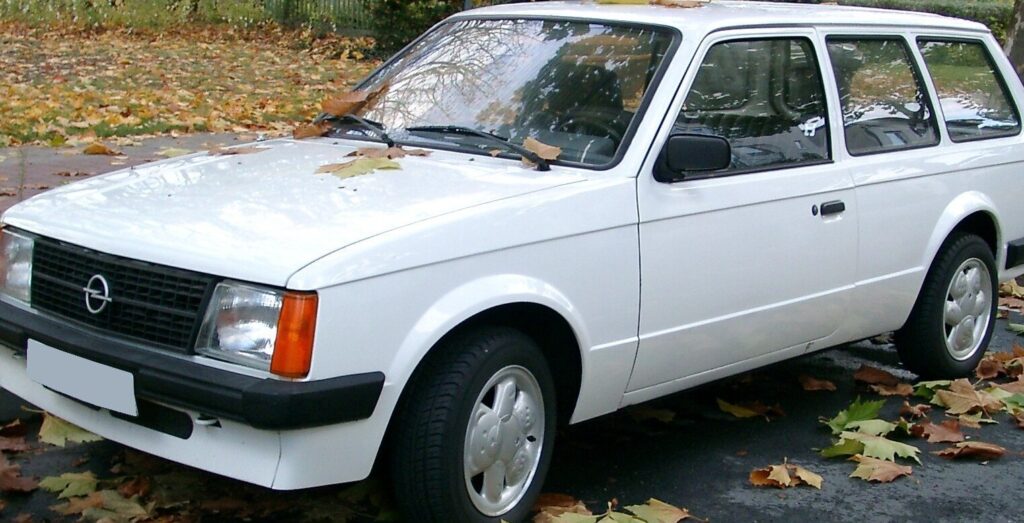
The Opel Kadett D Caravan 1.6 S, produced between 1981 and 1984, represented a practical and relatively sporty offering within the broader Kadett D range. Positioned as a mid-range trim level for the Caravan (estate) body style, it aimed to provide a balance between affordability, fuel efficiency, and usable performance. The Kadett D, launched in 1979, was a significant model for Opel, representing a move towards more modern design and engineering. The Caravan variant, in particular, was popular in Europe as a family vehicle, offering increased cargo capacity compared to the saloon and coupe versions. This 1.6 S trim, with its 90 horsepower engine, was a step up from the base models, appealing to buyers who needed a bit more power for hauling loads or tackling longer journeys.
Technical Specifications
| Brand | Opel |
| Model | Kadett |
| Generation | Kadett D Caravan |
| Type (Engine) | 1.6 S (90 Hp) |
| Start of production | 1981 |
| End of production | 1984 |
| Powertrain Architecture | Internal Combustion engine |
| Body type | Station wagon (estate) |
| Seats | 5 |
| Doors | 3-5 |
| Fuel Type | Petrol (Gasoline) |
| Acceleration 0 – 100 km/h | 12 sec |
| Acceleration 0 – 62 mph | 12 sec |
| Acceleration 0 – 60 mph | 11.4 sec |
| Maximum speed | 170 km/h (105.63 mph) |
| Weight-to-power ratio | 10.5 kg/Hp, 95.2 Hp/tonne |
| Weight-to-torque ratio | 7.5 kg/Nm, 133.3 Nm/tonne |
| Power | 90 Hp |
| Power per litre | 56.3 Hp/l |
| Torque | 126 Nm @ 3800-4200 rpm (92.93 lb.-ft. @ 3800-4200 rpm) |
| Engine layout | Front, Transverse |
| Engine Model/Code | 16SH |
| Engine displacement | 1598 cm3 (97.52 cu. in.) |
| Number of cylinders | 4 |
| Engine configuration | Inline |
| Cylinder Bore | 80 mm (3.15 in.) |
| Piston Stroke | 79.5 mm (3.13 in.) |
| Compression ratio | 9.2:1 |
| Number of valves per cylinder | 2 |
| Fuel injection system | Carburettor |
| Engine aspiration | Naturally aspirated engine |
| Valvetrain | SOHC |
| Engine oil capacity | 3.25 l (3.43 US qt | 2.86 UK qt) |
| Coolant | 7.7 l (8.14 US qt | 6.78 UK qt) |
| Kerb Weight | 945 kg (2083.37 lbs.) |
| Max. weight | 1435 kg (3163.63 lbs.) |
| Max load | 490 kg (1080.27 lbs.) |
| Trunk (boot) space – minimum | 535 l (18.89 cu. ft.) |
| Trunk (boot) space – maximum | 1700 l (60.03 cu. ft.) |
| Fuel tank capacity | 50 l (13.21 US gal | 11 UK gal) |
| Length | 4207 mm (165.63 in.) |
| Width | 1636 mm (64.41 in.) |
| Height | 1400 mm (55.12 in.) |
| Wheelbase | 2514 mm (98.98 in.) |
| Front track | 1406 mm (55.35 in.) |
| Rear (Back) track | 1406 mm (55.35 in.) |
| Minimum turning circle | 10.5 m (34.45 ft.) |
| Drivetrain Architecture | The Internal combustion engine (ICE) drives the front wheels of the vehicle. |
| Drive wheel | Front wheel drive |
| Number of gears and type of gearbox | 4 gears, manual transmission |
| Front brakes | Disc |
| Rear brakes | Drum |
Powertrain & Engine Architecture
The heart of the Kadett D Caravan 1.6 S was the 16SH engine, a 1.6-liter inline-four cylinder unit. This engine featured a single overhead camshaft (SOHC) valvetrain operating two valves per cylinder. Fuel delivery was handled by a carburetor, a common setup for the time, though less efficient and precise than fuel injection. The 16SH produced 90 horsepower and 126 Nm (93 lb-ft) of torque. The engine’s relatively simple design contributed to its reliability, but also limited its overall performance potential. The engine was transversely mounted, driving the front wheels. The four-speed manual transmission was the standard offering for this trim, providing a direct connection between the engine and the wheels. While an automatic transmission was available on some Kadett D models, it wasn’t typically paired with the 1.6 S engine.
Driving Characteristics
The 1.6 S offered a noticeable step up in performance compared to the base Kadett Caravan models. Acceleration to 60 mph took around 11.4 seconds, and it could reach a top speed of 105.63 mph. However, it wasn’t a particularly quick car by modern standards. The four-speed manual transmission provided adequate control, but the relatively wide gear ratios meant that the engine often felt strained when accelerating hard or climbing hills. Compared to the more powerful Kadett models, such as those equipped with the 1.8 or 2.0-liter engines, the 1.6 S felt somewhat underpowered. The handling was typical for a front-wheel-drive car of the era – safe and predictable, but not particularly engaging. The suspension was tuned for comfort, prioritizing ride quality over sporty handling.
Equipment & Trim Levels
The 1.6 S trim level included a number of features that distinguished it from the more basic Kadett Caravan models. Standard equipment typically included upgraded cloth upholstery, a more comprehensive instrument cluster, and a higher-quality steering wheel. Optional extras included a sunroof, upgraded audio system, and power windows. The interior design was functional and straightforward, reflecting the car’s practical nature. The Caravan’s spacious interior and large cargo area were key selling points, making it a popular choice for families and those who needed to transport bulky items.
Chassis & Braking
The Kadett D Caravan featured a MacPherson strut front suspension and a rigid axle rear suspension. The front brakes were disc brakes, providing adequate stopping power, while the rear brakes were drum brakes. The suspension was tuned for comfort, providing a relatively smooth ride, but it wasn’t particularly sporty. Stabilizer bars were often included to reduce body roll during cornering. The chassis was relatively lightweight, contributing to the car’s fuel efficiency and handling. The steering was manual rack and pinion, providing a direct and responsive feel.
Market Reception & Comparison
The Kadett D Caravan 1.6 S was generally well-received by automotive critics as a practical and affordable family car. It offered a good balance between performance, fuel economy, and space. However, some critics noted that the engine felt underpowered, especially when the car was fully loaded. Compared to other station wagons in its class, such as the Ford Escort Estate and the Volkswagen Passat Variant, the Kadett Caravan offered a competitive level of equipment and a reasonable price. The 1.6 S trim level was positioned as a mid-range option, appealing to buyers who wanted a bit more performance than the base models but didn’t want to pay the premium for the more expensive trims.
Legacy
The Opel Kadett D Caravan 1.6 S has become a popular classic car among enthusiasts. The 16SH engine is known for its reliability and relatively simple maintenance requirements. However, finding parts can be challenging, as the car is now over 40 years old. The Kadett D Caravan remains a testament to Opel’s commitment to building practical and affordable family cars. Today, well-maintained examples are sought after by collectors and enthusiasts who appreciate their classic styling and straightforward engineering. The 1.6 S variant, while not the most powerful Kadett D, offers a good balance of performance and economy, making it a rewarding classic car to own and drive.