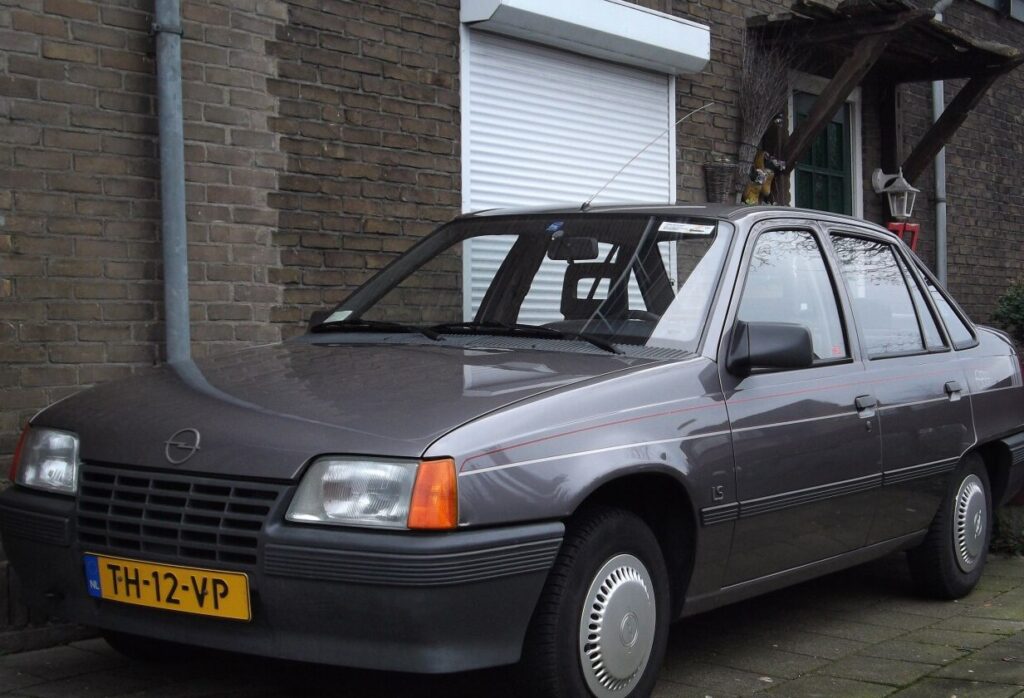
The Opel Kadett E 1.3 N, producing 60 horsepower, was a foundational variant of the Kadett E range, manufactured between 1984 and 1987. Positioned as the entry-level model, it served as an affordable and economical option within the broader Kadett E lineup, which also included more powerful versions like the 1.6 and specialized models like the GSi. The Kadett E itself represented a significant step forward for Opel, built on the GM T-platform (internally known as the 1HX0/A3 platform) and offering improved aerodynamics, interior space, and overall refinement compared to its predecessor, the Kadett D. This variant was primarily aimed at budget-conscious buyers in Europe, offering reliable transportation with a focus on fuel efficiency.
Technical Specifications
| Brand | Opel |
| Model | Kadett |
| Generation | Kadett E |
| Type (Engine) | 1.3 N (60 Hp) |
| Start of production | 1984 |
| End of production | 1987 |
| Powertrain Architecture | Internal Combustion engine |
| Body type | Sedan |
| Seats | 5 |
| Doors | 4 |
| Fuel Type | Petrol (Gasoline) |
| Acceleration 0 – 100 km/h | 15 sec |
| Acceleration 0 – 62 mph | 15 sec |
| Acceleration 0 – 60 mph | 14.3 sec |
| Maximum speed | 160 km/h (99.42 mph) |
| Weight-to-power ratio | 14.6 kg/Hp, 68.6 Hp/tonne |
| Weight-to-torque ratio | 9.3 kg/Nm, 107.4 Nm/tonne |
| Power | 60 Hp @ 5800 rpm |
| Power per litre | 46.3 Hp/l |
| Torque | 94 Nm @ 3400-3800 rpm (69.33 lb.-ft. @ 3400-3800 rpm) |
| Engine layout | Front, Transverse |
| Engine Model/Code | 13N |
| Engine displacement | 1297 cm3 (79.15 cu. in.) |
| Number of cylinders | 4 |
| Engine configuration | Inline |
| Cylinder Bore | 75 mm (2.95 in.) |
| Piston Stroke | 73.4 mm (2.89 in.) |
| Compression ratio | 8.2:1 |
| Number of valves per cylinder | 2 |
| Fuel injection system | Carburettor |
| Engine aspiration | Naturally aspirated engine |
| Valvetrain | SOHC |
| Engine oil capacity | 3 l (3.17 US qt | 2.64 UK qt) |
| Coolant | 7 l (7.4 US qt | 6.16 UK qt) |
| Kerb Weight | 875 kg (1929.04 lbs.) |
| Max. weight | 1365 kg (3009.31 lbs.) |
| Max load | 490 kg (1080.27 lbs.) |
| Trunk (boot) space – minimum | 550 l (19.42 cu. ft.) |
| Trunk (boot) space – maximum | 890 l (31.43 cu. ft.) |
| Fuel tank capacity | 52 l (13.74 US gal | 11.44 UK gal) |
| Length | 4218 mm (166.06 in.) |
| Width | 1658 mm (65.28 in.) |
| Height | 1400 mm (55.12 in.) |
| Wheelbase | 2520 mm (99.21 in.) |
| Front track | 1400 mm (55.12 in.) |
| Rear (Back) track | 1406 mm (55.35 in.) |
| Minimum turning circle | 10.5 m (34.45 ft.) |
| Drivetrain Architecture | The Internal combustion engine (ICE) drives the front wheels of the vehicle. |
| Drive wheel | Front wheel drive |
| Number of gears and type of gearbox | 4 gears, manual transmission |
| Front brakes | Disc |
| Rear brakes | Drum |
Powertrain & Engine Architecture
The heart of the Kadett E 1.3 N was the 13N engine, a 1.3-liter inline-four cylinder unit. This engine utilized a single overhead camshaft (SOHC) valvetrain with two valves per cylinder. Fuel delivery was managed by a carburetor, a common feature for entry-level cars of this era, prioritizing simplicity and cost-effectiveness over the more advanced fuel injection systems found in higher-spec models. The 13N engine produced 60 horsepower at 5800 rpm and 94 Nm (69.33 lb-ft) of torque between 3400 and 3800 rpm. The engine was transversely mounted in the front of the vehicle, driving the front wheels. The standard transmission was a four-speed manual gearbox, designed for durability and ease of use. While an automatic transmission was offered on some Kadett E models, it was not typically paired with the 1.3 N engine due to the limited power output.
Driving Characteristics
The Kadett E 1.3 N offered modest performance, reflecting its position as the base model. Acceleration from 0 to 100 km/h (0-62 mph) took approximately 15 seconds, and its top speed was around 160 km/h (99 mph). The four-speed manual transmission provided adequate gear spacing for everyday driving, but the engine lacked the punch for quick overtaking maneuvers. Compared to the 1.6-liter Kadett E, the 1.3 N felt noticeably slower, particularly at higher speeds. The focus was on fuel economy and smooth, predictable handling rather than outright performance. The relatively light weight of the vehicle (875 kg or 1929 lbs) helped to mitigate the lack of power to some extent.
Equipment & Trim Levels
The 1.3 N Kadett E was typically equipped with basic features. Standard equipment included cloth upholstery, a simple dashboard layout, and manual windows and door locks. The interior was functional and durable, prioritizing practicality over luxury. Optional extras included a radio, upgraded seat fabrics, and sometimes, a sunroof. The trim level was generally quite spartan, reflecting its affordability. It was often identified by minimal exterior trim and steel wheels with hubcaps.
Chassis & Braking
The Kadett E featured a MacPherson strut front suspension and a twist-beam rear suspension. The front brakes were disc brakes, providing adequate stopping power, while the rear brakes were drum brakes, a cost-saving measure common in entry-level vehicles. The suspension was tuned for comfort and ride quality, rather than sporty handling. Stabilizer bars were often omitted on the base 1.3 N model, further emphasizing its focus on comfort and affordability. The steering was a rack-and-pinion system, providing reasonable precision.
Market Reception & Comparison
The Kadett E 1.3 N was generally well-received as an affordable and reliable family car. Critics acknowledged its practicality and fuel efficiency, but noted its lack of performance. Compared to the more powerful Kadett E variants, such as the 1.6 and GSi, the 1.3 N was significantly slower and less engaging to drive. However, it offered a lower purchase price and better fuel economy, making it an attractive option for budget-conscious buyers. Its reliability was a key selling point, and maintenance costs were relatively low due to the simplicity of the engine and drivetrain.
Legacy
The Opel Kadett E 1.3 N, while not the most exciting variant of the range, played a crucial role in establishing the Kadett E as a popular and successful family car in Europe. The 13N engine, while simple, proved to be durable and reliable. Today, the Kadett E 1.3 N is a relatively affordable classic car, appealing to enthusiasts looking for a simple, reliable, and nostalgic vehicle. Parts availability is generally good, and the car’s straightforward mechanical design makes it relatively easy to maintain and repair. While not highly sought after by collectors, it represents a significant piece of automotive history and a testament to Opel’s commitment to providing affordable transportation.