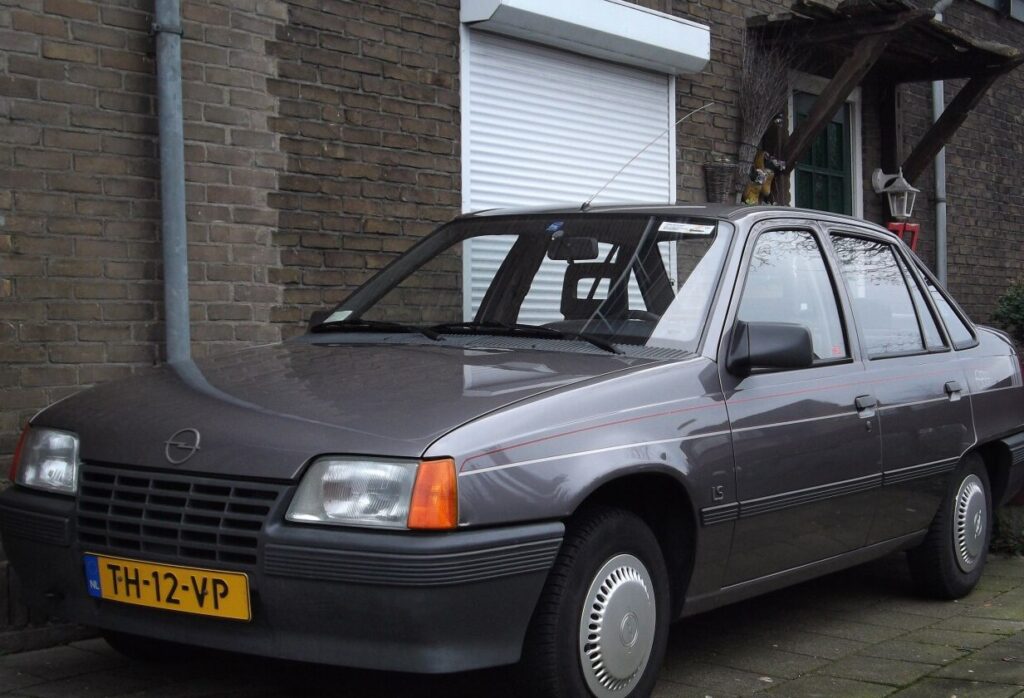
The Opel Kadett E 1.3 S, produced between 1984 and 1986, represented an entry-level offering within the broader Kadett E range. Positioned as a practical and economical choice, this variant aimed to provide affordable transportation for families and commuters. The Kadett E itself was a significant model for Opel, built on the GM T-platform (internally known as the 1HX0/A3 platform) and sharing components with other GM vehicles like the Vauxhall Astra, Isuzu Gemini, and Holden Nova. The 1.3 S trim, with its 75 horsepower engine, served as the base model for those seeking a simple, reliable, and fuel-efficient vehicle. It was a popular choice in Europe, particularly in Germany, where Opel held a strong market share.
Technical Specifications
| Brand | Opel |
| Model | Kadett |
| Generation | Kadett E |
| Type (Engine) | 1.3 S (75 Hp) |
| Start of production | 1984 |
| End of production | 1986 |
| Powertrain Architecture | Internal Combustion engine |
| Body type | Sedan |
| Seats | 5 |
| Doors | 4 |
| Fuel Type | Petrol (Gasoline) |
| Acceleration 0 – 100 km/h | 13 sec |
| Acceleration 0 – 62 mph | 13 sec |
| Acceleration 0 – 60 mph | 12.4 sec |
| Maximum speed | 170 km/h (105.63 mph) |
| Weight-to-power ratio | 11.5 kg/Hp, 86.7 Hp/tonne |
| Weight-to-torque ratio | 8.5 kg/Nm, 117.9 Nm/tonne |
| Power | 75 Hp @ 6000 rpm |
| Power per litre | 57.8 Hp/l |
| Torque | 102 Nm @ 4200 rpm (75.23 lb.-ft. @ 4200 rpm) |
| Engine layout | Front, Transverse |
| Engine Model/Code | 13S |
| Engine displacement | 1297 cm3 (79.15 cu. in.) |
| Number of cylinders | 4 |
| Engine configuration | Inline |
| Cylinder Bore | 75 mm (2.95 in.) |
| Piston Stroke | 73.4 mm (2.89 in.) |
| Compression ratio | 9.2:1 |
| Number of valves per cylinder | 2 |
| Fuel injection system | Carburettor |
| Engine aspiration | Naturally aspirated engine |
| Valvetrain | OHC |
| Engine oil capacity | 3 l (3.17 US qt | 2.64 UK qt) |
| Coolant | 7 l (7.4 US qt | 6.16 UK qt) |
| Kerb Weight | 865 kg (1907 lbs.) |
| Max. weight | 1355 kg (2987.26 lbs.) |
| Max load | 490 kg (1080.27 lbs.) |
| Trunk (boot) space – minimum | 550 l (19.42 cu. ft.) |
| Trunk (boot) space – maximum | 890 l (31.43 cu. ft.) |
| Fuel tank capacity | 52 l (13.74 US gal | 11.44 UK gal) |
| Length | 4218 mm (166.06 in.) |
| Width | 1658 mm (65.28 in.) |
| Height | 1400 mm (55.12 in.) |
| Wheelbase | 2520 mm (99.21 in.) |
| Front track | 1400 mm (55.12 in.) |
| Rear (Back) track | 1406 mm (55.35 in.) |
| Minimum turning circle | 10.5 m (34.45 ft.) |
| Drivetrain Architecture | The Internal combustion engine (ICE) drives the front wheels of the vehicle. |
| Drive wheel | Front wheel drive |
| Number of gears and type of gearbox | 5 gears, manual transmission |
| Front suspension | Wishbone |
| Rear suspension | Suspension with traction connecting levers |
| Front brakes | Disc |
| Rear brakes | Drum |
| Steering type | Steering rack and pinion |
| Wheel rims size | 4.5 J x 13 |
Powertrain & Engine Architecture
The heart of the Kadett E 1.3 S was the 13S engine, a 1.3-liter (1297 cc) inline-four cylinder unit. This engine featured a single overhead camshaft (OHC) valvetrain with two valves per cylinder. Fuel delivery was managed by a carburetor, a common feature for entry-level cars of this era, prioritizing simplicity and cost-effectiveness over the more advanced fuel injection systems found in higher-spec models. The engine produced 75 horsepower at 6000 rpm and 102 Nm (75.23 lb-ft) of torque at 4200 rpm. The engine’s relatively low compression ratio of 9.2:1 allowed it to run on lower octane fuel, further contributing to its affordability. The engine was transversely mounted in the front of the vehicle, driving the front wheels. The standard transmission was a five-speed manual gearbox, designed for efficient operation and reasonable fuel economy.
Driving Characteristics
The 1.3 S, with its 75 horsepower and relatively lightweight body (865 kg or 1907 lbs), offered adequate performance for everyday driving. Acceleration from 0 to 100 km/h (0-62 mph) took around 13 seconds, and top speed was approximately 170 km/h (105.63 mph). Compared to the more powerful Kadett E variants, such as those equipped with the 1.6-liter or 2.0-liter engines, the 1.3 S felt noticeably slower, particularly when accelerating or overtaking. The five-speed manual transmission helped to keep the engine in its optimal power band, but the engine lacked the low-end torque of larger displacement units. The gear ratios were geared towards fuel efficiency rather than outright performance. Steering was light and responsive, making it easy to maneuver in urban environments. The suspension, while basic, provided a comfortable ride on most road surfaces.
Equipment & Trim Levels
The Kadett E 1.3 S was typically equipped with basic, but functional, features. Standard equipment included cloth upholstery, a simple dashboard layout, and manual windows and door locks. The interior was designed with practicality in mind, offering sufficient space for five passengers. Optional extras included a radio, upgraded upholstery, and a sunroof. The 1.3 S trim level generally represented the entry point into the Kadett E range, with more luxurious trims offering features like power windows, central locking, and upgraded interior trim.
Chassis & Braking
The Kadett E 1.3 S utilized a front-wheel-drive layout with a relatively simple chassis design. The front suspension featured independent wishbones, while the rear suspension employed a torsion beam setup with traction connecting levers. This configuration provided a reasonable balance between ride comfort and handling. Braking duties were handled by disc brakes at the front and drum brakes at the rear. The braking system was adequate for the vehicle’s weight and performance, but lacked the stopping power of more advanced braking systems found on higher-spec models. The steering system utilized a rack and pinion setup, providing precise and responsive steering.
Market Reception & Comparison
The Kadett E 1.3 S was generally well-received as an affordable and reliable family car. Critics praised its fuel efficiency and practicality, but noted its lack of performance compared to higher-spec models. Compared to the 1.6-liter Kadett E, the 1.3 S offered significantly lower running costs but sacrificed acceleration and overall driving enjoyment. The 1.6-liter version was a popular upgrade for those seeking a more engaging driving experience. The 1.3 S also compared favorably to other entry-level cars in its class, such as the Ford Escort and Volkswagen Golf, in terms of price and fuel economy.
Legacy
The Opel Kadett E 1.3 S, while not the most powerful or luxurious variant of the Kadett E, remains a popular choice among classic car enthusiasts and collectors. Its simple design and robust engine make it relatively easy to maintain and repair. The 13S engine, while not known for its high performance, is generally considered to be reliable and durable. Today, well-maintained examples of the Kadett E 1.3 S are becoming increasingly rare, and are often sought after by those looking for a nostalgic and affordable classic car. The Kadett E, as a whole, is remembered as a significant model in Opel’s history, representing a period of innovation and affordability.