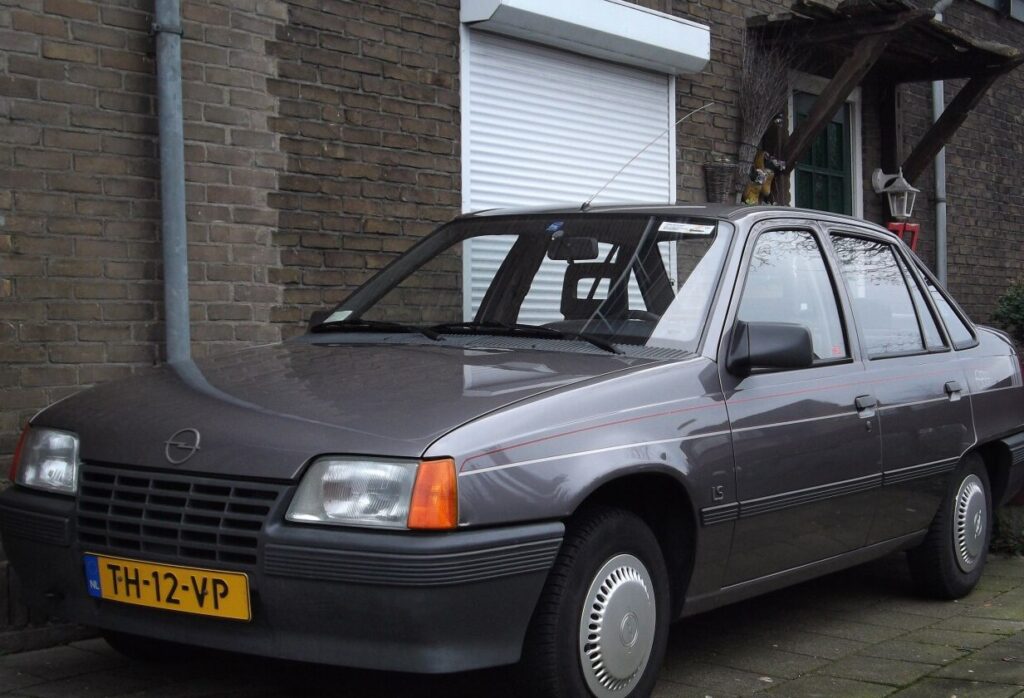
The Opel Kadett E 1.3 S Automatic, produced between 1984 and 1986, represented an entry-level offering within the broader Kadett E range. Positioned as a practical and affordable family sedan, it aimed to provide comfortable transportation with a focus on fuel economy. The Kadett E, launched in 1984, was a significant model for Opel (and later Vauxhall in the UK), representing a move towards more modern design and engineering. This generation of Kadett, built on the GM T-platform (internally known as the 1HX0/A3 platform), was intended to compete with rivals like the Volkswagen Jetta, Ford Escort, and Fiat Regata. The 1.3 S Automatic variant specifically targeted buyers seeking an uncomplicated, easy-to-drive vehicle, often favored by those new to driving or preferring the convenience of an automatic transmission.
Technical Specifications
| Brand | Opel |
| Model | Kadett |
| Generation | Kadett E |
| Type (Engine) | 1.3 S (75 Hp) Automatic |
| Start of production | 1984 |
| End of production | 1986 |
| Powertrain Architecture | Internal Combustion engine |
| Body type | Sedan |
| Seats | 5 |
| Doors | 4 |
| Fuel Type | Petrol (Gasoline) |
| Acceleration 0 – 100 km/h | 15.5 sec |
| Acceleration 0 – 62 mph | 15.5 sec |
| Acceleration 0 – 60 mph | 14.7 sec |
| Maximum speed | 166 km/h (103.15 mph) |
| Weight-to-power ratio | 11.5 kg/Hp, 86.7 Hp/tonne |
| Weight-to-torque ratio | 8.5 kg/Nm, 117.9 Nm/tonne |
| Power | 75 Hp @ 6000 rpm |
| Power per litre | 57.8 Hp/l |
| Torque | 102 Nm @ 4200 rpm (75.23 lb.-ft. @ 4200 rpm) |
| Engine layout | Front, Transverse |
| Engine Model/Code | 13S |
| Engine displacement | 1297 cm3 (79.15 cu. in.) |
| Number of cylinders | 4 |
| Engine configuration | Inline |
| Cylinder Bore | 75 mm (2.95 in.) |
| Piston Stroke | 73.4 mm (2.89 in.) |
| Compression ratio | 9.2:1 |
| Number of valves per cylinder | 2 |
| Fuel injection system | Carburettor |
| Engine aspiration | Naturally aspirated engine |
| Valvetrain | OHC |
| Engine oil capacity | 3 l (3.17 US qt | 2.64 UK qt) |
| Coolant | 7 l (7.4 US qt | 6.16 UK qt) |
| Kerb Weight | 865 kg (1907 lbs.) |
| Max. weight | 1355 kg (2987.26 lbs.) |
| Max load | 490 kg (1080.27 lbs.) |
| Trunk (boot) space – minimum | 550 l (19.42 cu. ft.) |
| Trunk (boot) space – maximum | 890 l (31.43 cu. ft.) |
| Fuel tank capacity | 52 l (13.74 US gal | 11.44 UK gal) |
| Length | 4218 mm (166.06 in.) |
| Width | 1658 mm (65.28 in.) |
| Height | 1400 mm (55.12 in.) |
| Wheelbase | 2520 mm (99.21 in.) |
| Front track | 1400 mm (55.12 in.) |
| Rear (Back) track | 1406 mm (55.35 in.) |
| Minimum turning circle | 10.5 m (34.45 ft.) |
| Drivetrain Architecture | The Internal combustion engine (ICE) drives the front wheels of the vehicle. |
| Drive wheel | Front wheel drive |
| Number of gears and type of gearbox | 4 gears, automatic transmission |
| Front suspension | Wishbone |
| Rear suspension | Suspension with traction connecting levers |
| Front brakes | Disc |
| Rear brakes | Drum |
| Steering type | Steering rack and pinion |
| Wheel rims size | 4.5J x 13 |
Powertrain & Engine Architecture
The heart of the Kadett E 1.3 S Automatic was the 13S engine, a 1.3-liter (1297cc) inline-four cylinder unit. This engine featured a single overhead camshaft (OHC) valvetrain with two valves per cylinder. Crucially, it utilized a carburetor for fuel delivery, a relatively simple and cost-effective system for the time, but less efficient and precise than fuel injection. The carburetor setup contributed to the engine’s modest power output of 75 horsepower at 6000 rpm and 102 Nm (75.23 lb-ft) of torque at 4200 rpm. The engine’s design prioritized reliability and low-end torque over outright performance. The automatic transmission was a four-speed unit, designed to provide smooth, if not particularly sporty, gear changes. It was a typical torque converter automatic of the era, prioritizing comfort and ease of use.
Driving Characteristics
The 1.3 S Automatic Kadett offered a comfortable, but unhurried, driving experience. Acceleration was noticeably slower than the manual transmission versions or those equipped with larger engines. The 0-60 mph time of around 14.7 seconds and a top speed of 103.15 mph reflected this. The automatic transmission, while convenient, sapped some of the engine’s power, resulting in a less responsive feel. Gear ratios were optimized for fuel economy and smooth cruising rather than spirited acceleration. In real-world driving, the car felt best suited to city commuting and highway cruising at moderate speeds. The automatic transmission did offer a degree of refinement that the manual versions lacked, making it a popular choice for drivers prioritizing comfort.
Equipment & Trim Levels
The 1.3 S Automatic trim level was considered a mid-range offering within the Kadett E lineup. Standard equipment typically included cloth upholstery, basic instrumentation (speedometer, fuel gauge, temperature gauge), and a four-spoke steering wheel. Optional extras could include a radio, upgraded interior trim, and power steering (though this was relatively rare on the 1.3 S). The interior design was functional and straightforward, prioritizing practicality over luxury. The dashboard layout was simple and easy to use, with clearly labeled controls.
Chassis & Braking
The Kadett E featured a front-wheel-drive layout with independent wishbone suspension at the front and a semi-independent suspension with traction connecting levers at the rear. This suspension setup provided a reasonable balance between ride comfort and handling. Braking was accomplished via disc brakes at the front and drum brakes at the rear. The braking system was adequate for the car’s weight and performance, but lacked the stopping power of more modern systems. The steering was a rack and pinion system, providing reasonably precise steering feel.
Market Reception & Comparison
The Kadett E 1.3 S Automatic received mixed reviews. Critics generally praised its affordability, fuel economy, and comfortable ride. However, the engine’s lack of power and the automatic transmission’s sluggishness were common criticisms. Compared to the manual transmission versions, the automatic offered significantly reduced performance. The larger-engined Kadett models, such as the 1.6 and 2.0, provided a much more engaging driving experience, but at a higher price point. The 1.3 S Automatic appealed to a specific segment of the market – those prioritizing practicality and ease of use over performance.
Legacy
The Opel Kadett E 1.3 S Automatic, while not a performance icon, remains a fondly remembered car for many. The 13S engine, while simple, proved to be relatively reliable. The automatic transmission, if properly maintained, could provide years of service. Today, these Kadetts are becoming increasingly rare and sought after by classic car enthusiasts. Their affordability and simplicity make them relatively easy to maintain and repair. The 1.3 S Automatic represents a snapshot of 1980s automotive engineering – a practical, affordable, and reliable family sedan designed for everyday use. Finding well-maintained examples can be challenging, but they offer a charming and nostalgic driving experience.