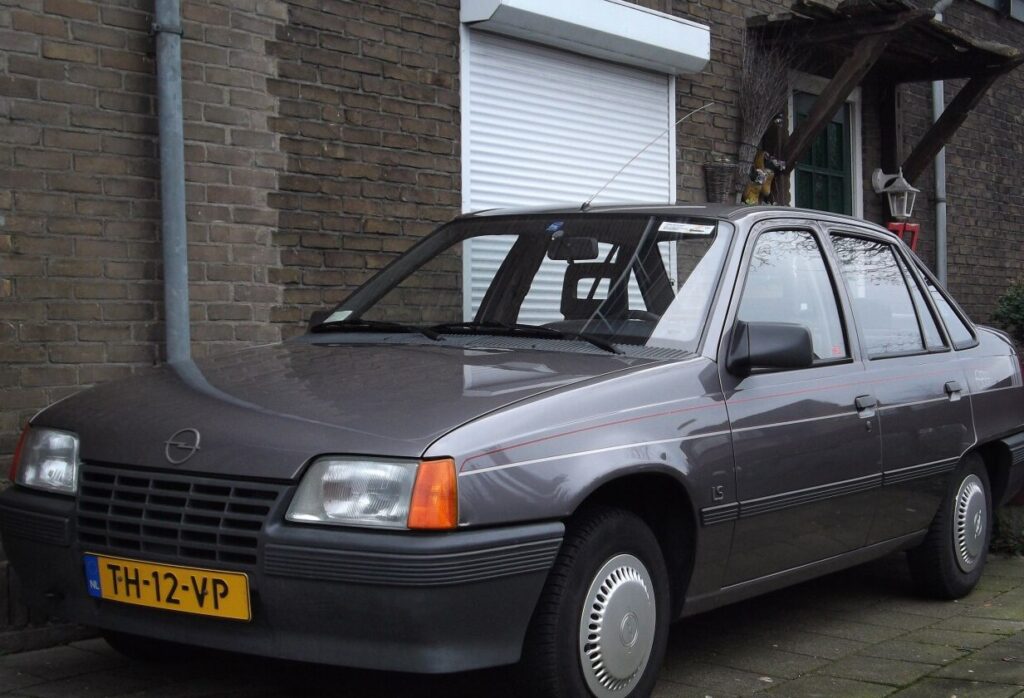
The Opel Kadett E 1.5 TD, produced between 1988 and 1991, represented a fuel-efficient and practical option within the broader Kadett E range. Positioned as an entry-level diesel variant, it aimed to provide economical transportation for a wider audience. The Kadett E itself, built on the GM T platform (internally designated as the 1HX0/A3), was a significant model for Opel, offering a modern design and improved features compared to its predecessor. This particular 1.5-liter turbocharged diesel version was primarily marketed in Europe, where diesel engines enjoyed considerable popularity due to favorable taxation and fuel costs.
Technical Specifications
| Brand | Opel |
| Model | Kadett |
| Generation | Kadett E |
| Type (Engine) | 1.5 TD (72 Hp) |
| Start of production | 1988 |
| End of production | 1991 |
| Powertrain Architecture | Internal Combustion engine |
| Body type | Sedan |
| Seats | 5 |
| Doors | 4 |
| Fuel Type | Diesel |
| Acceleration 0 – 100 km/h | 13.5 sec |
| Acceleration 0 – 62 mph | 13.5 sec |
| Acceleration 0 – 60 mph | 12.8 sec |
| Maximum speed | 170 km/h (105.63 mph) |
| Weight-to-power ratio | 14 kg/Hp, 71.6 Hp/tonne |
| Weight-to-torque ratio | 7 kg/Nm, 142.3 Nm/tonne |
| Power | 72 Hp @ 4600 rpm |
| Power per litre | 48.4 Hp/l |
| Torque | 143 Nm @ 2600 rpm (105.47 lb.-ft. @ 2600 rpm) |
| Engine layout | Front, Transverse |
| Engine Model/Code | 15DTR |
| Engine displacement | 1488 cm3 (90.8 cu. in.) |
| Number of cylinders | 4 |
| Engine configuration | Inline |
| Cylinder Bore | 76 mm (2.99 in.) |
| Piston Stroke | 82 mm (3.23 in.) |
| Compression ratio | 22:1 |
| Number of valves per cylinder | 2 |
| Engine aspiration | Turbocharger |
| Valvetrain | SOHC |
| Engine oil capacity | 4.5 l (4.76 US qt | 3.96 UK qt) |
| Coolant | 6.3 l (6.66 US qt | 5.54 UK qt) |
| Kerb Weight | 1005 kg (2215.65 lbs.) |
| Max. weight | 1485 kg (3273.86 lbs.) |
| Max load | 480 kg (1058.22 lbs.) |
| Trunk (boot) space – minimum | 550 l (19.42 cu. ft.) |
| Trunk (boot) space – maximum | 890 l (31.43 cu. ft.) |
| Fuel tank capacity | 52 l (13.74 US gal | 11.44 UK gal) |
| Length | 4218 mm (166.06 in.) |
| Width | 1658 mm (65.28 in.) |
| Height | 1400 mm (55.12 in.) |
| Wheelbase | 2520 mm (99.21 in.) |
| Front track | 1400 mm (55.12 in.) |
| Rear (Back) track | 1406 mm (55.35 in.) |
| Minimum turning circle | 10.5 m (34.45 ft.) |
| Drivetrain Architecture | The Internal combustion engine (ICE) drives the front wheels of the vehicle. |
| Drive wheel | Front wheel drive |
| Number of gears | 5 gears, manual transmission |
| Front brakes | Disc |
| Rear brakes | Drum |
Powertrain & Engine Architecture
The heart of the Kadett E 1.5 TD was the 15DTR engine, a 1.5-liter inline-four cylinder diesel. This engine featured a turbocharger and indirect injection, a common setup for European diesel engines of the era. The indirect injection system, while less efficient than direct injection, offered quieter operation and reduced emissions – important considerations for the European market. The engine utilized a single overhead camshaft (SOHC) valvetrain, operating two valves per cylinder. The turbocharger, a Garrett unit in many cases, significantly boosted power output compared to naturally aspirated diesel engines of similar displacement. The 5-speed manual transmission was the standard offering, providing a reasonable spread of gears for both city driving and highway cruising. The engine’s relatively high compression ratio of 22:1 was typical for diesel engines, contributing to its fuel efficiency.
Driving Characteristics
The 1.5 TD Kadett E offered modest performance. With 72 horsepower and 105 lb-ft of torque, acceleration was not its strong suit. The 0-60 mph time of around 12.8 seconds reflects this. However, the turbocharger provided a noticeable boost in power once spooled up, making overtaking at highway speeds manageable. The manual transmission allowed drivers to keep the engine in its optimal power band. Compared to the more powerful Kadett E variants, such as the 2.0-liter gasoline models, the 1.5 TD prioritized fuel economy over outright speed. The gear ratios were tuned for efficiency, resulting in a relatively relaxed driving experience. While not sporty, the Kadett E 1.5 TD provided adequate performance for everyday commuting and longer journeys.
Equipment & Trim Levels
The 1.5 TD Kadett E typically came with a fairly basic level of equipment. Standard features generally included cloth upholstery, a simple dashboard layout, and manual windows and door locks. Power steering was often an optional extra, as was air conditioning. The interior was functional and durable, reflecting the car’s focus on practicality. Higher trim levels, if selected, might have included upgraded upholstery, a more comprehensive instrument cluster, and additional convenience features. However, the 1.5 TD was generally positioned as the entry-level diesel model, so luxury features were not a priority.
Chassis & Braking
The Kadett E utilized a MacPherson strut front suspension and a twist-beam rear suspension. This setup provided a comfortable ride, although handling was not particularly sharp. The front brakes were disc brakes, offering adequate stopping power, while the rear brakes were drums, a cost-saving measure common in this class of vehicle. The Kadett E’s suspension was tuned for ride comfort rather than sporty handling. Stabilizer bars were often included, helping to reduce body roll during cornering. The relatively light weight of the 1.5 TD variant helped to offset the limitations of the braking system.
Market Reception & Comparison
The Kadett E 1.5 TD was well-received in Europe as an economical and reliable diesel option. Critics praised its fuel efficiency and durability, but noted its modest performance. Compared to the gasoline-powered Kadett E models, the 1.5 TD offered significantly better fuel economy, making it a popular choice for high-mileage drivers. Compared to other diesel-powered cars in its class, such as the Volkswagen Golf Diesel, the Kadett E 1.5 TD offered a competitive price point and a practical interior. However, some reviewers found the engine to be somewhat noisy and lacking in refinement.
Legacy
The Opel Kadett E 1.5 TD, while not a performance icon, remains a respected vehicle among enthusiasts for its reliability and fuel efficiency. The 15DTR engine, when properly maintained, is known to be a durable and long-lasting unit. Today, well-maintained examples are sought after by collectors and those looking for a classic European diesel car. Parts availability can be a challenge, but many components are still available through specialist suppliers. The Kadett E 1.5 TD represents a significant chapter in Opel’s history, demonstrating the company’s commitment to providing affordable and practical transportation to a wide range of customers. Its enduring appeal lies in its simplicity, durability, and fuel-efficient diesel powertrain.