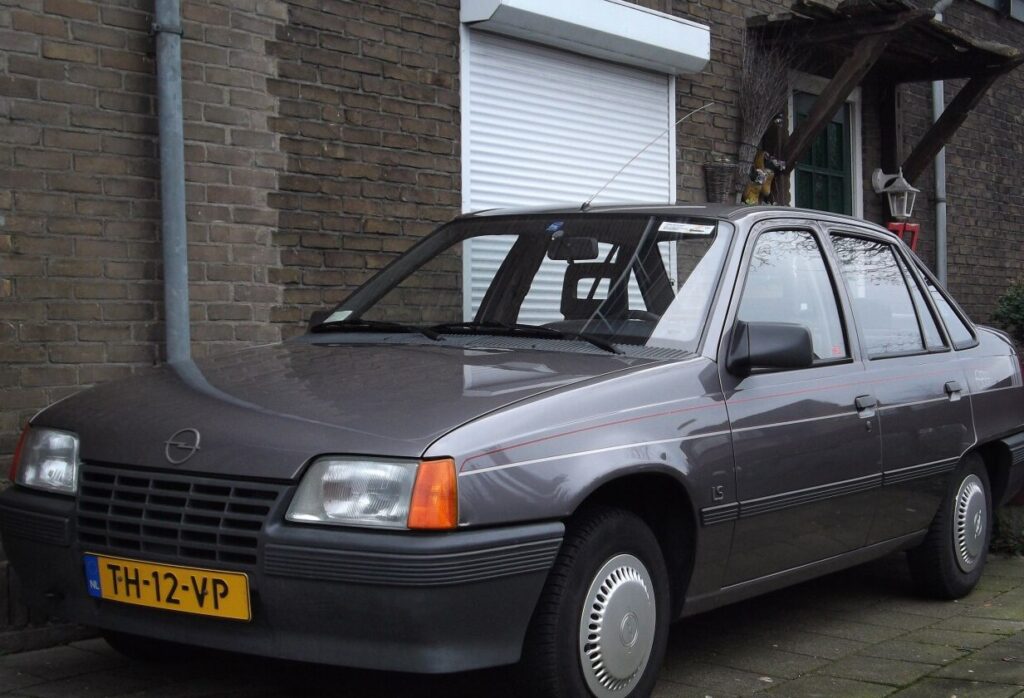
The Opel Kadett E 2.0i, produced between 1987 and 1990, represented the performance pinnacle of the Kadett E range. Positioned as the top-tier trim level, it offered a significant step up in power and driving experience compared to the lower-displacement models. The Kadett E, built on the GM T-platform (internally known as the 1HX0/A3 platform), was a crucial model for Opel, aiming to modernize the brand and compete effectively in the crowded European compact car segment. The 2.0i variant, with its 129 horsepower engine, was targeted towards drivers seeking a more engaging and spirited driving experience without sacrificing the practicality and affordability that the Kadett E embodied.
Technical Specifications
| Brand | Opel |
| Model | Kadett |
| Generation | Kadett E |
| Type (Engine) | 2.0i (129 Hp) |
| Start of production | 1987 |
| End of production | 1990 |
| Powertrain Architecture | Internal Combustion engine |
| Body type | Sedan |
| Seats | 5 |
| Doors | 4 |
| Fuel Type | Petrol (Gasoline) |
| Acceleration 0 – 100 km/h | 8.5 sec |
| Acceleration 0 – 62 mph | 8.5 sec |
| Acceleration 0 – 60 mph | 8.1 sec |
| Maximum speed | 206 km/h (128 mph) |
| Weight-to-power ratio | 7.6 kg/Hp |
| Weight-to-torque ratio | 5.5 kg/Nm |
| Power | 129 Hp @ 5600 rpm |
| Power per litre | 64.6 Hp/l |
| Torque | 180 Nm @ 4600 rpm (132.76 lb.-ft. @ 4600 rpm) |
| Engine layout | Front, Transverse |
| Engine Model/Code | 20SEH |
| Engine displacement | 1998 cm3 (121.93 cu. in.) |
| Number of cylinders | 4 |
| Engine configuration | Inline |
| Cylinder Bore | 86 mm (3.39 in.) |
| Piston Stroke | 86 mm (3.39 in.) |
| Compression ratio | 10:1 |
| Number of valves per cylinder | 2 |
| Fuel injection system | Multi-port manifold injection |
| Engine aspiration | Naturally aspirated engine |
| Valvetrain | SOHC |
| Engine oil capacity | 4 l (4.23 US qt | 3.52 UK qt) |
| Coolant | 6.9 l (7.29 US qt | 6.07 UK qt) |
| Kerb Weight | 985 kg (2171.55 lbs.) |
| Max. weight | 1450 kg (3196.7 lbs.) |
| Max load | 465 kg (1025.15 lbs.) |
| Trunk (boot) space – minimum | 550 l (19.42 cu. ft.) |
| Trunk (boot) space – maximum | 890 l (31.43 cu. ft.) |
| Fuel tank capacity | 52 l (13.74 US gal | 11.44 UK gal) |
| Permitted trailer load with brakes (12%) | 1000 kg (2204.62 lbs.) |
| Permitted trailer load without brakes | 450 kg (992.08 lbs.) |
| Length | 4218 mm (166.06 in.) |
| Width | 1658 mm (65.28 in.) |
| Height | 1400 mm (55.12 in.) |
| Wheelbase | 2520 mm (99.21 in.) |
| Front track | 1400 mm (55.12 in.) |
| Rear (Back) track | 1406 mm (55.35 in.) |
| Minimum turning circle | 10.5 m (34.45 ft.) |
| Drivetrain Architecture | The Internal combustion engine (ICE) drives the front wheels of the vehicle. |
| Drive wheel | Front wheel drive |
| Number of gears and type of gearbox | 5 gears, manual transmission |
| Front brakes | Ventilated discs |
| Rear brakes | Drum |
| Tires size | 185/60 R14 |
| Wheel rims size | 14 |
Powertrain & Engine Architecture
The heart of the Kadett E 2.0i was the 20SEH engine, a 1998cc inline-four cylinder unit. This engine was part of Opel’s Family II series, known for its robust construction and relatively simple design. The 20SEH featured a single overhead camshaft (SOHC) valvetrain operating two valves per cylinder. Fuel delivery was handled by Bosch multi-port fuel injection, providing a good balance between performance and fuel efficiency for the time. The engine produced 129 horsepower at 5600 rpm and 180 Nm (132.76 lb-ft) of torque at 4600 rpm. The engine’s design prioritized reliability and ease of maintenance, making it a popular choice for both private owners and fleet operators. The standard transmission was a five-speed manual gearbox, although a three-speed automatic transmission was also available, albeit less common and impacting performance.
Driving Characteristics
The 2.0i Kadett E offered a noticeably more engaging driving experience than its smaller-engined siblings. The increased power and torque allowed for quicker acceleration – achieving 0-60 mph in approximately 8.1 seconds – and a higher top speed of 128 mph. The five-speed manual transmission provided precise gear changes, allowing drivers to fully exploit the engine’s powerband. While not a sports car, the 2.0i Kadett E felt nimble and responsive, particularly on winding roads. The automatic transmission option, while offering convenience, resulted in a slight decrease in performance and a less direct connection to the engine. The suspension, tuned for comfort, provided a reasonably compliant ride, although it could feel somewhat soft during aggressive cornering.
Equipment & Trim Levels
The 2.0i trim level was generally well-equipped for its time. Standard features typically included power steering, central locking, and a basic stereo system. Interior upholstery was usually cloth, with options for upgraded materials. Dashboard configuration was functional and straightforward, prioritizing usability over aesthetics. Optional extras included electric windows, a sunroof, and upgraded sound systems. The 2.0i often featured a slightly more refined interior trim compared to the base models, with improved door cards and seat fabrics.
Chassis & Braking
The Kadett E 2.0i utilized a MacPherson strut front suspension and a torsion beam rear suspension. The front brakes were ventilated discs, providing adequate stopping power, while the rear brakes were typically drum brakes. The suspension setup was designed to balance ride comfort with handling stability. The 2.0i models often featured a slightly thicker front stabilizer bar compared to the lower-spec versions, further improving handling. The car’s relatively light weight (around 2172 lbs) contributed to its nimble handling characteristics.
Market Reception & Comparison
The Kadett E 2.0i was generally well-received by automotive critics, who praised its performance and value for money. It was seen as a competent and practical family car that offered a more enjoyable driving experience than many of its competitors. Compared to the 1.6-liter and 1.8-liter Kadett E models, the 2.0i offered a significant performance advantage. However, it was more expensive to purchase and maintain, and its fuel economy was slightly lower. Compared to rivals like the Volkswagen Golf GTI, the Kadett E 2.0i offered a similar level of performance at a more affordable price point.
Legacy
The Opel Kadett E 2.0i has developed a cult following among classic car enthusiasts. The 20SEH engine is known for its durability and relatively simple mechanics, making it a popular choice for restoration projects and engine swaps. While not as highly regarded as some of its more iconic rivals, the Kadett E 2.0i remains a fondly remembered example of 1980s European automotive engineering. Today, well-maintained examples are becoming increasingly rare and sought after by collectors, representing a piece of automotive history and a testament to Opel’s commitment to building reliable and affordable vehicles.