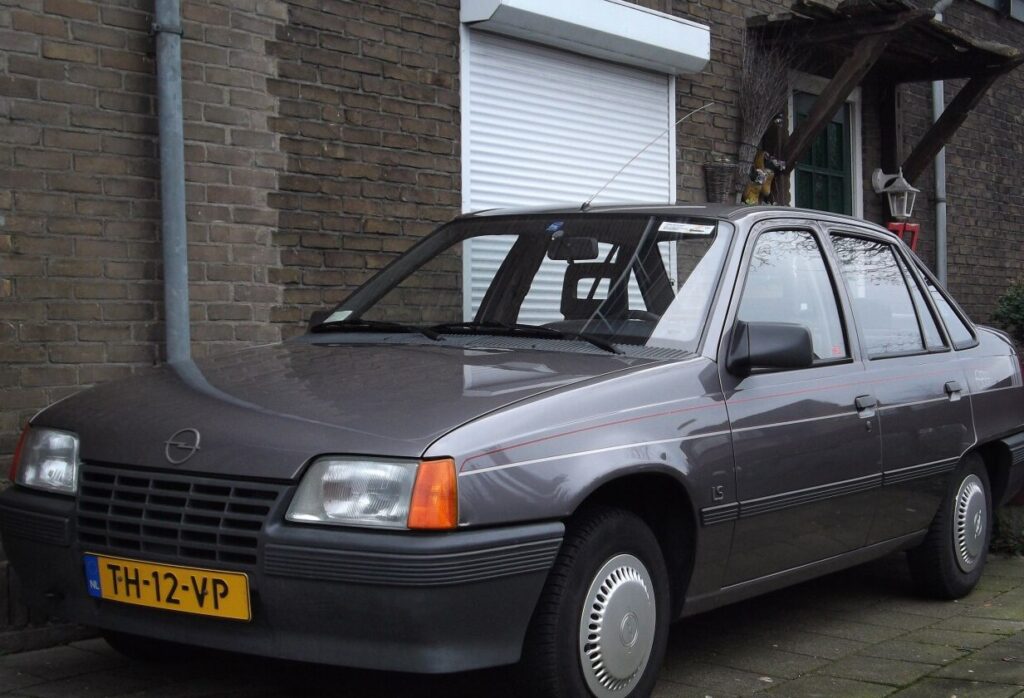
The Opel Kadett E 2.0i CAT, produced between 1986 and 1993, represented a significant step up in performance and refinement within the Kadett E range. Positioned as a mid-range offering, it catered to drivers seeking a blend of practicality, fuel efficiency, and respectable power. This variant, equipped with the C20NE engine and a five-speed manual transmission, played a crucial role in solidifying the Kadett E’s popularity in European markets, particularly Germany, where it competed with rivals like the Volkswagen Golf and Ford Escort. The Kadett E itself was built on the GM T-platform, also known internally as the 1HX0/A3 platform, and was a substantial redesign over its predecessor, the Kadett D.
Technical Specifications
| Brand | Opel |
| Model | Kadett |
| Generation | Kadett E |
| Type (Engine) | 2.0i CAT (115 Hp) |
| Start of production | 1986 |
| End of production | 1993 |
| Powertrain Architecture | Internal Combustion engine |
| Body type | Sedan |
| Seats | 5 |
| Doors | 4 |
| Fuel Type | Petrol (Gasoline) |
| Acceleration 0 – 100 km/h | 9 sec |
| Acceleration 0 – 62 mph | 9 sec |
| Acceleration 0 – 60 mph | 8.6 sec |
| Maximum speed | 195 km/h (121.17 mph) |
| Weight-to-power ratio | 8.6 kg/Hp, 116.8 Hp/tonne |
| Weight-to-torque ratio | 5.8 kg/Nm, 172.6 Nm/tonne |
| Power | 115 Hp @ 5400 rpm |
| Power per litre | 57.6 Hp/l |
| Torque | 170 Nm @ 3000 rpm (125.39 lb.-ft. @ 3000 rpm) |
| Engine layout | Front, Transverse |
| Engine Model/Code | C20NE |
| Engine displacement | 1998 cm3 (121.93 cu. in.) |
| Number of cylinders | 4 |
| Engine configuration | Inline |
| Cylinder Bore | 86 mm (3.39 in.) |
| Piston Stroke | 86 mm (3.39 in.) |
| Compression ratio | 9.2:1 |
| Number of valves per cylinder | 2 |
| Fuel injection system | Multi-port manifold injection |
| Engine aspiration | Naturally aspirated engine |
| Valvetrain | SOHC |
| Engine oil capacity | 4 l (4.23 US qt | 3.52 UK qt) |
| Coolant | 6.9 l (7.29 US qt | 6.07 UK qt) |
| Kerb Weight | 985 kg (2171.55 lbs) |
| Max. weight | 1450 kg (3196.7 lbs) |
| Max load | 465 kg (1025.15 lbs) |
| Trunk (boot) space – minimum | 550 l (19.42 cu. ft.) |
| Trunk (boot) space – maximum | 890 l (31.43 cu. ft.) |
| Fuel tank capacity | 52 l (13.74 US gal | 11.44 UK gal) |
| Length | 4218 mm (166.06 in.) |
| Width | 1658 mm (65.28 in.) |
| Height | 1400 mm (55.12 in.) |
| Wheelbase | 2520 mm (99.21 in.) |
| Front track | 1400 mm (55.12 in.) |
| Rear (Back) track | 1406 mm (55.35 in.) |
| Minimum turning circle | 10.5 m (34.45 ft.) |
| Drivetrain Architecture | The Internal combustion engine (ICE) drives the front wheels of the vehicle. |
| Drive wheel | Front wheel drive |
| Number of gears | 5 gears, manual transmission |
| Front brakes | Ventilated discs |
| Rear brakes | Drum |
Powertrain & Engine Architecture
The heart of the Kadett E 2.0i CAT is the C20NE engine, an 1,998 cc inline-four cylinder unit. This engine featured a single overhead camshaft (SOHC) valvetrain operating two valves per cylinder. The ‘E’ designation in the engine code signifies electronic fuel injection, specifically a Bosch Motronic multi-port fuel injection system. This system precisely meters fuel into the intake ports, optimizing combustion efficiency and reducing emissions. The catalytic converter (“CAT” in the model name) was a crucial component in meeting increasingly stringent European emissions regulations. The C20NE was known for its relatively robust construction and good low-end torque, making it a practical choice for everyday driving. The five-speed manual transmission provided a good balance between performance and fuel economy, with gear ratios tailored to maximize the engine’s output.
Driving Characteristics
The 2.0i CAT offered a noticeable performance improvement over the lower-displacement Kadett E models. Acceleration to 60 mph took approximately 8.6 seconds, and it could achieve a top speed of around 121 mph. While not a sports car, the 115 horsepower and 125 lb-ft of torque provided ample power for overtaking and cruising on the Autobahn. The five-speed gearbox allowed drivers to keep the engine in its optimal power band. Compared to the 1.6-liter versions, the 2.0i CAT felt significantly more responsive, especially at higher speeds. The handling was typical of front-wheel-drive cars of the era – safe and predictable, but not particularly engaging. The suspension, while comfortable, leaned towards a softer setup, prioritizing ride quality over sharp cornering.
Equipment & Trim Levels
The 2.0i CAT typically came equipped with features considered fairly generous for its time. Standard equipment included power steering, central locking, and a basic stereo system. Interior upholstery was usually cloth, with options for upgraded velour or leather. Dashboard configuration was functional and straightforward, with clearly marked gauges. Optional extras included electric windows, a sunroof, and alloy wheels. The trim level often dictated the exterior detailing, with chrome accents and body-colored bumpers becoming more prevalent on higher-spec models.
Chassis & Braking
The Kadett E 2.0i CAT utilized a MacPherson strut front suspension and a torsion beam rear suspension. The front brakes were ventilated discs, providing adequate stopping power, while the rear brakes were drums. Stabilizer bars were fitted to both the front and rear axles to reduce body roll during cornering. The chassis was relatively lightweight, contributing to the car’s nimble handling. The suspension setup was tuned for comfort, but it did a reasonable job of controlling body movement in most driving situations.
Market Reception & Comparison
The Kadett E 2.0i CAT was generally well-received by automotive critics. It was praised for its blend of performance, fuel efficiency, and practicality. Compared to the 1.6-liter Kadett E, the 2.0i CAT offered a significant performance boost, but at a slightly higher price point. The 1.6-liter models were favored by those prioritizing fuel economy and affordability, while the 2.0i CAT appealed to drivers who wanted more power and refinement. The Kadett E as a whole was a strong competitor in the compact car segment, offering a compelling alternative to the Volkswagen Golf and Ford Escort.
Legacy
The C20NE engine, found in the Kadett E 2.0i CAT, proved to be a durable and reliable unit when properly maintained. Today, well-maintained examples of the Kadett E 2.0i CAT are becoming increasingly sought after by classic car enthusiasts. While not as iconic as some of its rivals, the Kadett E holds a special place in the hearts of many European drivers who grew up with it. The car’s simple mechanical design and readily available parts make it a relatively easy vehicle to maintain and restore. The Kadett E 2.0i CAT represents a significant chapter in Opel’s history, showcasing the brand’s commitment to building practical, reliable, and affordable automobiles.