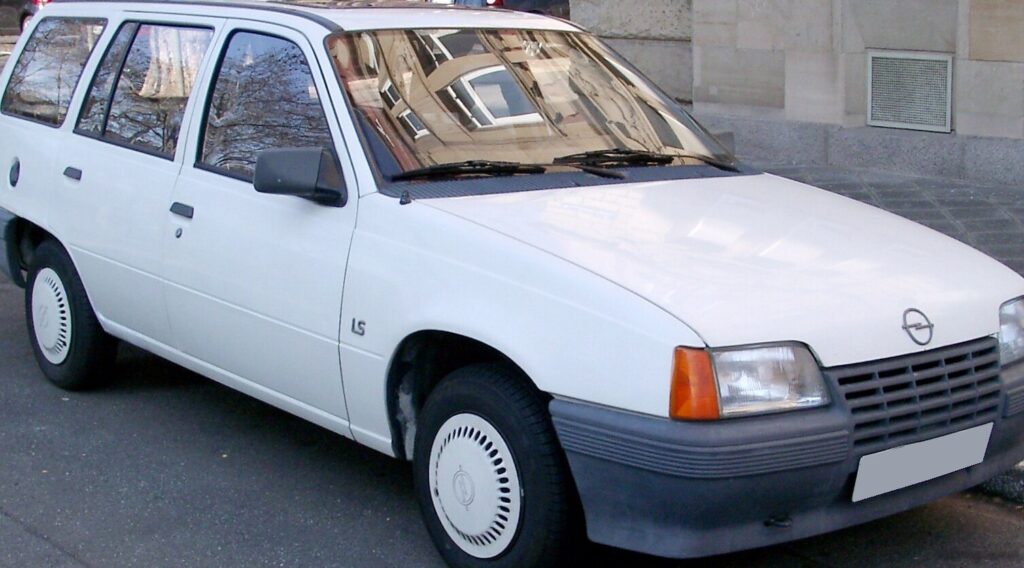
The Opel Kadett E Caravan 1.6 D, produced between 1984 and 1989, represented a practical and economical offering within the broader Kadett E range. Positioned as the diesel-powered wagon variant, it catered to buyers prioritizing fuel efficiency and cargo capacity over outright performance. The Kadett E, launched in 1986 as a replacement for the Kadett D, was a significant model for Opel, embodying a move towards more modern design and engineering. The Caravan (estate) body style, in particular, was popular in Europe for its versatility, appealing to families and those requiring ample space for work or leisure. This 1.6 D variant, with its modest 55 horsepower, served as an entry-level option, offering a cost-effective means of transportation.
Technical Specifications
| Brand | Opel |
| Model | Kadett |
| Generation | Kadett E Caravan |
| Type (Engine) | 1.6 D (55 Hp) |
| Start of production | 1984 |
| End of production | 1989 |
| Powertrain Architecture | Internal Combustion engine |
| Body type | Station wagon (estate) |
| Seats | 5 |
| Doors | 3-5 |
| Fuel Type | Diesel |
| Acceleration 0 – 100 km/h | 21 sec |
| Acceleration 0 – 62 mph | 21 sec |
| Acceleration 0 – 60 mph | 20 sec |
| Maximum speed | 147 km/h (91.34 mph) |
| Weight-to-power ratio | 17.7 kg/Hp, 56.4 Hp/tonne |
| Weight-to-torque ratio | 10.2 kg/Nm, 98.5 Nm/tonne |
| Power | 55 Hp @ 4600 rpm |
| Power per litre | 34.4 Hp/l |
| Torque | 96 Nm @ 2400 rpm (70.81 lb.-ft. @ 2400 rpm) |
| Engine layout | Front, Transverse |
| Engine Model/Code | 16D |
| Engine displacement | 1598 cm3 (97.52 cu. in.) |
| Number of cylinders | 4 |
| Engine configuration | Inline |
| Cylinder Bore | 80 mm (3.15 in.) |
| Piston Stroke | 79.5 mm (3.13 in.) |
| Compression ratio | 23:1 |
| Number of valves per cylinder | 2 |
| Engine aspiration | Naturally aspirated engine |
| Valvetrain | SOHC |
| Engine oil capacity | 5 l (5.28 US qt | 4.4 UK qt) |
| Coolant | 7.5 l (7.93 US qt | 6.6 UK qt) |
| Kerb Weight | 975 kg (2149.51 lbs.) |
| Max. weight | 1500 kg (3306.93 lbs.) |
| Max load | 525 kg (1157.43 lbs.) |
| Trunk (boot) space – minimum | 565 l (19.95 cu. ft.) |
| Trunk (boot) space – maximum | 1800 l (63.57 cu. ft.) |
| Fuel tank capacity | 50 l (13.21 US gal | 11 UK gal) |
| Length | 4228 mm (166.46 in.) |
| Width | 1666 mm (65.59 in.) |
| Height | 1430 mm (56.3 in.) |
| Wheelbase | 2520 mm (99.21 in.) |
| Front track | 1406 mm (55.35 in.) |
| Rear (Back) track | 1406 mm (55.35 in.) |
| Minimum turning circle | 10.5 m (34.45 ft.) |
Powertrain & Engine Architecture
The heart of the Kadett E Caravan 1.6 D was the 16D engine, a 1.6-liter inline-four diesel. This engine, a mainstay of Opel’s diesel offerings during the 1980s, featured indirect injection. The indirect injection system, while less efficient than direct injection, offered quieter operation and reduced emissions – important considerations for the time. The engine utilized a single overhead camshaft (SOHC) valvetrain, operating two valves per cylinder. The relatively low compression ratio of 23:1 was typical for indirect injection diesels, contributing to smoother combustion. The 16D engine was known for its durability, though its performance was decidedly modest. The engine was typically paired with a four-speed manual transmission, although a three-speed automatic transmission was also available, albeit less common. The automatic transmission was a General Motors unit, known for its reliability but also for its relatively slow shift times and tendency to sap power.
Driving Characteristics
The 1.6 D-powered Kadett E Caravan was not designed for speed. With only 55 horsepower, acceleration was slow, taking approximately 21 seconds to reach 62 mph. The automatic transmission further diminished performance, resulting in a sluggish driving experience. However, the engine’s torque characteristics – 96 Nm (70.81 lb-ft) available at 2400 rpm – provided adequate pulling power for everyday driving and hauling loads. The gear ratios in the automatic transmission were spaced to prioritize fuel economy over acceleration. The Kadett E’s suspension, while basic, provided a comfortable ride, absorbing bumps and imperfections in the road reasonably well. Steering was light and easy, making it maneuverable in urban environments.
Equipment & Trim Levels
The 1.6 D Caravan typically represented the base trim level within the Kadett E Caravan range. Standard equipment included cloth upholstery, a basic dashboard layout, and steel wheels with hubcaps. Power steering and central locking were often optional extras. Interior space was generous for a vehicle of its size, particularly in the rear cargo area. The rear seats could be folded down to create a larger, more versatile cargo space. Air conditioning was rarely fitted to this base model, and other comfort features like electric windows were also uncommon.
Chassis & Braking
The Kadett E Caravan utilized a front-wheel-drive layout with a MacPherson strut front suspension and a twist-beam rear suspension. Braking was typically accomplished with disc brakes on the front wheels and drum brakes on the rear. The braking system was adequate for the vehicle’s weight and performance, but lacked the stopping power of more modern systems. A stabilizer bar was fitted to the front suspension to reduce body roll during cornering. The relatively simple suspension setup contributed to the Kadett E’s affordability and ease of maintenance.
Market Reception & Comparison
The Kadett E Caravan 1.6 D was generally well-received as a practical and economical family vehicle. Critics praised its spacious interior, fuel efficiency, and durability. However, its lack of performance was often noted. Compared to the gasoline-powered Kadett E variants, the 1.6 D offered significantly lower running costs but at the expense of driving enjoyment. The 1.6 D was also slower and less refined than other diesel-powered vehicles in its class, such as the Volkswagen Golf Diesel. However, its lower price point made it an attractive option for budget-conscious buyers.
Legacy
The Opel Kadett E Caravan 1.6 D, while not a performance icon, remains a fondly remembered vehicle for many European drivers. The 16D engine, despite its age, is known for its robustness and longevity. Well-maintained examples are still found on the roads today, testament to its inherent reliability. In the used car market, these Kadett E Caravans are relatively affordable and represent a simple, practical, and economical mode of transportation. Parts availability is generally good, making them relatively easy to maintain and repair. The Kadett E Caravan 1.6 D stands as a representative example of 1980s European automotive engineering, prioritizing practicality and fuel efficiency over outright performance.