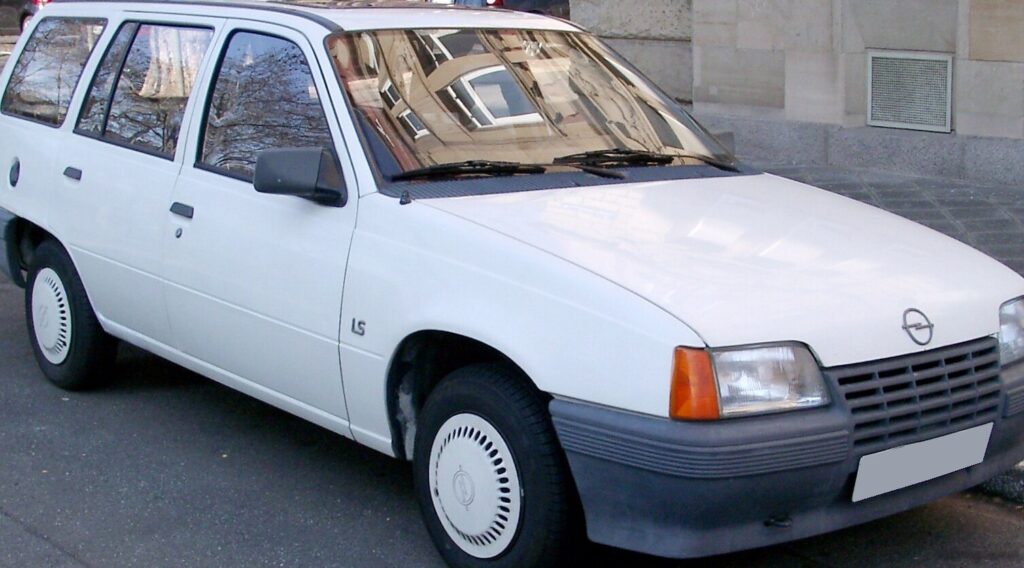
The Opel Kadett E Caravan 1.6 S, produced between 1984 and 1986, represented a practical and affordable option within the broader Kadett E range. Positioned as a mid-range trim level for the Caravan (estate) body style, it offered a balance between performance and economy, appealing to families and those needing a versatile vehicle. The Kadett E, launched in 1984, was a significant step forward for Opel, built on the GM T-platform (internally known as the 1HX0/A3 platform) and sharing components with other GM models like the Vauxhall Astra. The Caravan body style, in particular, was popular in Europe, offering a spacious and practical alternative to saloons.
Technical Specifications
| Brand | Opel |
| Model | Kadett |
| Generation | Kadett E Caravan |
| Type (Engine) | 1.6 S (90 Hp) |
| Start of production | 1984 |
| End of production | 1986 |
| Powertrain Architecture | Internal Combustion engine |
| Body type | Station wagon (estate) |
| Seats | 5 |
| Doors | 3-5 |
| Fuel Type | Petrol (Gasoline) |
| Acceleration 0 – 100 km/h | 12 sec |
| Acceleration 0 – 62 mph | 12 sec |
| Acceleration 0 – 60 mph | 11.4 sec |
| Maximum speed | 175 km/h (108.74 mph) |
| Weight-to-power ratio | 10.7 kg/Hp, 93.3 Hp/tonne |
| Weight-to-torque ratio | 7.7 kg/Nm, 130.6 Nm/tonne |
| Power | 90 Hp @ 5800 rpm |
| Power per litre | 56.3 Hp/l |
| Torque | 126 Nm @ 3800-4200 rpm (92.93 lb.-ft. @ 3800-4200 rpm) |
| Engine layout | Front, Transverse |
| Engine Model/Code | 16SH |
| Engine displacement | 1598 cm3 (97.52 cu. in.) |
| Number of cylinders | 4 |
| Engine configuration | Inline |
| Cylinder Bore | 80 mm (3.15 in.) |
| Piston Stroke | 79.5 mm (3.13 in.) |
| Compression ratio | 9.2:1 |
| Number of valves per cylinder | 2 |
| Fuel injection system | Carburettor |
| Engine aspiration | Naturally aspirated engine |
| Valvetrain | SOHC |
| Engine oil capacity | 3.25 l (3.43 US qt | 2.86 UK qt) |
| Coolant | 7.7 l (8.14 US qt | 6.78 UK qt) |
| Kerb Weight | 965 kg (2127.46 lbs.) |
| Max. weight | 1500 kg (3306.93 lbs.) |
| Max load | 535 kg (1179.47 lbs.) |
| Trunk (boot) space – minimum | 565 l (19.95 cu. ft.) |
| Trunk (boot) space – maximum | 1800 l (63.57 cu. ft.) |
| Fuel tank capacity | 50 l (13.21 US gal | 11 UK gal) |
| Length | 4228 mm (166.46 in.) |
| Width | 1666 mm (65.59 in.) |
| Height | 1430 mm (56.3 in.) |
| Wheelbase | 2520 mm (99.21 in.) |
| Front track | 1406 mm (55.35 in.) |
| Rear (Back) track | 1406 mm (55.35 in.) |
| Minimum turning circle | 10.5 m (34.45 ft.) |
Powertrain & Engine Architecture
The heart of the Kadett E Caravan 1.6 S was the 16SH engine, a 1.6-liter inline-four cylinder unit. This engine featured a single overhead camshaft (SOHC) valvetrain and utilized a carburetor for fuel delivery. While not the most technologically advanced system by the mid-1980s, the carburetor provided reliable and relatively simple operation. The 16SH produced 90 horsepower at 5800 rpm and 126 Nm (93 lb-ft) of torque between 3800 and 4200 rpm. The engine’s design prioritized durability and ease of maintenance over outright performance. The transmission was typically a four-speed manual, although a three-speed automatic transmission was also available, albeit less common. The automatic gearbox, while offering convenience, did impact acceleration and fuel economy.
Driving Characteristics
The 1.6 S with the manual transmission offered adequate performance for everyday driving. Acceleration to 60 mph took around 11.4 seconds, and top speed was approximately 109 mph. The engine felt relatively responsive in the mid-range, making it suitable for overtaking and highway cruising. However, it lacked the punch of the more powerful Kadett variants, such as those equipped with the 1.8 or 2.0-liter engines. The automatic transmission version noticeably reduced performance, with slower acceleration and a less engaging driving experience. The gear ratios were optimized for fuel efficiency rather than spirited driving. The Kadett E’s front-wheel-drive layout provided predictable handling, although it wasn’t particularly sporty.
Equipment & Trim Levels
The 1.6 S trim level offered a step up in equipment compared to the base Kadett Caravan. Standard features typically included cloth upholstery, a basic stereo system, and a more comprehensive instrument cluster. Optional extras included a sunroof, upgraded stereo systems, and power windows. The interior was functional and durable, reflecting the car’s practical focus. The Caravan’s spacious interior and large cargo area were key selling points, making it a popular choice for families. The 1.6 S trim often included a slightly more refined interior finish compared to the base models, with improved seat fabrics and door panel trim.
Chassis & Braking
The Kadett E Caravan featured a MacPherson strut front suspension and a twist-beam rear suspension. This setup provided a comfortable ride, although it wasn’t particularly sophisticated. The 1.6 S typically came equipped with disc brakes on the front wheels and drum brakes on the rear. The braking system was adequate for the car’s weight and performance, but it lacked the stopping power of more modern systems. Stabilizer bars were often included as standard equipment, helping to reduce body roll during cornering. The suspension was tuned for comfort and practicality, prioritizing a smooth ride over sporty handling.
Market Reception & Comparison
The Kadett E Caravan 1.6 S was generally well-received by automotive critics as a practical and affordable family car. It was praised for its spacious interior, fuel efficiency, and reliability. However, it was also criticized for its relatively modest performance and somewhat dated technology. Compared to the higher-spec Kadett variants, such as the 1.8 or 2.0-liter models, the 1.6 S offered less power and a less refined driving experience. However, it was significantly more affordable to purchase and operate. The 1.6 S also offered a more economical alternative to the diesel-powered Kadett Caravans, which were popular in Europe but often lacked the refinement of the petrol engines.
Legacy
The Opel Kadett E Caravan 1.6 S remains a relatively common sight on European roads today, testament to its durability and reliability. The 16SH engine is known for its robustness and relatively simple maintenance requirements. While not a particularly collectible model, well-maintained examples are sought after by enthusiasts and classic car collectors. The Kadett E Caravan, in general, is remembered as a practical and affordable family car that played a significant role in the European automotive landscape of the 1980s. The availability of spare parts remains good, making it a relatively easy car to keep on the road. The 1.6 S variant, while not the most powerful or luxurious, represents a sweet spot in the range, offering a good balance of practicality, affordability, and reliability.