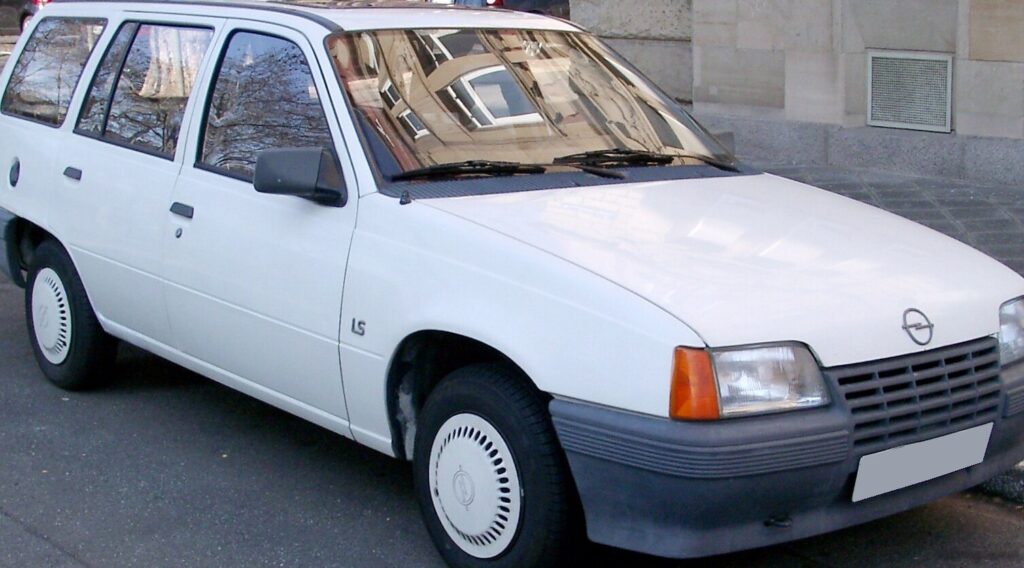
The Opel Kadett E Caravan 2.0i, produced between 1986 and 1989, represented a significant step up in performance and practicality within the Kadett E range. As the estate (station wagon) variant of the popular Kadett E, it offered family-friendly versatility combined with a relatively potent engine for its time. This particular 2.0i model, developing 115 horsepower, occupied a mid-range position in the lineup, bridging the gap between the more economical base models and the performance-oriented GSi variants. It was primarily marketed towards European buyers seeking a spacious, reliable, and reasonably quick family vehicle.
Technical Specifications
| Brand | Opel |
| Model | Kadett |
| Generation | Kadett E Caravan |
| Type (Engine) | 2.0i (115 Hp) |
| Start of production | 1986 |
| End of production | 1989 |
| Powertrain Architecture | Internal Combustion engine |
| Body type | Station wagon (estate) |
| Seats | 5 |
| Doors | 5 |
| Fuel Type | Petrol (Gasoline) |
| Acceleration 0 – 100 km/h | 10 sec |
| Acceleration 0 – 62 mph | 10 sec |
| Acceleration 0 – 60 mph | 9.5 sec |
| Maximum speed | 190 km/h (118.06 mph) |
| Weight-to-power ratio | 8.8 kg/Hp, 113.9 Hp/tonne |
| Weight-to-torque ratio | 5.9 kg/Nm, 168.3 Nm/tonne |
| Power | 115 Hp @ 5200 rpm |
| Power per litre | 57.6 Hp/l |
| Torque | 170 Nm @ 2600 rpm (125.39 lb.-ft. @ 2600 rpm) |
| Engine layout | Front, Transverse |
| Engine Model/Code | 20NE |
| Engine displacement | 1998 cm3 (121.93 cu. in.) |
| Number of cylinders | 4 |
| Engine configuration | Inline |
| Cylinder Bore | 86 mm (3.39 in.) |
| Piston Stroke | 86 mm (3.39 in.) |
| Compression ratio | 9.2:1 |
| Number of valves per cylinder | 2 |
| Fuel injection system | Multi-port manifold injection |
| Engine aspiration | Naturally aspirated engine |
| Valvetrain | SOHC |
| Engine oil capacity | 4 l (4.23 US qt | 3.52 UK qt) |
| Coolant | 6.9 l (7.29 US qt | 6.07 UK qt) |
| Kerb Weight | 1010 kg (2226.67 lbs.) |
| Max. weight | 1500 kg (3306.93 lbs.) |
| Max load | 490 kg (1080.27 lbs.) |
| Trunk (boot) space – minimum | 565 l (19.95 cu. ft.) |
| Trunk (boot) space – maximum | 1800 l (63.57 cu. ft.) |
| Fuel tank capacity | 50 l (13.21 US gal | 11 UK gal) |
| Length | 4228 mm (166.46 in.) |
| Width | 1666 mm (65.59 in.) |
| Height | 1430 mm (56.3 in.) |
| Wheelbase | 2520 mm (99.21 in.) |
| Front track | 1400 mm (55.12 in.) |
| Rear (Back) track | 1406 mm (55.35 in.) |
| Minimum turning circle | 10.5 m (34.45 ft.) |
| Drivetrain Architecture | The Internal combustion engine (ICE) drives the front wheels of the vehicle. |
| Drive wheel | Front wheel drive |
| Number of gears and type of gearbox | 5 gears, manual transmission |
| Front brakes | Ventilated discs |
| Rear brakes | Drum |
| Tires size | 175/65 R14 |
| Wheel rims size | 14 |
Powertrain & Engine Architecture
The heart of the Kadett E Caravan 2.0i was the 20NE engine, a 1998cc inline-four cylinder unit. This engine featured a single overhead camshaft (SOHC) valvetrain operating two valves per cylinder. Fuel delivery was handled by Bosch multi-port fuel injection, a significant advancement over the carburetors found in earlier Kadett models. This system contributed to improved fuel efficiency and smoother power delivery. The 20NE was known for its relative durability and straightforward design, making it relatively easy to maintain. The engine was transversely mounted, driving the front wheels. The five-speed manual transmission, a Getrag unit, was the standard offering, providing a good balance between performance and fuel economy. The gear ratios were fairly conventional for the era, prioritizing acceleration in the lower gears and comfortable cruising at highway speeds.
Driving Characteristics
The 2.0i version of the Kadett E Caravan offered a noticeable performance improvement over the smaller-engined variants. Acceleration to 60 mph took around 9.5 seconds, and it could reach a top speed of approximately 118 mph. While not a sports car, the 115 hp engine provided sufficient power for confident overtaking and comfortable highway driving, even when fully loaded with passengers and luggage. Compared to the base 1.3 or 1.6-liter models, the 2.0i felt significantly more responsive. However, it didn’t possess the sharper handling or higher revving nature of the GSi models. The five-speed manual transmission allowed drivers to keep the engine in its optimal power band, while the suspension, though relatively basic, provided a reasonably comfortable ride.
Equipment & Trim Levels
The 2.0i Kadett E Caravan typically came with a reasonable level of standard equipment. This included features like power steering, central locking, and a basic stereo system. Interior upholstery was typically cloth, with a durable and practical design. Optional extras included a sunroof, upgraded stereo systems, and alloy wheels. The dashboard layout was functional and straightforward, with clearly labeled controls. The Caravan’s defining feature, of course, was its spacious interior and large cargo area, making it ideal for families or those needing to transport bulky items.
Chassis & Braking
The Kadett E Caravan utilized a MacPherson strut front suspension and a twist-beam rear axle. This setup provided a good compromise between ride comfort and handling. The front brakes were ventilated discs, offering adequate stopping power, while the rear brakes were drums. Stabilizer bars were fitted to both the front and rear axles to reduce body roll during cornering. The steering was rack and pinion, providing precise and responsive control. The suspension was tuned for comfort rather than outright sportiness, but it handled everyday driving conditions with competence.
Market Reception & Comparison
The Kadett E Caravan 2.0i was generally well-received by automotive critics. It was praised for its spaciousness, practicality, and relatively strong performance. Compared to rivals like the Ford Escort Estate and Volkswagen Golf Estate, the Kadett offered a good value proposition, with a competitive price and a well-equipped interior. The 2.0i engine provided a noticeable performance advantage over the base models, but fuel economy was slightly lower. Reliability was generally good, although some owners reported minor issues with the fuel injection system. The GSi models were favored by driving enthusiasts, but the 2.0i appealed to a broader audience seeking a practical and reliable family car.
Legacy
The Opel Kadett E Caravan 2.0i remains a popular choice among classic car enthusiasts and collectors. The 20NE engine is known for its durability and relative simplicity, making it a relatively easy engine to maintain and repair. Parts availability is generally good, although some components can be difficult to find. Today, well-maintained examples of the 2.0i Caravan command reasonable prices in the used car market. It is remembered as a practical, reliable, and enjoyable family car that offered a good balance of performance, comfort, and affordability.