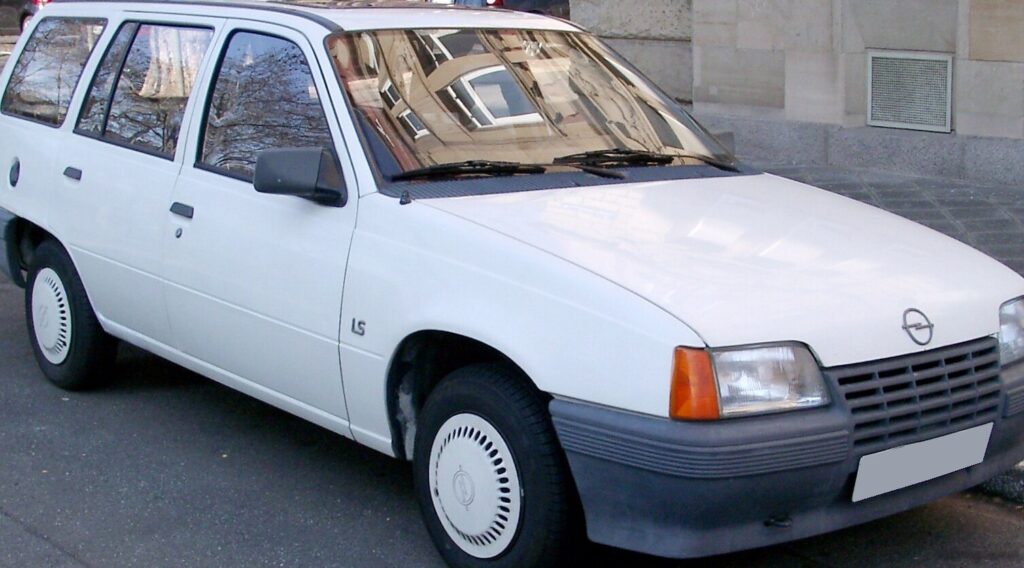
The Opel Kadett E Caravan 2.0i CAT, produced between 1986 and 1993, represented a significant offering in the European compact estate car segment. Positioned as a more upscale variant within the Kadett E range, the 2.0i CAT combined a relatively powerful engine with the practicality of a station wagon body style. It was a key model for Opel, appealing to families and those needing a versatile vehicle without sacrificing performance. The Kadett E series, built on the GM T-platform (internally known as the 1HX0/A3 platform), aimed to modernize Opel’s image and compete effectively with rivals like the Ford Escort and Volkswagen Golf. This particular variant, with its catalytic converter (“CAT” designation), was designed to meet increasingly stringent European emissions regulations.
Technical Specifications
| Brand | Opel |
| Model | Kadett |
| Generation | Kadett E Caravan |
| Type (Engine) | 2.0i CAT (115 Hp) |
| Start of production | 1986 |
| End of production | 1993 |
| Powertrain Architecture | Internal Combustion engine |
| Body type | Station wagon (estate) |
| Seats | 5 |
| Doors | 5 |
| Fuel Type | Petrol (Gasoline) |
| Acceleration 0 – 100 km/h | 10 sec |
| Acceleration 0 – 62 mph | 10 sec |
| Acceleration 0 – 60 mph | 9.5 sec |
| Maximum speed | 190 km/h (118.06 mph) |
| Weight-to-power ratio | 8.8 kg/Hp, 113.9 Hp/tonne |
| Weight-to-torque ratio | 5.9 kg/Nm, 168.3 Nm/tonne |
| Power | 115 Hp @ 5200 rpm |
| Power per litre | 57.6 Hp/l |
| Torque | 170 Nm @ 2600 rpm (125.39 lb.-ft. @ 2600 rpm) |
| Engine layout | Front, Transverse |
| Engine Model/Code | C20NE |
| Engine displacement | 1998 cm3 (121.93 cu. in.) |
| Number of cylinders | 4 |
| Engine configuration | Inline |
| Cylinder Bore | 86 mm (3.39 in.) |
| Piston Stroke | 86 mm (3.39 in.) |
| Compression ratio | 9.2:1 |
| Number of valves per cylinder | 2 |
| Fuel injection system | Multi-port manifold injection |
| Engine aspiration | Naturally aspirated engine |
| Valvetrain | SOHC |
| Engine oil capacity | 4 l (4.23 US qt | 3.52 UK qt) |
| Coolant | 6.9 l (7.29 US qt | 6.07 UK qt) |
| Kerb Weight | 1010 kg (2226.67 lbs.) |
| Max. weight | 1500 kg (3306.93 lbs.) |
| Max load | 490 kg (1080.27 lbs.) |
| Trunk (boot) space – minimum | 565 l (19.95 cu. ft.) |
| Trunk (boot) space – maximum | 1800 l (63.57 cu. ft.) |
| Fuel tank capacity | 50 l (13.21 US gal | 11 UK gal) |
| Length | 4228 mm (166.46 in.) |
| Width | 1666 mm (65.59 in.) |
| Height | 1430 mm (56.3 in.) |
| Wheelbase | 2520 mm (99.21 in.) |
| Front track | 1400 mm (55.12 in.) |
| Rear (Back) track | 1406 mm (55.35 in.) |
| Minimum turning circle | 10.5 m (34.45 ft.) |
| Drivetrain Architecture | The Internal combustion engine (ICE) drives the front wheels of the vehicle. |
| Drive wheel | Front wheel drive |
| Number of gears and type of gearbox | 5 gears, manual transmission |
| Front brakes | Ventilated discs |
| Rear brakes | Drum |
| Tires size | 175/65 R14 |
| Wheel rims size | 14 |
Powertrain & Engine Architecture
The heart of the Kadett E Caravan 2.0i CAT was the C20NE engine, a 1998cc inline-four cylinder unit. This engine featured a single overhead camshaft (SOHC) valvetrain operating two valves per cylinder. It utilized Bosch multi-port fuel injection, a significant advancement over earlier carburetor-equipped Kadett models, contributing to improved fuel efficiency and reduced emissions. The “CAT” designation indicated the presence of a catalytic converter, essential for meeting European emission standards of the time. The C20NE was known for its relative durability and straightforward design, making it relatively easy to maintain. The engine produced 115 horsepower at 5200 rpm and 170 Nm (125 lb-ft) of torque at 2600 rpm. The engine was transversely mounted, driving the front wheels. The five-speed manual transmission was the standard offering, providing a good balance between performance and fuel economy.
Driving Characteristics
The 2.0i CAT offered a noticeable step up in performance compared to the lower-displacement Kadett E Caravan models. While not a sports car, the 115 hp engine provided adequate power for comfortable cruising and overtaking on highways. Acceleration from 0 to 60 mph took around 9.5 seconds, and it could reach a top speed of approximately 118 mph. The five-speed manual transmission allowed drivers to keep the engine in its optimal power band. The gear ratios were fairly well-spaced, providing decent acceleration in each gear. Compared to the 1.6-liter versions, the 2.0i felt more relaxed at higher speeds and required less frequent gear changes. The handling was typical for a front-wheel-drive car of the era – safe and predictable, but not particularly sporty.
Equipment & Trim Levels
The 2.0i CAT trim generally included features such as power steering, central locking, and electric windows. Interior upholstery was typically cloth, with a relatively simple but functional dashboard layout. Optional extras included a sunroof, upgraded audio systems, and alloy wheels. The Caravan estate body style itself added to the practicality, offering a generous 565 liters of boot space (minimum) which expanded to 1800 liters with the rear seats folded down. The trim level often included body-colored bumpers and door handles, differentiating it from the more basic models.
Chassis & Braking
The Kadett E Caravan featured independent suspension at the front, utilizing MacPherson struts and a stabilizer bar. The rear suspension employed a twist-beam axle, a cost-effective and space-saving design. Braking was handled by ventilated discs at the front and drum brakes at the rear. The braking system was adequate for the car’s weight and performance, but lacked the stopping power of more modern systems. The 175/65 R14 tires provided a reasonable level of grip in most conditions.
Market Reception & Comparison
The Kadett E Caravan 2.0i CAT was generally well-received by automotive critics as a practical and reasonably priced family car. It was praised for its spacious interior, comfortable ride, and relatively strong engine. However, some critics noted that the interior styling was somewhat dated and that the handling wasn’t particularly engaging. Compared to the 1.6-liter Kadett Caravan, the 2.0i offered a significant performance boost, but at a higher price point. The 1.6-liter models were more popular with budget-conscious buyers, while the 2.0i appealed to those who prioritized performance and refinement. The diesel versions, while offering excellent fuel economy, were considerably slower.
Legacy
The Opel Kadett E Caravan 2.0i CAT, while now a classic car, remains a relatively common sight on European roads. The C20NE engine is known for its durability, and well-maintained examples can still provide reliable service. Parts availability is generally good, although some trim-specific components may be harder to find. In the used car market, these Kadett Caravans are appreciated for their practicality, affordability, and nostalgic appeal. They represent a significant chapter in Opel’s history, showcasing the brand’s commitment to building versatile and reliable family cars.