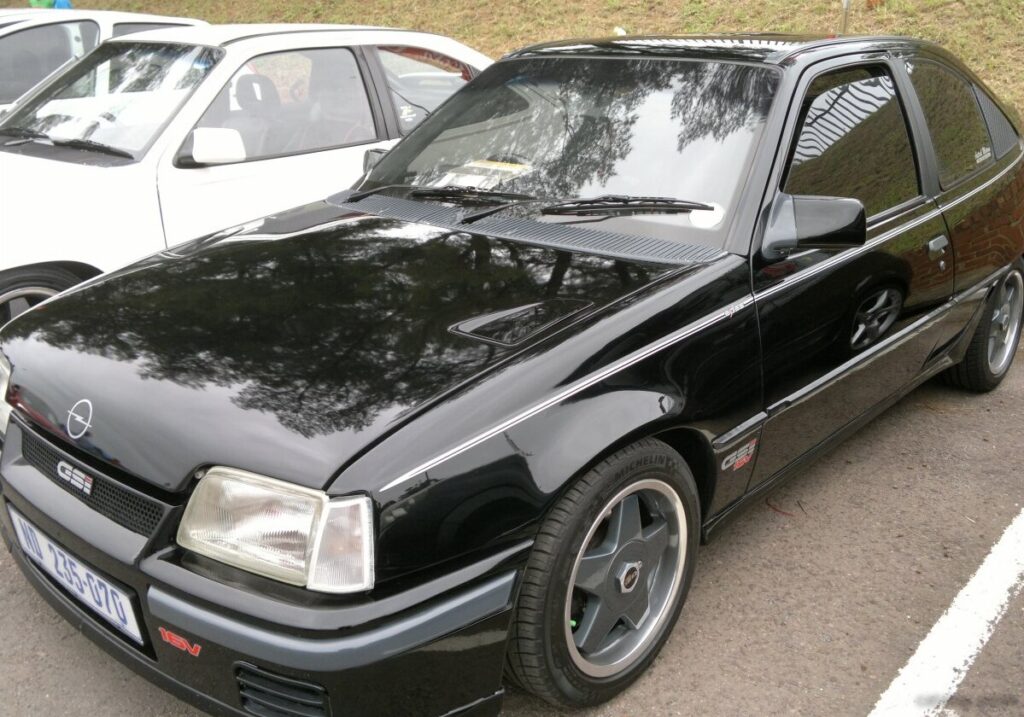
The Opel Kadett E CC 1.3 N, producing 60 horsepower, was a mainstay of the Kadett E range from 1984 to 1987. Positioned as the entry-level model, it offered affordable transportation within the compact car segment, primarily in European markets. The Kadett E, internally designated the T85 project, represented a significant leap forward for Opel, moving to a more modern, aerodynamic design and incorporating improved engineering compared to its predecessor, the Kadett D. This variant, with its modest engine, played a crucial role in attracting budget-conscious buyers and establishing the Kadett E as a popular choice for families and first-time car owners.
Technical Specifications
| Brand | Opel |
| Model | Kadett |
| Generation | Kadett E CC |
| Type (Engine) | 1.3 N (60 Hp) |
| Start of production | 1984 |
| End of production | 1987 |
| Powertrain Architecture | Internal Combustion engine |
| Body type | Hatchback |
| Seats | 5 |
| Doors | 3-5 |
| Fuel Type | Petrol (Gasoline) |
| Acceleration 0 – 100 km/h | 15 sec |
| Acceleration 0 – 62 mph | 15 sec |
| Acceleration 0 – 60 mph | 14.3 sec |
| Maximum speed | 160 km/h (99.42 mph) |
| Weight-to-power ratio | 14.1 kg/Hp, 71 Hp/tonne |
| Weight-to-torque ratio | 9 kg/Nm, 111.2 Nm/tonne |
| Power | 60 Hp @ 5800 rpm |
| Power per litre | 46.3 Hp/l |
| Torque | 94 Nm @ 3400-3800 rpm (69.33 lb.-ft. @ 3400-3800 rpm) |
| Engine layout | Front, Transverse |
| Engine Model/Code | 13N |
| Engine displacement | 1297 cm3 (79.15 cu. in.) |
| Number of cylinders | 4 |
| Engine configuration | Inline |
| Cylinder Bore | 75 mm (2.95 in.) |
| Piston Stroke | 73.4 mm (2.89 in.) |
| Compression ratio | 8.2:1 |
| Number of valves per cylinder | 2 |
| Fuel injection system | Multi-port manifold injection |
| Engine aspiration | Naturally aspirated engine |
| Valvetrain | SOHC |
| Engine oil capacity | 3 l (3.17 US qt | 2.64 UK qt) |
| Coolant | 7 l (7.4 US qt | 6.16 UK qt) |
| Kerb Weight | 845 kg (1862.91 lbs.) |
| Max. weight | 1335 kg (2943.17 lbs.) |
| Max load | 490 kg (1080.27 lbs.) |
| Trunk (boot) space – minimum | 485 l (17.13 cu. ft.) |
| Trunk (boot) space – maximum | 1385 l (48.91 cu. ft.) |
| Length | 3998 mm (157.4 in.) |
| Width | 1663 mm (65.47 in.) |
| Height | 1400 mm (55.12 in.) |
| Wheelbase | 2520 mm (99.21 in.) |
| Front track | 1400 mm (55.12 in.) |
| Rear (Back) track | 1406 mm (55.35 in.) |
| Minimum turning circle | 10.5 m (34.45 ft.) |
| Drivetrain Architecture | The Internal combustion engine (ICE) drives the front wheels of the vehicle. |
| Drive wheel | Front wheel drive |
| Number of gears | 5 gears, manual transmission |
| Front brakes | Disc |
| Rear brakes | Drum |
Powertrain & Engine Architecture
The heart of the Kadett E 1.3 N was the 13N engine, a 1.3-liter inline-four cylinder unit. This engine featured a single overhead camshaft (SOHC) valvetrain operating two valves per cylinder. Fuel delivery was handled by a multi-port fuel injection system, a relatively modern feature for its time, contributing to improved fuel efficiency and smoother operation compared to carbureted engines. The 13N engine, while not particularly powerful, was known for its durability and relative simplicity. The five-speed manual transmission was standard, providing a reasonable spread of gears for everyday driving. The engine’s transverse mounting, common in front-wheel-drive vehicles, helped to maximize interior space.
Driving Characteristics
The 1.3 N Kadett offered modest performance. Acceleration was leisurely, taking around 15 seconds to reach 62 mph (100 km/h). The engine’s 94 Nm (69.33 lb-ft) of torque, available between 3400-3800 rpm, meant that drivers often needed to downshift to maintain momentum, especially when overtaking or climbing hills. Compared to the more powerful 1.6-liter and 2.0-liter Kadett variants, the 1.3 N felt noticeably slower. However, its lighter weight and efficient engine contributed to reasonable fuel economy, making it a practical choice for daily commuting. The five-speed gearbox was well-matched to the engine’s characteristics, allowing for comfortable cruising at highway speeds, although with limited reserves of power for quick maneuvers.
Equipment & Trim Levels
The 1.3 N Kadett was typically equipped with basic, but functional, features. Standard equipment included cloth upholstery, a simple dashboard layout, and manual windows and door locks. Power steering and central locking were generally not standard on this base model, but were often available as optional extras. The interior was designed with practicality in mind, offering ample space for passengers and a reasonably sized trunk (485-1385 liters depending on rear seat configuration). Higher trim levels, such as the Formel and City, added features like upgraded upholstery, a more comprehensive instrument cluster, and additional comfort items.
Chassis & Braking
The Kadett E utilized a MacPherson strut front suspension and a twist-beam rear suspension. This setup provided a comfortable ride, although handling was not as sharp as some of its competitors. The 1.3 N models typically featured disc brakes on the front wheels and drum brakes on the rear. While adequate for the car’s performance level, the rear drum brakes were a cost-saving measure and offered less stopping power than disc brakes. The steering was a rack-and-pinion system, providing reasonable precision and feedback. Stabilizer bars were often optional, and their presence significantly improved handling characteristics.
Market Reception & Comparison
The Kadett E 1.3 N was generally well-received as an affordable and reliable compact car. Critics praised its fuel efficiency and practicality, but noted its lack of outright performance. Compared to other entry-level cars of the time, such as the Ford Escort and Volkswagen Golf, the Kadett E offered a competitive package in terms of price and features. The 1.6-liter Kadett offered a noticeable performance upgrade, while the 2.0-liter GSi models provided a more sporty driving experience. However, these higher-spec models came at a significantly higher price point. The 1.3 N appealed to buyers who prioritized economy and practicality over performance.
Legacy
The Opel Kadett E 1.3 N, while not a performance icon, remains a fondly remembered car for many European drivers. The 13N engine proved to be remarkably durable, and many examples are still on the road today. Its simplicity makes it relatively easy to maintain, and spare parts are still readily available. In the used car market, the 1.3 N Kadett E represents an affordable and reliable classic, appealing to enthusiasts and those seeking a practical and economical vintage vehicle. Its role in establishing the Kadett E as a successful model for Opel cemented its place in automotive history.