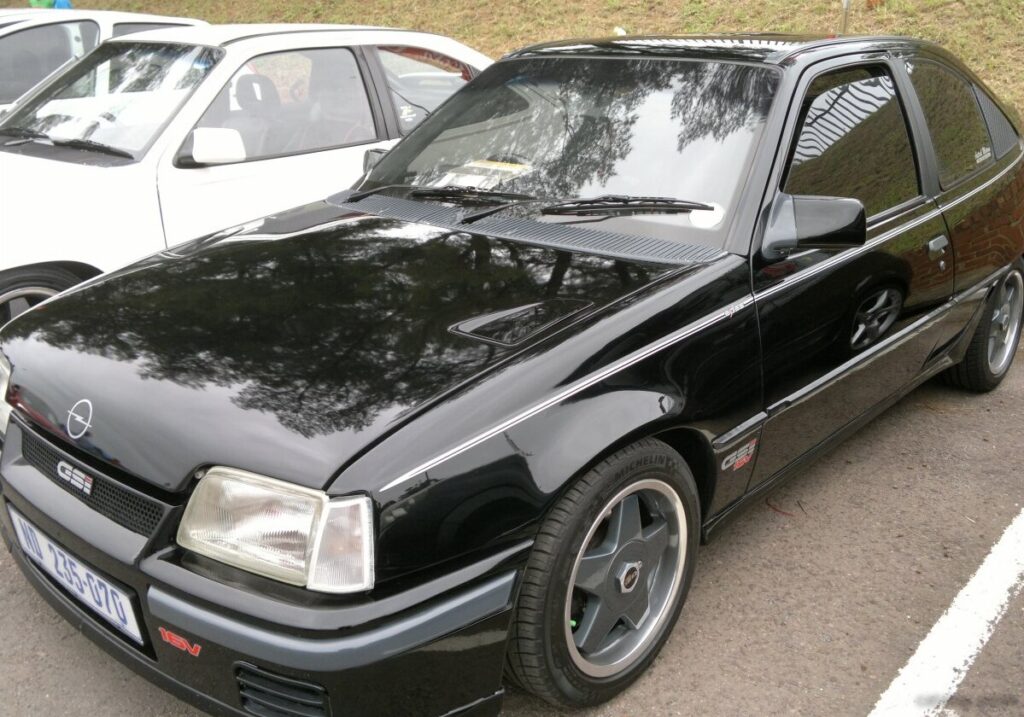
The Opel Kadett E CC 1.4 S, produced from 1990 to 1991, represented a mid-cycle refresh of the popular Kadett E series. Positioned as a step up from the base models, the 1.4 S offered a modest increase in power and a slightly more equipped interior, appealing to buyers seeking a balance between affordability and driving enjoyment. It was a key component of Opel’s lineup during a period of significant competition in the European compact car segment, and served as a practical and relatively economical option for families and commuters. The Kadett E, internally designated the T85, was built on the GM T-platform, shared with other models like the Vauxhall Astra and Isuzu Gemini.
Technical Specifications
| Brand | Opel |
| Model | Kadett |
| Generation | Kadett E CC |
| Type (Engine) | 1.4 S (75 Hp) |
| Start of production | 1990 |
| End of production | 1991 |
| Powertrain Architecture | Internal Combustion engine |
| Body type | Hatchback |
| Seats | 5 |
| Doors | 5 |
| Fuel Type | Petrol (Gasoline) |
| Acceleration 0 – 100 km/h | 13 sec |
| Acceleration 0 – 62 mph | 13 sec |
| Acceleration 0 – 60 mph | 12.4 sec |
| Maximum speed | 170 km/h (105.63 mph) |
| Weight-to-power ratio | 12.1 kg/Hp, 82.9 Hp/tonne |
| Weight-to-torque ratio | 7.2 kg/Nm, 138.1 Nm/tonne |
| Power | 75 Hp @ 5200 rpm |
| Power per litre | 46.9 Hp/l |
| Torque | 125 Nm @ 3200 rpm (92.2 lb.-ft. @ 3200 rpm) |
| Engine layout | Front, Transverse |
| Engine Model/Code | 14NV |
| Engine displacement | 1598 cm3 (97.52 cu. in.) |
| Number of cylinders | 4 |
| Engine configuration | Inline |
| Cylinder Bore | 80 mm (3.15 in.) |
| Piston Stroke | 79.5 mm (3.13 in.) |
| Compression ratio | 9.2:1 |
| Number of valves per cylinder | 2 |
| Fuel injection system | Multi-port manifold injection |
| Engine aspiration | Naturally aspirated engine |
| Valvetrain | SOHC |
| Engine oil capacity | 3 l (3.17 US qt | 2.64 UK qt) |
| Coolant | 6.2 l (6.55 US qt | 5.46 UK qt) |
| Kerb Weight | 905 kg (1995.18 lbs.) |
| Max. weight | 1405 kg (3097.49 lbs.) |
| Max load | 500 kg (1102.31 lbs.) |
| Trunk (boot) space – minimum | 485 l (17.13 cu. ft.) |
| Trunk (boot) space – maximum | 1385 l (48.91 cu. ft.) |
| Fuel tank capacity | 52 l (13.74 US gal | 11.44 UK gal) |
| Length | 3998 mm (157.4 in.) |
| Width | 1663 mm (65.47 in.) |
| Height | 1400 mm (55.12 in.) |
| Wheelbase | 2520 mm (99.21 in.) |
| Front track | 1400 mm (55.12 in.) |
| Rear (Back) track | 1406 mm (55.35 in.) |
| Minimum turning circle | 10.5 m (34.45 ft.) |
| Drivetrain Architecture | The Internal combustion engine (ICE) drives the front wheels of the vehicle. |
| Drive wheel | Front wheel drive |
| Number of gears and type of gearbox | 5 gears, manual transmission |
| Front brakes | Disc |
| Rear brakes | Drum |
Powertrain & Engine Architecture
The heart of the Kadett E 1.4 S was the 14NV engine, a 1.6-liter (1598cc) inline-four cylinder gasoline engine. This engine featured a single overhead camshaft (SOHC) valvetrain operating two valves per cylinder. Fuel delivery was handled by a multi-port fuel injection system, a significant improvement over the carburetors found in earlier Kadett models. This system contributed to improved fuel efficiency and smoother power delivery. The 14NV produced 75 horsepower at 5200 rpm and 92.2 lb-ft of torque at 3200 rpm. The engine’s relatively simple design prioritized reliability and ease of maintenance. The Kadett E 1.4 S was exclusively offered with a five-speed manual transmission, designed to maximize the engine’s efficiency and provide a reasonably engaging driving experience.
Driving Characteristics
The 1.4 S, while not a performance-oriented variant, offered adequate power for everyday driving. Acceleration from 0-60 mph took around 12.4 seconds, and it had a top speed of approximately 105.63 mph. The five-speed manual transmission allowed drivers to keep the engine in its optimal power band, making it feel more responsive than its horsepower figure might suggest. Compared to the base 1.3-liter Kadett, the 1.4 S provided noticeably more punch, particularly when overtaking or climbing hills. However, it lagged behind the more powerful 1.6-liter and 2.0-liter versions in terms of outright performance. The gear ratios were tuned for fuel economy and everyday usability, rather than sporty acceleration. The steering was light and precise, making it easy to maneuver in urban environments.
Equipment & Trim Levels
The Kadett E 1.4 S typically included features such as power steering, a basic stereo system, and upgraded interior trim compared to the base models. Interior upholstery was typically cloth, with a simple, functional dashboard layout. Optional extras included a sunroof, upgraded sound system, and central locking. The “S” designation indicated a slightly more sporting appearance, often including body-colored bumpers and wheel covers. While not luxurious, the interior was well-built and durable, reflecting Opel’s reputation for practicality. The 1.4 S aimed to provide a comfortable and well-equipped package for the price-conscious buyer.
Chassis & Braking
The Kadett E utilized a MacPherson strut front suspension and a torsion beam rear suspension. This setup provided a good balance between ride comfort and handling. The front brakes were disc brakes, offering adequate stopping power, while the rear brakes were drum brakes, a cost-saving measure common in this class of vehicle. The Kadett E 1.4 S had a curb weight of approximately 1995 lbs, which contributed to its relatively nimble handling. Stabilizer bars were included on both the front and rear axles to reduce body roll during cornering. The suspension was tuned for comfort, but it still provided a reasonably stable and predictable driving experience.
Market Reception & Comparison
The Kadett E 1.4 S was generally well-received by automotive critics as a practical and affordable compact car. It was praised for its fuel efficiency, reliability, and comfortable ride. However, some critics noted that its performance was somewhat underwhelming compared to its rivals, such as the Volkswagen Golf and Ford Escort. The 1.4 S offered a good value proposition, providing a step up in equipment and performance from the base models without a significant price increase. Compared to the higher-output Kadett variants, the 1.4 S was more economical to run and maintain, making it a popular choice for budget-conscious buyers. Fuel economy was a strong point, averaging around 35-40 mpg in mixed driving conditions.
Legacy
The Opel Kadett E 1.4 S, while not a particularly rare or collectible model today, remains a popular choice among classic car enthusiasts and those seeking a reliable and affordable vintage vehicle. The 14NV engine is known for its durability and relatively simple maintenance requirements. Parts availability is generally good, although some components may be becoming increasingly difficult to find. The Kadett E 1.4 S represents a significant chapter in Opel’s history, embodying the brand’s commitment to producing practical and well-engineered vehicles. In the used car market, well-maintained examples of the 1.4 S can still provide years of reliable service, offering a nostalgic driving experience and a connection to a bygone era of automotive design.