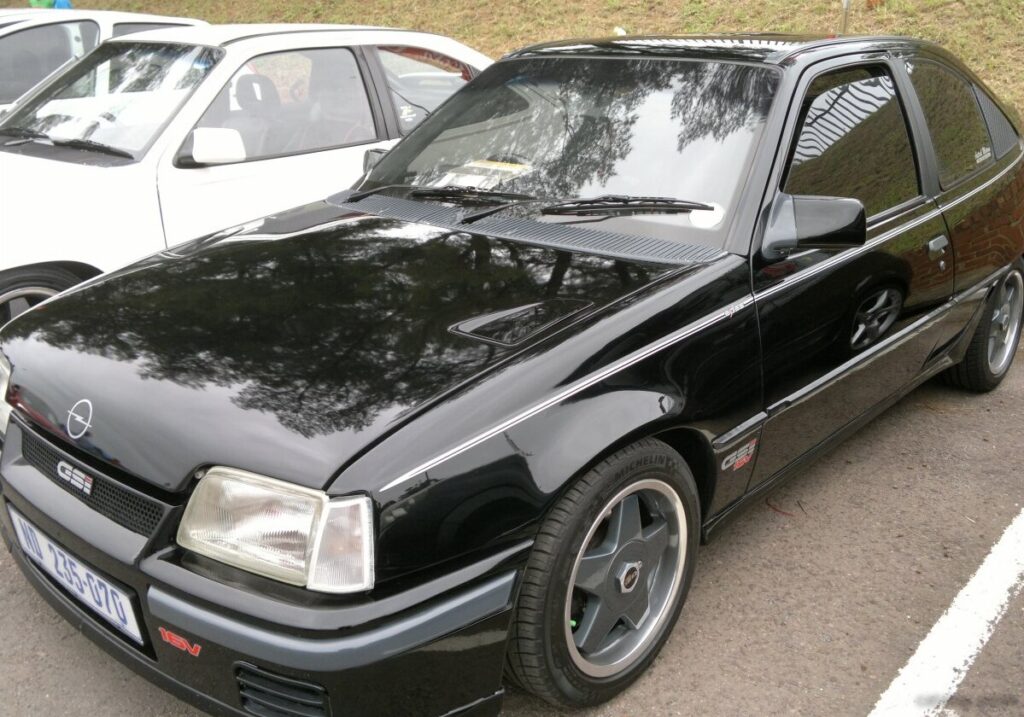
The Opel Kadett E CC 1.6i (75 hp) was a popular subcompact car produced between 1986 and 1987, representing a key iteration of the Kadett E generation (1986-1993). Positioned as an entry-level offering within the Kadett E range, it provided affordable transportation with a focus on fuel efficiency. The “CC” designation signified the ‘Coupe’ or ‘Commodore’ body style, referring to the hatchback configuration. This variant played a significant role in Opel’s strategy to offer a diverse lineup catering to various consumer needs in the European market, particularly Germany, the United Kingdom, and other European countries. It was a direct competitor to vehicles like the Ford Escort, Volkswagen Golf, and Peugeot 205.
Technical Specifications
| Brand | Opel |
| Model | Kadett |
| Generation | Kadett E CC |
| Type (Engine) | 1.6i (75 Hp) |
| Start of production | 1986 |
| End of production | 1987 |
| Powertrain Architecture | Internal Combustion engine |
| Body type | Hatchback |
| Seats | 5 |
| Doors | 3-5 |
| Fuel Type | Petrol (Gasoline) |
| Acceleration 0 – 100 km/h | 13 sec |
| Acceleration 0 – 62 mph | 13 sec |
| Acceleration 0 – 60 mph | 12.4 sec |
| Maximum speed | 170 km/h (105.63 mph) |
| Weight-to-power ratio | 11.9 kg/Hp, 84.3 Hp/tonne |
| Weight-to-torque ratio | 7 kg/Nm, 142.7 Nm/tonne |
| Power | 75 Hp @ 5200 rpm |
| Power per litre | 46.9 Hp/l |
| Torque | 127 Nm @ 2600 rpm (93.67 lb.-ft. @ 2600 rpm) |
| Engine layout | Front, Transverse |
| Engine Model/Code | C16LZ |
| Engine displacement | 1598 cm3 (97.52 cu. in.) |
| Number of cylinders | 4 |
| Engine configuration | Inline |
| Cylinder Bore | 80 mm (3.15 in.) |
| Piston Stroke | 79.5 mm (3.13 in.) |
| Compression ratio | 9.2:1 |
| Number of valves per cylinder | 2 |
| Fuel injection system | Multi-port manifold injection |
| Engine aspiration | Naturally aspirated engine |
| Valvetrain | SOHC |
| Engine oil capacity | 3.5 l (3.7 US qt | 3.08 UK qt) |
| Coolant | 6.4 l (6.76 US qt | 5.63 UK qt) |
| Kerb Weight | 890 kg (1962.11 lbs.) |
| Max. weight | 1385 kg (3053.4 lbs.) |
| Max load | 495 kg (1091.29 lbs.) |
| Trunk (boot) space – minimum | 485 l (17.13 cu. ft.) |
| Trunk (boot) space – maximum | 1385 l (48.91 cu. ft.) |
| Fuel tank capacity | 52 l (13.74 US gal | 11.44 UK gal) |
| Length | 3998 mm (157.4 in.) |
| Width | 1663 mm (65.47 in.) |
| Height | 1400 mm (55.12 in.) |
| Wheelbase | 2520 mm (99.21 in.) |
| Front track | 1400 mm (55.12 in.) |
| Rear (Back) track | 1406 mm (55.35 in.) |
| Minimum turning circle | 10.5 m (34.45 ft.) |
| Drivetrain Architecture | Front wheel drive |
| Number of gears | 5 gears, manual transmission |
| Front brakes | Disc |
| Rear brakes | Drum |
Powertrain & Engine Architecture
The Kadett E CC 1.6i was powered by the Opel C16LZ engine, a 1.6-liter inline-four cylinder gasoline engine. This engine featured a single overhead camshaft (SOHC) valvetrain operating two valves per cylinder. The C16LZ utilized multi-port fuel injection, a significant advancement over earlier carbureted Opel engines, contributing to improved fuel efficiency and smoother operation. The engine produced 75 horsepower at 5200 rpm and 127 Nm (93.67 lb-ft) of torque at 2600 rpm. The engine’s relatively simple design prioritized reliability and ease of maintenance. The 5-speed manual transmission was the standard offering, providing a reasonable balance between performance and fuel economy. The transmission’s gear ratios were tuned for everyday driving, prioritizing acceleration in lower gears and comfortable cruising at highway speeds.
Driving Characteristics
The 1.6i Kadett E, with its 75 hp, offered modest but adequate performance for its time. Acceleration from 0 to 60 mph took approximately 12.4 seconds, and the top speed was around 105.63 mph. Compared to the more powerful Kadett E variants, such as the 1.8-liter or the later GSi models, the 1.6i felt noticeably slower. However, it provided a more relaxed driving experience, particularly in urban environments. The 5-speed manual transmission allowed drivers to keep the engine in its optimal power band, but the engine lacked the low-end torque of larger displacement engines. The steering was light and precise, making the car easy to maneuver. The suspension, while basic, provided a comfortable ride, absorbing bumps and imperfections in the road surface reasonably well.
Equipment & Trim Levels
The Kadett E CC 1.6i was typically equipped with basic but functional features. Standard equipment included cloth upholstery, a basic instrument cluster, and manual windows and door locks. Optional extras included a sunroof, upgraded stereo system, and central locking. The interior design was functional and utilitarian, reflecting the car’s affordable positioning. Trim levels were relatively limited for the 1.6i variant, with most cars featuring a standard level of equipment. Higher trim levels, available on other Kadett E models, were generally not offered with the 1.6i engine.
Chassis & Braking
The Kadett E CC featured a front-wheel-drive layout with a MacPherson strut front suspension and a twist-beam rear suspension. The front brakes were disc brakes, providing adequate stopping power, while the rear brakes were drum brakes, a cost-saving measure common in this class of vehicle. The suspension was tuned for comfort, prioritizing ride quality over sporty handling. The steering was a rack-and-pinion system, providing precise and responsive steering feel. Stabilizer bars were typically fitted to the front suspension to reduce body roll during cornering.
Market Reception & Comparison
The Kadett E CC 1.6i was generally well-received by critics as an affordable and reliable family car. It was praised for its fuel efficiency and ease of driving. However, it was also criticized for its lack of power and relatively basic interior. Compared to other Kadett E variants, such as the 1.8-liter, the 1.6i offered lower running costs but sacrificed performance. The 1.6i was a popular choice for drivers who prioritized economy and practicality over outright speed. Its fuel economy was competitive with other vehicles in its class, making it an attractive option for budget-conscious buyers.
Legacy
The Opel Kadett E CC 1.6i, while not the most powerful or luxurious variant of the Kadett E, remains a fondly remembered car for many European drivers. The C16LZ engine proved to be relatively reliable, and parts availability remains good, making it a viable option for classic car enthusiasts. Today, well-maintained examples of the Kadett E CC 1.6i are becoming increasingly collectible. The car represents a significant era in Opel’s history, showcasing the company’s commitment to providing affordable and practical transportation to the masses. Its simple design and robust construction have contributed to its longevity, ensuring that it will continue to be enjoyed by car enthusiasts for years to come.