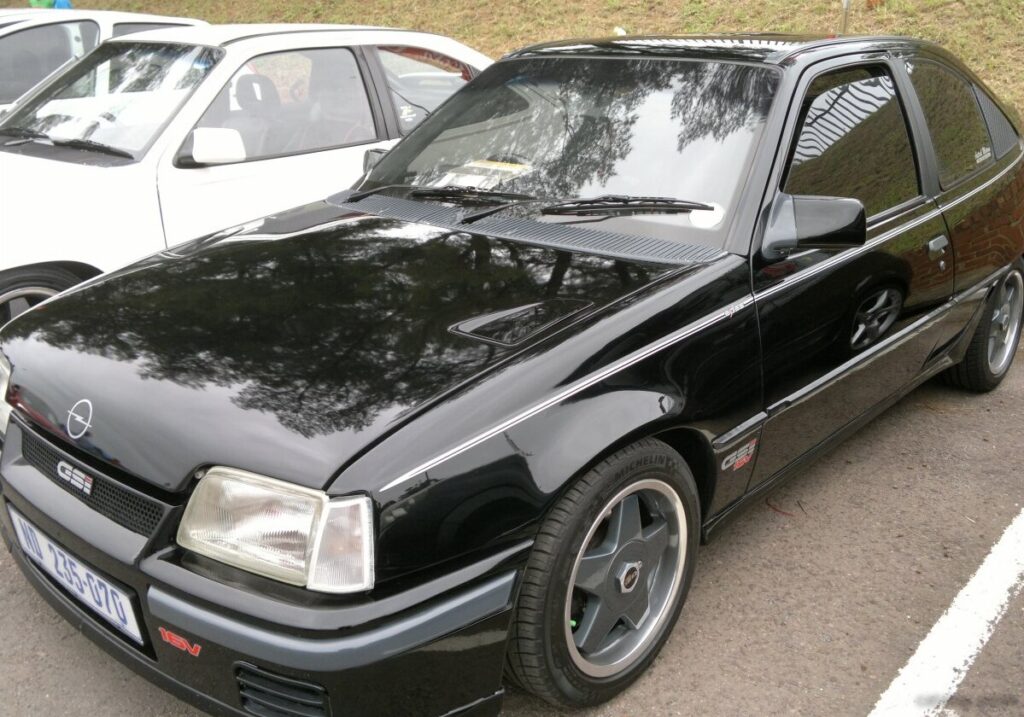
The Opel Kadett E CC 1.7 D, produced between 1989 and 1991, represented the diesel-powered entry point into the Kadett E range. Positioned as an economy-focused variant, it catered to buyers prioritizing fuel efficiency and practicality over outright performance. The Kadett E, launched in 1986, was a significant model for Opel (and later Vauxhall in the UK), serving as a direct replacement for the Kadett D. The “CC” designation signified the ‘Coupe’ or fastback body style, though it was functionally a five-door hatchback. This particular 1.7-liter diesel version played a role in offering affordable transportation within the European market, particularly in countries where diesel fuel was heavily subsidized.
Technical Specifications
| Brand | Opel |
| Model | Kadett |
| Generation | Kadett E CC |
| Type (Engine) | 1.7 D (57 Hp) |
| Start of production | 1989 |
| End of production | 1991 |
| Powertrain Architecture | Internal Combustion engine |
| Body type | Hatchback |
| Seats | 5 |
| Doors | 5 |
| Fuel Type | Diesel |
| Acceleration 0 – 100 km/h | 18 sec |
| Acceleration 0 – 62 mph | 18 sec |
| Acceleration 0 – 60 mph | 17.1 sec |
| Maximum speed | 153 km/h (95.07 mph) |
| Weight-to-power ratio | 16.5 kg/Hp, 60.6 Hp/tonne |
| Weight-to-torque ratio | 9 kg/Nm, 111.7 Nm/tonne |
| Power | 57 Hp @ 4600 rpm |
| Power per litre | 33.5 Hp/l |
| Torque | 105 Nm @ 2400-2600 rpm (77.44 lb.-ft. @ 2400-2600 rpm) |
| Engine layout | Front, Transverse |
| Engine Model/Code | 17D |
| Engine displacement | 1700 cm3 (103.74 cu. in.) |
| Number of cylinders | 4 |
| Engine configuration | Inline |
| Cylinder Bore | 82.5 mm (3.25 in.) |
| Piston Stroke | 79.5 mm (3.13 in.) |
| Compression ratio | 23:1 |
| Number of valves per cylinder | 2 |
| Engine aspiration | Naturally aspirated |
| Valvetrain | SOHC |
| Engine oil capacity | 5 l (5.28 US qt | 4.4 UK qt) |
| Coolant | 9.1 l (9.62 US qt | 8.01 UK qt) |
| Kerb Weight | 940 kg (2072.35 lbs.) |
| Max. weight | 1445 kg (3185.68 lbs.) |
| Max load | 505 kg (1113.33 lbs.) |
| Trunk (boot) space – minimum | 485 l (17.13 cu. ft.) |
| Trunk (boot) space – maximum | 1385 l (48.91 cu. ft.) |
| Fuel tank capacity | 52 l (13.74 US gal | 11.44 UK gal) |
| Length | 3998 mm (157.4 in.) |
| Width | 1663 mm (65.47 in.) |
| Height | 1400 mm (55.12 in.) |
| Wheelbase | 2520 mm (99.21 in.) |
| Front track | 1400 mm (55.12 in.) |
| Rear (Back) track | 1406 mm (55.35 in.) |
| Minimum turning circle | 10.5 m (34.45 ft.) |
| Drivetrain Architecture | The Internal combustion engine (ICE) drives the front wheels of the vehicle. |
| Drive wheel | Front wheel drive |
| Number of gears and type of gearbox | 5 gears, manual transmission |
| Front brakes | Disc |
| Rear brakes | Drum |
Powertrain & Engine Architecture
The heart of the Kadett E 1.7 D was the Isuzu-derived 17D diesel engine. This 1.7-liter inline-four cylinder engine utilized indirect injection, a common feature for diesel engines of the era. The engine featured a single overhead camshaft (SOHC) operating two valves per cylinder. Its robust construction and relatively simple design contributed to its longevity. The 17D engine produced 57 horsepower at 4600 rpm and 105 Nm (77.44 lb-ft) of torque between 2400 and 2600 rpm. The engine’s durability was a key selling point, but it came at the expense of refinement and performance. The five-speed manual transmission was the only gearbox option available with this engine, prioritizing fuel economy over driver engagement. The indirect injection system, while less efficient than direct injection, offered smoother operation and reduced engine noise – important considerations for the time.
Driving Characteristics
The Kadett E 1.7 D was not known for its speed. Acceleration was leisurely, taking approximately 18 seconds to reach 62 mph (100 km/h). The engine’s torque delivery was concentrated in a narrow band, requiring frequent gear changes to maintain momentum, especially when climbing hills or overtaking. The manual transmission, while not particularly sporty, was well-matched to the engine’s characteristics. Compared to the gasoline-powered Kadett E variants, the 1.7 D offered significantly lower fuel consumption, making it an attractive option for high-mileage drivers. However, it lacked the responsiveness and overall driving enjoyment of its petrol counterparts. The gearing was optimized for economy, meaning the engine often felt strained at higher speeds. The relatively long throw of the gearshift also contributed to a less engaging driving experience.
Equipment & Trim Levels
The 1.7 D Kadett E typically represented the base trim level. Standard equipment was fairly basic, including cloth upholstery, a simple dashboard layout, and manual windows and door locks. Power steering and central locking were often optional extras. The interior was functional and durable, prioritizing practicality over luxury. Radio and upgraded speaker systems were common options. The exterior styling was consistent across the Kadett E range, with the 1.7 D typically featuring steel wheels with hubcaps. Metallic paint finishes were available at an additional cost. The dashboard featured a basic instrument cluster with speedometer, fuel gauge, and temperature indicator. The seats were typically finished in a durable, patterned cloth.
Chassis & Braking
The Kadett E utilized a MacPherson strut front suspension and a torsion beam rear suspension. The suspension setup was tuned for comfort and ride quality, rather than sporty handling. The 1.7 D variant typically featured drum brakes on the rear wheels, while the front wheels were equipped with disc brakes. The braking system was adequate for the car’s performance, but lacked the stopping power of more powerful Kadett E models. Stabilizer bars were often omitted from the base trim level to reduce cost. The torsion beam rear suspension contributed to a relatively compliant ride, but limited handling precision. The steering was unassisted, requiring more effort at low speeds.
Market Reception & Comparison
The Kadett E 1.7 D was generally well-received as an affordable and economical mode of transportation. Critics acknowledged its fuel efficiency and durability, but often criticized its lack of performance and refinement. Compared to the more popular 1.6-liter gasoline engine, the 1.7 D offered significantly better fuel economy but considerably less power. The 1.8-liter gasoline variants provided a better balance of performance and economy, but at a higher price point. The 1.7 D appealed to buyers who prioritized cost savings and reliability over driving excitement. It was particularly popular with fleet operators and drivers covering long distances. The diesel engine’s higher purchase price was offset by lower running costs.
Legacy
The Opel Kadett E 1.7 D, while not a performance icon, remains a relatively common sight on European roads today, a testament to its durability. The 17D engine, while simple, proved to be remarkably robust and capable of high mileage with proper maintenance. In the used car market, these Kadetts are often sought after by enthusiasts looking for a classic, affordable, and easy-to-maintain vehicle. Parts availability is generally good, and the car’s simple mechanical design makes it relatively easy to repair. However, potential buyers should be aware of the potential for rust, a common issue with vehicles of this era. The Kadett E 1.7 D represents a practical and economical choice for those seeking a piece of automotive history. Its enduring appeal lies in its simplicity, reliability, and low running costs, making it a popular choice for classic car enthusiasts and budget-conscious drivers alike.