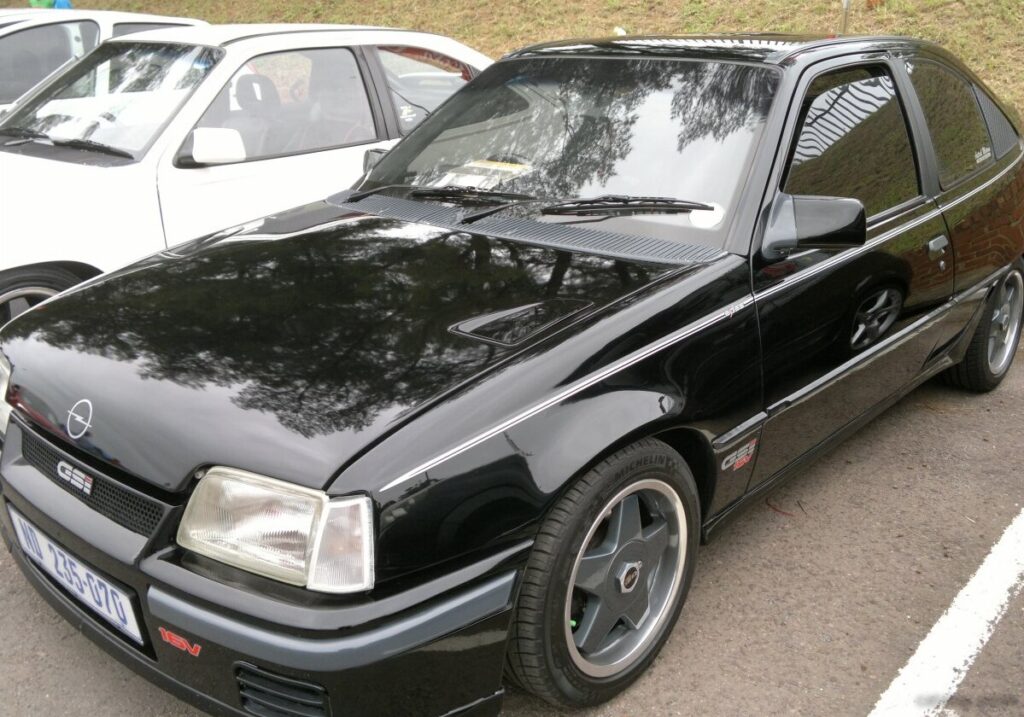
The Opel Kadett E CC 1.8i (90 hp) was a popular variant of the Kadett E series, produced between 1985 and 1991. Positioned as a mid-range offering within the Kadett E lineup, it provided a balance between affordability and performance. The Kadett E, internally designated as the T85 project, represented a significant leap forward for Opel, moving to a more modern, aerodynamic design and incorporating improved engineering. This generation of Kadett was primarily aimed at the European market, competing with vehicles like the Volkswagen Golf, Ford Escort, and Peugeot 305. The “CC” designation signifies the ‘Coupe’ or fastback body style, differentiating it from the four-door saloon version.
Technical Specifications
| Brand | Opel |
| Model | Kadett |
| Generation | Kadett E CC |
| Type (Engine) | 1.8i (90 Hp) |
| Start of production | 1985 |
| End of production | 1991 |
| Powertrain Architecture | Internal Combustion engine |
| Body type | Hatchback |
| Seats | 5 |
| Doors | 5 |
| Fuel Type | Petrol (Gasoline) |
| Acceleration 0 – 100 km/h | 11.5 sec |
| Acceleration 0 – 62 mph | 11.5 sec |
| Acceleration 0 – 60 mph | 10.9 sec |
| Maximum speed | 180 km/h (111.85 mph) |
| Weight-to-power ratio | 10.5 kg/Hp, 95.2 Hp/tonne |
| Weight-to-torque ratio | 6.5 kg/Nm, 153.4 Nm/tonne |
| Power | 90 Hp @ 5400 rpm |
| Power per litre | 50.1 Hp/l |
| Torque | 145 Nm @ 2800 rpm (106.95 lb.-ft. @ 2800 rpm) |
| Engine layout | Front, Transverse |
| Engine Model/Code | C18NT, C18NZ |
| Engine displacement | 1796 cm3 (109.6 cu. in.) |
| Number of cylinders | 4 |
| Engine configuration | Inline |
| Cylinder Bore | 84.8 mm (3.34 in.) |
| Piston Stroke | 79.5 mm (3.13 in.) |
| Compression ratio | 9.2:1 |
| Number of valves per cylinder | 2 |
| Fuel injection system | Multi-port manifold injection |
| Engine aspiration | Naturally aspirated engine |
| Engine oil capacity | 4 l (4.23 US qt | 3.52 UK qt) |
| Coolant | 6.5 l (6.87 US qt | 5.72 UK qt) |
| Kerb Weight | 945 kg (2083.37 lbs.) |
| Max. weight | 1435 kg (3163.63 lbs.) |
| Max load | 490 kg (1080.27 lbs.) |
| Trunk (boot) space – minimum | 485 l (17.13 cu. ft.) |
| Trunk (boot) space – maximum | 1385 l (48.91 cu. ft.) |
| Fuel tank capacity | 52 l (13.74 US gal | 11.44 UK gal) |
| Length | 3998 mm (157.4 in.) |
| Width | 1663 mm (65.47 in.) |
| Height | 1400 mm (55.12 in.) |
| Wheelbase | 2520 mm (99.21 in.) |
| Front track | 1400 mm (55.12 in.) |
| Rear (Back) track | 1406 mm (55.35 in.) |
| Minimum turning circle | 10.5 m (34.45 ft.) |
| Drivetrain Architecture | The Internal combustion engine (ICE) drives the front wheels of the vehicle. |
| Drive wheel | Front wheel drive |
| Number of gears | 5 gears, manual transmission |
| Front brakes | Disc |
| Rear brakes | Drum |
Powertrain & Engine Architecture
The heart of the Kadett E CC 1.8i was the C18NT or C18NZ engine, an inline four-cylinder unit displacing 1796cc. Both engine codes were commonly found in this variant. The C18NT was typically equipped with a catalytic converter, while the C18NZ was designed for markets without strict emission regulations. The engine featured a two-valve-per-cylinder configuration and utilized Bosch Mono-Jetronic fuel injection, a relatively simple but effective system for the time. This system delivered fuel through a single throttle body with integrated injectors, offering a good balance between fuel efficiency and performance. The engine’s 90 horsepower output at 5400 rpm and 145 Nm (107 lb-ft) of torque at 2800 rpm were considered adequate for the vehicle’s weight. The Kadett E 1.8i was typically paired with a five-speed manual transmission, although a three-speed automatic transmission was also available, albeit less common. The automatic transmission, while offering convenience, noticeably impacted acceleration and fuel economy.
Driving Characteristics
The 1.8i with the five-speed manual transmission provided a reasonably engaging driving experience. Acceleration to 60 mph took around 10.9 seconds, and the top speed was approximately 112 mph. The engine felt responsive in the mid-range, making it suitable for everyday driving. The automatic transmission version, however, felt sluggish in comparison, with a 0-60 mph time closer to 12.5 seconds. The gear ratios in the manual transmission were well-spaced, allowing for efficient cruising and adequate power for overtaking. The Kadett E’s front-wheel-drive layout provided predictable handling, although it wasn’t particularly sporty. The steering was light and precise, making it easy to maneuver in urban environments.
Equipment & Trim Levels
The Kadett E CC 1.8i typically came equipped with features such as power steering, central locking, and a basic stereo system. Interior upholstery was usually cloth, with options for upgraded materials available. Trim levels varied depending on the market, but generally included a base model and a more luxurious variant. The higher trim levels offered features like electric windows, a sunroof, and upgraded interior trim. Optional extras included alloy wheels, a rear window wiper, and a more sophisticated audio system. The dashboard layout was functional and straightforward, with clearly labeled controls.
Chassis & Braking
The Kadett E CC featured a MacPherson strut front suspension and a torsion beam rear suspension. This setup provided a comfortable ride, although it wasn’t particularly sophisticated. The front brakes were disc brakes, while the rear brakes were drum brakes on most models. Some higher-spec versions featured rear disc brakes. The braking system was adequate for the vehicle’s weight and performance, but it lacked the stopping power of more modern cars. A stabilizer bar was fitted to the front suspension to reduce body roll during cornering.
Market Reception & Comparison
The Kadett E CC 1.8i was generally well-received by automotive critics. It was praised for its practicality, fuel efficiency, and affordability. However, some critics noted that the engine lacked refinement and that the interior was somewhat basic. Compared to the 1.6-liter version, the 1.8i offered noticeably more power and torque, making it a more enjoyable car to drive. Compared to the more powerful Kadett E GSi models (with engines ranging from 1.8 to 2.0 liters), the 1.8i was less sporty but more fuel-efficient and affordable. The 1.9-liter diesel version offered even better fuel economy but lacked the performance of the 1.8i.
Legacy
The Opel Kadett E CC 1.8i remains a popular choice among classic car enthusiasts. The C18NT and C18NZ engines are known for their reliability, although regular maintenance is essential. Parts availability is generally good, although some components can be difficult to find. Today, well-maintained examples of the Kadett E CC 1.8i are sought after by collectors and enthusiasts who appreciate its simplicity, affordability, and nostalgic appeal. The Kadett E, as a whole, played a significant role in establishing Opel as a major player in the European automotive market, paving the way for future models like the Astra.