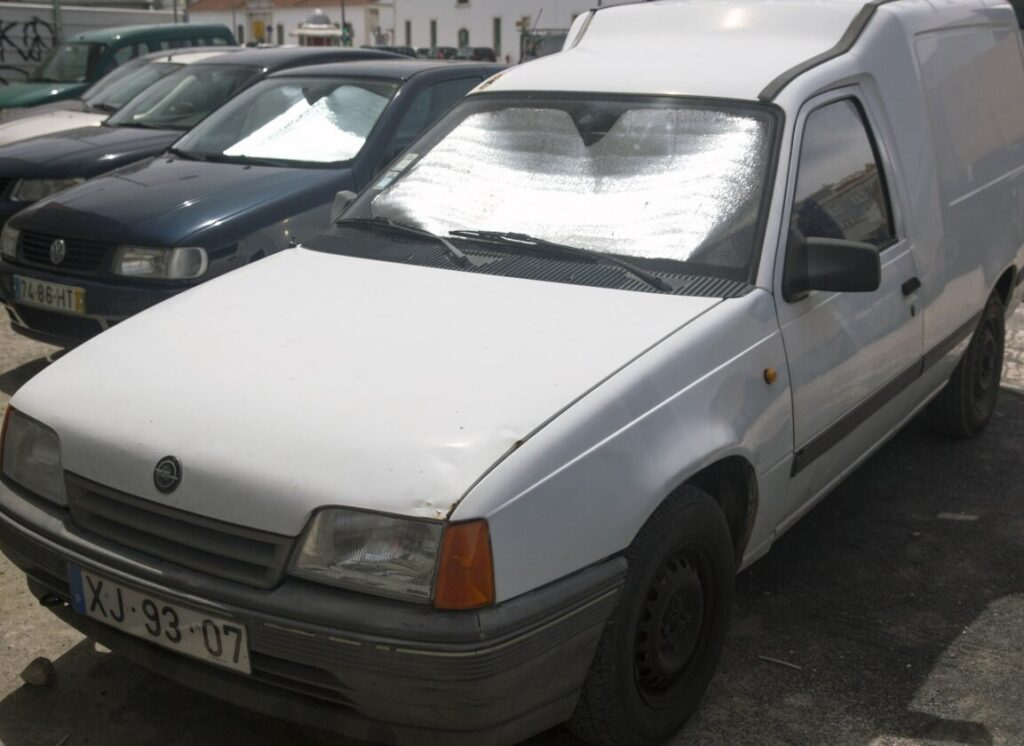
The Opel Kadett E Combo 1.3 S, produced from January to July 1986, represents a practical and economical variant within the broader Kadett E range. Positioned as an entry-level offering, particularly within the Combo – Opel’s small panel van/estate car – body style, it catered to buyers prioritizing utility and affordability. The Kadett E itself was a significant model for Opel, built on the GM T-platform (internally known as 1HX0/A3), and represented a substantial leap forward in terms of design, technology, and build quality compared to its predecessor, the Kadett D. The Combo version, with its extended rear cargo area, was popular with small businesses and families needing versatile transport.
Technical Specifications
| Brand | Opel |
| Model | Kadett |
| Generation | Kadett E Combo |
| Type (Engine) | 1.3 S (75 Hp) |
| Start of production | January, 1986 |
| End of production | July, 1986 |
| Powertrain Architecture | Internal Combustion engine |
| Body type | Station wagon (estate) |
| Seats | 2 |
| Doors | 3 |
| Fuel Type | Petrol (Gasoline) |
| Power | 75 Hp @ 6000 rpm |
| Power per litre | 57.8 Hp/l |
| Torque | 102 Nm @ 4200 rpm (75.23 lb.-ft. @ 4200 rpm) |
| Engine layout | Front, Transverse |
| Engine Model/Code | 13SC |
| Engine displacement | 1297 cm3 (79.15 cu. in.) |
| Number of cylinders | 4 |
| Engine configuration | Inline |
| Cylinder Bore | 75 mm (2.95 in.) |
| Piston Stroke | 73.4 mm (2.89 in.) |
| Compression ratio | 9.2:1 |
| Number of valves per cylinder | 2 |
| Fuel injection system | Carburettor |
| Engine aspiration | Naturally aspirated engine |
| Valvetrain | OHC |
| Engine oil capacity | 3 l (3.17 US qt | 2.64 UK qt) |
| Coolant | 7 l (7.4 US qt | 6.16 UK qt) |
| Trunk (boot) space – maximum | 2450 l (86.52 cu. ft.) |
| Length | 4221 mm (166.18 in.) |
| Width | 1674 mm (65.91 in.) |
| Height | 1670 mm (65.75 in.) |
| Wheelbase | 2530 mm (99.61 in.) |
| Drivetrain Architecture | The Internal combustion engine (ICE) drives the front wheels of the vehicle. |
| Drive wheel | Front wheel drive |
| Number of gears and type of gearbox | 5 gears, manual transmission |
Powertrain & Engine Architecture
The Kadett E Combo 1.3 S was powered by the 13SC engine, a 1.3-liter inline-four cylinder unit. This engine, a mainstay of Opel’s economy range during the 1980s, featured a single overhead camshaft (OHC) valvetrain with two valves per cylinder. Fuel delivery was managed by a carburetor, a relatively simple and cost-effective system for the time, but less efficient and precise than fuel injection. The 13SC produced 75 horsepower at 6000 rpm and 102 Nm (75.23 lb-ft) of torque at 4200 rpm. The engine was transversely mounted at the front of the vehicle, driving the front wheels. The five-speed manual transmission was the only gearbox option available for this variant, prioritizing fuel economy over outright performance.
Driving Characteristics
The 1.3 S engine, coupled with the five-speed manual gearbox, provided adequate, though not exhilarating, performance. Acceleration was modest, and the vehicle was best suited for urban and suburban driving. The gear ratios were tuned for economy, meaning the engine needed to be revved to access its full potential. Compared to the more powerful Kadett E variants, such as those equipped with 1.6 or 2.0-liter engines, the 1.3 S felt noticeably slower, particularly when fully loaded or climbing hills. However, the lighter weight of the Combo body style, compared to the saloon, helped to mitigate some of the performance deficit. The front-wheel-drive configuration provided predictable handling, but lacked the dynamic finesse of more sophisticated chassis designs.
Equipment & Trim Levels
The Kadett E Combo 1.3 S was a fairly basic trim level, reflecting its position as an entry-point into the range. Standard equipment typically included cloth upholstery, a basic dashboard layout with analog gauges, and steel wheels with hubcaps. Power steering and central locking were generally not standard features, but could be added as optional extras. The interior was functional and durable, prioritizing practicality over luxury. The Combo’s defining feature was its extended cargo area, accessible through rear doors, making it ideal for carrying goods or equipment. Optional extras could include a radio, upgraded speakers, and different interior trim colors.
Chassis & Braking
The Kadett E Combo utilized a MacPherson strut front suspension and a twist-beam rear suspension. This setup provided a reasonable balance between ride comfort and handling. The braking system consisted of disc brakes at the front and drum brakes at the rear, a common configuration for vehicles in this price range during the 1980s. The braking performance was adequate for normal driving conditions, but lacked the stopping power of more advanced braking systems. Stabilizer bars were fitted to both the front and rear axles to reduce body roll during cornering.
Market Reception & Comparison
The Kadett E Combo 1.3 S was generally well-received as a practical and affordable vehicle. Critics praised its spacious cargo area and fuel efficiency, but noted its lack of performance and refinement compared to more expensive rivals. Compared to other Kadett E variants, the 1.3 S offered the lowest purchase price, making it attractive to budget-conscious buyers. However, the 1.6-liter versions provided a noticeable improvement in performance, while the diesel models offered superior fuel economy. The 1.3 S was often seen as a workhorse vehicle, ideal for small businesses and tradespeople.
Legacy
The Opel Kadett E Combo 1.3 S, while not a particularly glamorous or high-performance vehicle, played an important role in Opel’s success during the 1980s. Its robust engine and simple mechanical design contributed to its reliability, and many examples remain on the road today. In the used car market, these vehicles are often sought after by enthusiasts looking for a classic and affordable Opel. The 13SC engine, while not known for its power, is relatively easy to maintain and repair. The Combo body style continues to be popular, offering a versatile and practical solution for those needing a small van or estate car. The Kadett E, in all its variants, is remembered as a well-built and dependable vehicle that helped to establish Opel as a major player in the European automotive market.