Technical Specifications
| Brand | Opel |
| Model | Kadett |
| Generation | Kadett E Combo |
| Type (Engine) | 1.4 S (75 Hp) |
| Start of production | September, 1989 |
| End of production | September, 1990 |
| Powertrain Architecture | Internal Combustion engine |
| Body type | Station wagon (estate) |
| Seats | 3 |
| Doors | 3 |
| Fuel Type | Petrol (Gasoline) |
| Power | 75 Hp @ 5600 rpm |
| Power per litre | 54 Hp/l |
| Torque | 108 Nm @ 3000 rpm (79.66 lb.-ft. @ 3000 rpm) |
| Engine layout | Front, Transverse |
| Engine Model/Code | 14NV |
| Engine displacement | 1389 cm3 (84.76 cu. in.) |
| Number of cylinders | 4 |
| Engine configuration | Inline |
| Cylinder Bore | 77.6 mm (3.06 in.) |
| Piston Stroke | 73.4 mm (2.89 in.) |
| Compression ratio | 9.4:1 |
| Number of valves per cylinder | 2 |
| Fuel injection system | Carburettor |
| Engine aspiration | Naturally aspirated engine |
| Valvetrain | SOHC |
| Engine oil capacity | 2.8 l (2.96 US qt | 2.46 UK qt) |
| Coolant | 6 l (6.34 US qt | 5.28 UK qt) |
| Trunk (boot) space – maximum | 2450 l (86.52 cu. ft.) |
| Length | 4221 mm (166.18 in.) |
| Width | 1674 mm (65.91 in.) |
| Height | 1670 mm (65.75 in.) |
| Wheelbase | 2530 mm (99.61 in.) |
| Drivetrain Architecture | The Internal combustion engine (ICE) drives the front wheels of the vehicle. |
| Drive wheel | Front wheel drive |
| Number of gears and type of gearbox | 5 gears, manual transmission |
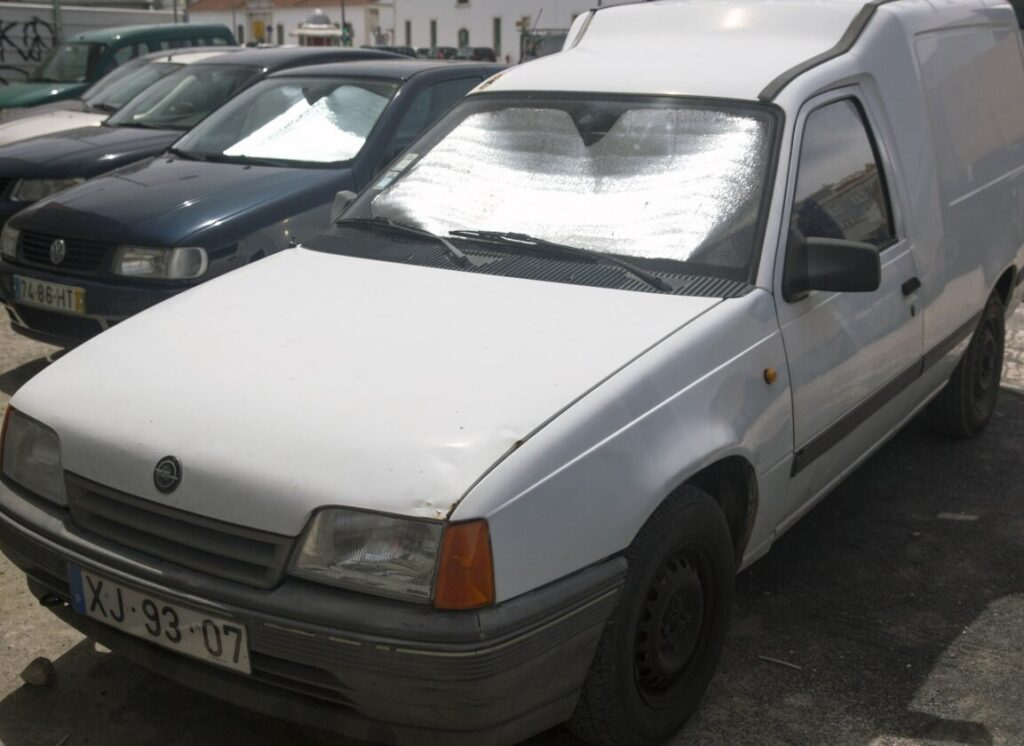
The Opel Kadett E Combo 1.4 S, manufactured between September 1989 and September 1990, served as an accessible and practical entry point into the Opel range during a period of significant automotive development. Positioned as a compact, three-door station wagon (estate), the Combo variant of the Kadett E aimed to provide utility and economy for families and small businesses. Built on the T-platform, shared with other General Motors products of the era, it was a versatile vehicle primarily marketed in Europe. This specific 1.4 S trim, producing 75 horsepower, was designed to balance affordability with reasonable performance for everyday driving needs.
Powertrain & Engine Architecture
The Kadett E Combo 1.4 S was powered by the 14NV engine, a 1.4-liter inline-four cylinder petrol engine. This engine featured a single overhead camshaft (SOHC) valvetrain with two valves per cylinder. A key characteristic of this engine was its use of a carburetor for fuel delivery, a technology gradually being replaced by fuel injection. While simpler and less expensive than fuel injection systems, the carburetor offered less precise fuel metering, resulting in slightly lower fuel economy and increased emissions. The engine generated 75 horsepower at 5600 rpm and 108 Nm (79.66 lb-ft) of torque at 3000 rpm. The engine was mounted transversely at the front of the vehicle, powering the front wheels. A 5-speed manual transmission was the sole gearbox option for this variant, offering a compromise between fuel efficiency and drivability.
Driving Characteristics
The Kadett E Combo 1.4 S, with its 75 horsepower and relatively light weight, provided adequate, though not particularly exciting, performance. Acceleration was modest, and overtaking maneuvers required careful consideration. The 5-speed manual transmission allowed drivers to maintain the engine within its optimal power band, but the carburetor’s response could feel somewhat sluggish compared to the responsiveness of modern fuel-injected engines. The gear ratios were optimized for economy, with a relatively tall fifth gear designed for comfortable highway cruising. Compared to more powerful Kadett E models, such as those equipped with larger engines or fuel injection, the 1.4 S felt noticeably slower. However, it delivered a more forgiving and economical driving experience, especially in urban environments. The steering, while not power-assisted, provided a direct feel for the road.
Equipment & Trim Levels
The Kadett E Combo 1.4 S was positioned as a basic, functional trim level within the Kadett E lineup. Standard equipment typically included cloth upholstery, a straightforward dashboard layout, and essential instrumentation. Power steering was not a standard feature, and air conditioning was generally offered as an optional extra. The interior prioritized practicality and durability over luxury. Available optional extras included upgraded audio systems, tinted glass, and various wheel cover designs. The Combo body style itself was a significant feature, providing a larger cargo capacity than the standard hatchback version, making it well-suited for transporting larger items.
Chassis & Braking
The Kadett E Combo utilized a MacPherson strut front suspension and a twist-beam rear suspension. The rear brakes were typically drum brakes, while the front brakes were disc brakes. This configuration was common for vehicles in this price segment during the late 1980s and early 1990s. The suspension was tuned for ride comfort rather than sporty handling. Stabilizer bars were often omitted on base models to minimize costs. The manual steering contributed to a more direct driving experience, although it required more physical effort from the driver.
Market Reception & Comparison
The Kadett E Combo 1.4 S was generally well-received as an affordable and practical vehicle. Critics acknowledged its spacious interior and generous cargo area but noted its modest performance and basic equipment levels. Compared to other Kadett E variants, such as the 1.6-liter or fuel-injected models, the 1.4 S offered lower running costs but sacrificed performance. It competed with other small station wagons of the era, including the Ford Escort Estate and the Volkswagen Golf Estate, offering a similar combination of practicality and affordability. Fuel economy was a key selling point, making it an appealing choice for budget-conscious buyers. It represented a sensible choice for those prioritizing functionality and economy over outright performance.
Legacy
The Opel Kadett E Combo 1.4 S, while not a particularly high-performance or technologically advanced vehicle, occupies a place in automotive history as a representative of a generation of affordable and practical European cars. The 14NV engine, despite its simplicity, proved to be relatively reliable, and a number of examples remain on the road today. In the used car market, these Kadett Combos are often sought after by enthusiasts and collectors seeking a classic and affordable vehicle. Parts availability can be challenging, but a dedicated community of owners and suppliers helps to maintain these cars. The Kadett E Combo 1.4 S stands as a testament to Opel’s commitment to providing functional and accessible transportation to a broad customer base.