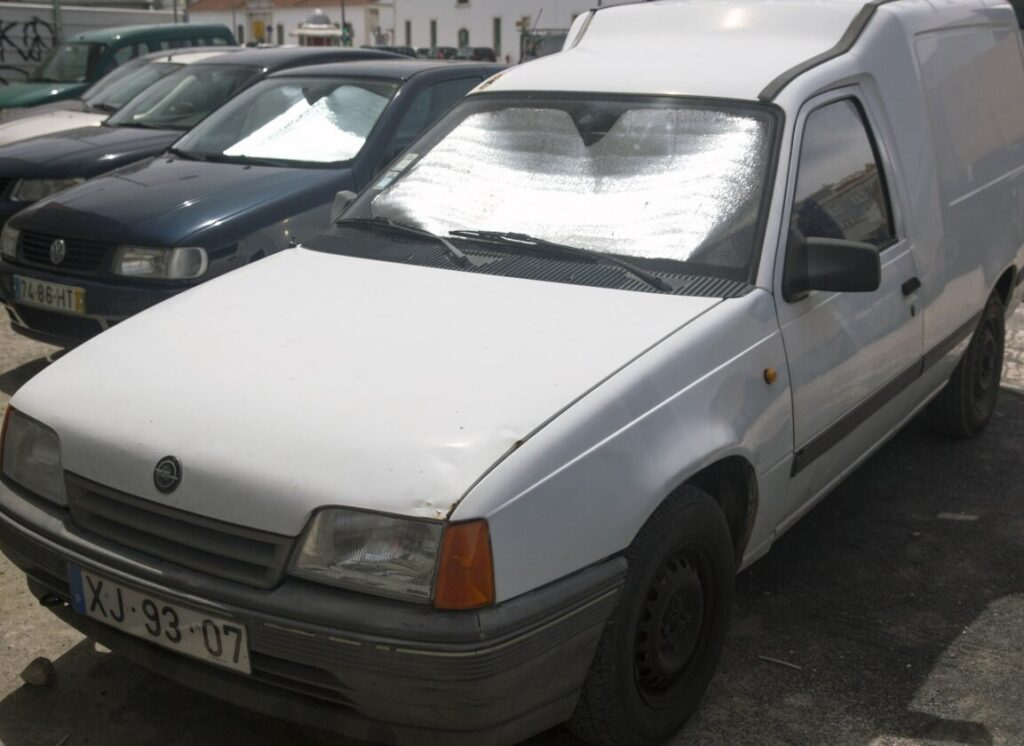
The Opel Kadett E Combo 1.6, producing 82 horsepower, was a practical and affordable variant of the Kadett E range, manufactured between September 1986 and May 1988. Positioned as a commercial-oriented vehicle, the Combo offered a spacious cargo area within a compact footprint, making it popular with small businesses and tradespeople. It represented a key offering in Opel’s lineup during a period of increasing demand for versatile, van-like vehicles in Europe. The Kadett E itself was a significant model for Opel, representing a substantial upgrade over the previous Kadett D, and the Combo variant further expanded its appeal to a wider customer base.
Technical Specifications
| Brand | Opel |
| Model | Kadett |
| Generation | Kadett E Combo |
| Type (Engine) | 1.6 (82 Hp) |
| Start of production | September, 1986 |
| End of production | May, 1988 |
| Powertrain Architecture | Internal Combustion engine |
| Body type | Station wagon (estate) |
| Seats | 2 |
| Doors | 3 |
| Fuel Type | Petrol (Gasoline) |
| Power | 82 Hp @ 5400 rpm |
| Power per litre | 51.3 Hp/l |
| Torque | 130 Nm @ 2600 rpm / 95.88 lb.-ft. @ 2600 rpm |
| Engine layout | Front, Transverse |
| Engine Model/Code | 16SV |
| Engine displacement | 1598 cm3 / 97.52 cu. in. |
| Number of cylinders | 4 |
| Engine configuration | Inline |
| Cylinder Bore | 80 mm / 3.15 in. |
| Piston Stroke | 79.5 mm / 3.13 in. |
| Compression ratio | 10:1 |
| Number of valves per cylinder | 2 |
| Fuel injection system | Carburettor |
| Engine aspiration | Naturally aspirated engine |
| Valvetrain | SOHC |
| Engine oil capacity | 3.5 l / 3.7 US qt | 3.08 UK qt |
| Coolant | 6.4 l / 6.76 US qt | 5.63 UK qt |
| Trunk (boot) space – maximum | 2450 l / 86.52 cu. ft. |
| Length | 4221 mm / 166.18 in. |
| Width | 1674 mm / 65.91 in. |
| Height | 1670 mm / 65.75 in. |
| Wheelbase | 2530 mm / 99.61 in. |
| Drivetrain Architecture | The Internal combustion engine (ICE) drives the front wheels of the vehicle. |
| Drive wheel | Front wheel drive |
| Number of gears and type of gearbox | 5 gears, manual transmission |
Powertrain & Engine Architecture
The Kadett E Combo 1.6 was powered by the 16SV engine, a 1.6-liter inline-four cylinder unit. This engine, part of Opel’s established SOHC (Single Overhead Camshaft) family, utilized a two-valve-per-cylinder configuration. Fuel delivery was managed by a carburetor, a common feature for vehicles of this era, offering simplicity and relatively low cost. The 16SV engine produced 82 horsepower at 5400 rpm and 130 Nm (95.88 lb-ft) of torque at 2600 rpm. The engine’s design prioritized durability and fuel efficiency over outright performance. The five-speed manual transmission was the standard offering, providing a reasonable spread of gears for both urban driving and highway cruising. The transverse engine layout, common in front-wheel-drive vehicles, contributed to a compact engine bay and efficient packaging.
Driving Characteristics
The 1.6-liter engine in the Kadett E Combo, coupled with the five-speed manual transmission, provided adequate, though not exhilarating, performance. Acceleration was modest, with a focus on providing sufficient power for carrying loads rather than sporty driving. The gear ratios were tuned for practicality, offering a balance between fuel economy and usability. Compared to higher-spec Kadett E models equipped with larger engines (like the 2.0-liter), the 1.6 felt noticeably less powerful, particularly when fully loaded. However, the lower engine capacity also meant lower running costs and a simpler mechanical layout. The front-wheel-drive configuration provided predictable handling, although it lacked the dynamic finesse of rear-wheel-drive alternatives.
Equipment & Trim Levels
The Kadett E Combo 1.6 was designed with functionality in mind, and as such, the trim level was relatively basic. Standard equipment typically included a simple dashboard layout, cloth upholstery, and minimal exterior embellishments. Power steering and central locking were often optional extras. The interior prioritized durability and ease of cleaning, reflecting its commercial vehicle status. The focus was on providing a robust and practical workspace for drivers. While not luxurious, the Combo offered essential features for its intended purpose. Options could include upgraded seating, a basic radio, and improved sound insulation.
Chassis & Braking
The Kadett E Combo utilized a MacPherson strut front suspension and a twist-beam rear suspension. This setup provided a reasonable compromise between ride comfort and handling. The rear drum brakes were standard on the base models, while higher-spec Combos could be equipped with rear disc brakes. The braking system was adequate for the vehicle’s weight and performance, but lacked the stopping power of more modern systems. A stabilizer bar was typically fitted to the front suspension to reduce body roll during cornering. The chassis was reinforced to handle the stresses of carrying loads, contributing to a robust and durable platform.
Market Reception & Comparison
The Kadett E Combo 1.6 was generally well-received in the commercial vehicle market. Critics praised its practicality, spacious cargo area, and relatively low running costs. However, the engine’s modest power output was often noted as a limitation, particularly when compared to competitors offering more powerful engines. Compared to the higher-spec Kadett E models, the Combo represented a more affordable entry point into the range, appealing to budget-conscious buyers. Its fuel economy was competitive for its time, making it an attractive option for businesses looking to minimize operating expenses. The 1.6-liter engine also proved to be relatively reliable, contributing to its popularity in the used car market.
Legacy
The Opel Kadett E Combo 1.6 remains a relatively common sight on European roads today, testament to its durability and practicality. The 16SV engine, while not particularly sophisticated, proved to be a robust and reliable unit, capable of withstanding years of use. Parts availability remains good, making it relatively easy to maintain and repair. In the used car market, the Combo 1.6 is often sought after by those looking for a simple, affordable, and practical vehicle. Its enduring appeal lies in its honest design and its ability to fulfill its intended purpose as a versatile and reliable workhorse. While not a performance icon, the Kadett E Combo 1.6 holds a significant place in automotive history as a practical and affordable vehicle that served a vital role in the European commercial vehicle market.